
Moon Picke independently researches products. If you buy through our links, we may earn a commission at no extra cost to you. Read our affiliate disclosure.
This travel backpack buying guide exists because there is no single best travel backpack. Trip style determines the right pack. Liters alone are not enough: packed dimensions, load, and carry style decide whether a bag works on your route. Moon Picke has not flown with every backpack in this cluster. Product pages stay in the linked reviews. See how Moon Picke evaluates products.
As an Amazon Associate I earn from qualifying purchases.
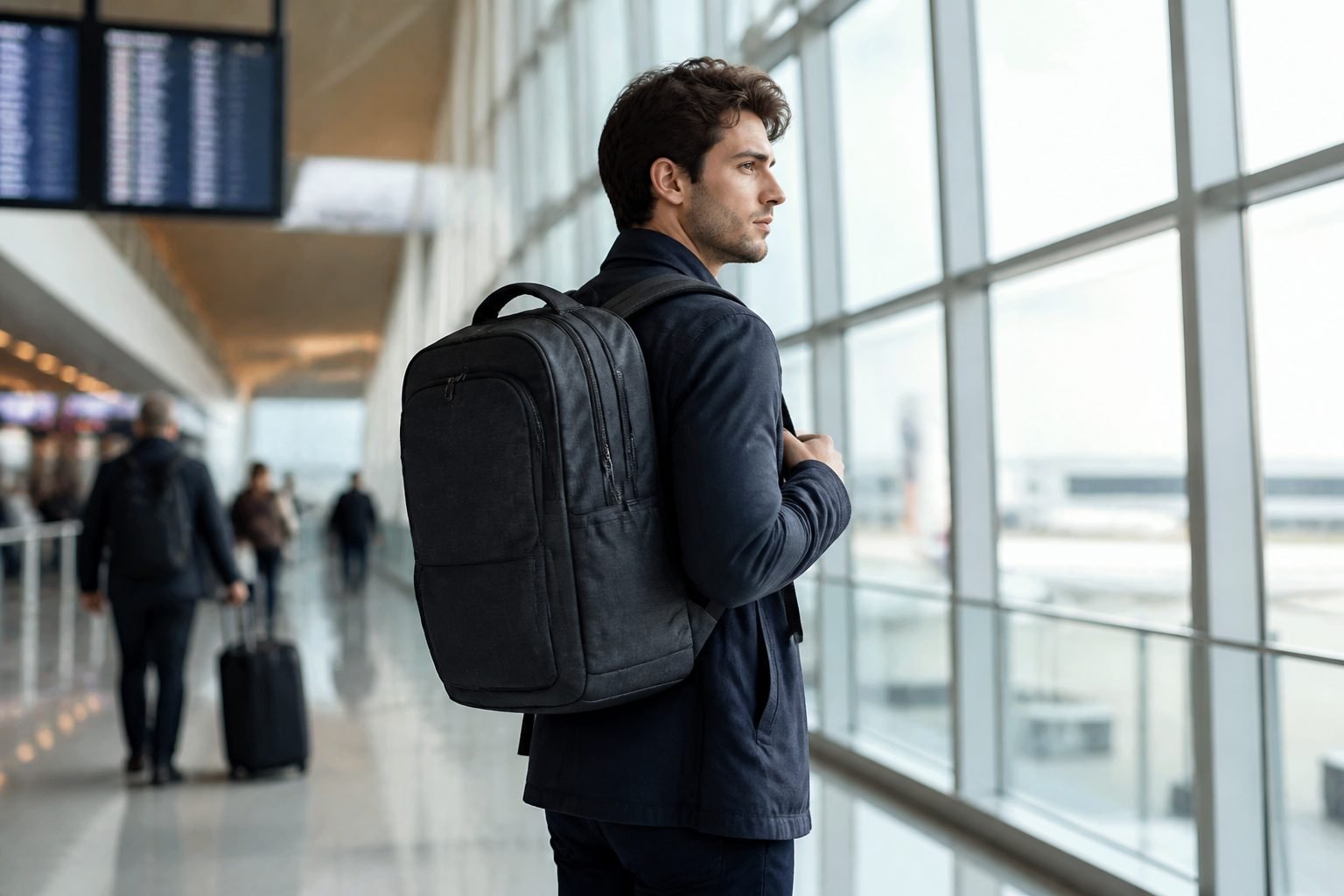
See a current carry-on-oriented travel backpack listing on Amazon →
Travel Backpack Buying Guide: The Short Answer
What type of travel backpack should I buy? Match trip length, airline limits, and load first. Use liters only as a rough capacity band. Dimensions, empty weight, and how you carry the bag matter more than a marketing volume number.
Weekend / light travel: roughly 20L–30L.
General carry-on travel: roughly 30L–40L.
Maximum carry-on-oriented capacity: roughly 35L–45L, depending on packed dimensions, not on the liter label.
Specialized: camera, hiking hybrid, business, anti-theft, expandable, or wheeled hardware when that workflow is real.
Liters do not determine airline compliance. A 35L pack can be physically larger than another 40L pack. Check the packed bag against the operating carrier’s current chart.
carry-on-oriented travel backpack
A recommendation supported by the article’s existing analysis.
- Recommendation context documented in the article
- Relevant use case covered in the guide
- Trade-offs discussed in the surrounding analysis
Affiliate link. Moon Picke may earn a commission from qualifying purchases.
20L-class laptop travel pack
What Travel Backpack Size Do You Need?
- Recommendation context documented in the article
- Relevant use case covered in the guide
- Trade-offs discussed in the surrounding analysis
Affiliate link. Moon Picke may earn a commission from qualifying purchases.
expandable travel backpack
Fixed-Capacity vs Expandable Travel Backpack
- Factor: Fixed
- Dimensions: more predictable
- Capacity: fixed
Affiliate link. Moon Picke may earn a commission from qualifying purchases.
Start With Trip Type, Not Backpack Features
The best backpack for a three-day business trip can be very different from the best backpack for a seven-day city trip. Features are downstream of the itinerary.
Weekend: a compact bag plus a personal-item-sized tech kit often beats a 45L shell you will not fill.
Three to seven days: clothing cubes, weather layers, and a laptop start to compete. This is the core range for most carry-on travel backpacks.
Business: documents, chargers, and a meeting-ready profile can matter more than shirt count.
International / multi-city: connections, trains, and cabin weight limits often matter as much as bin size.
Outdoor: a hip belt and load transfer start to matter once trail miles appear.
Photography: dense glass fills weight long before it fills volume.
If you cannot name the trip, you cannot name the bag.
What Travel Backpack Size Do You Need?
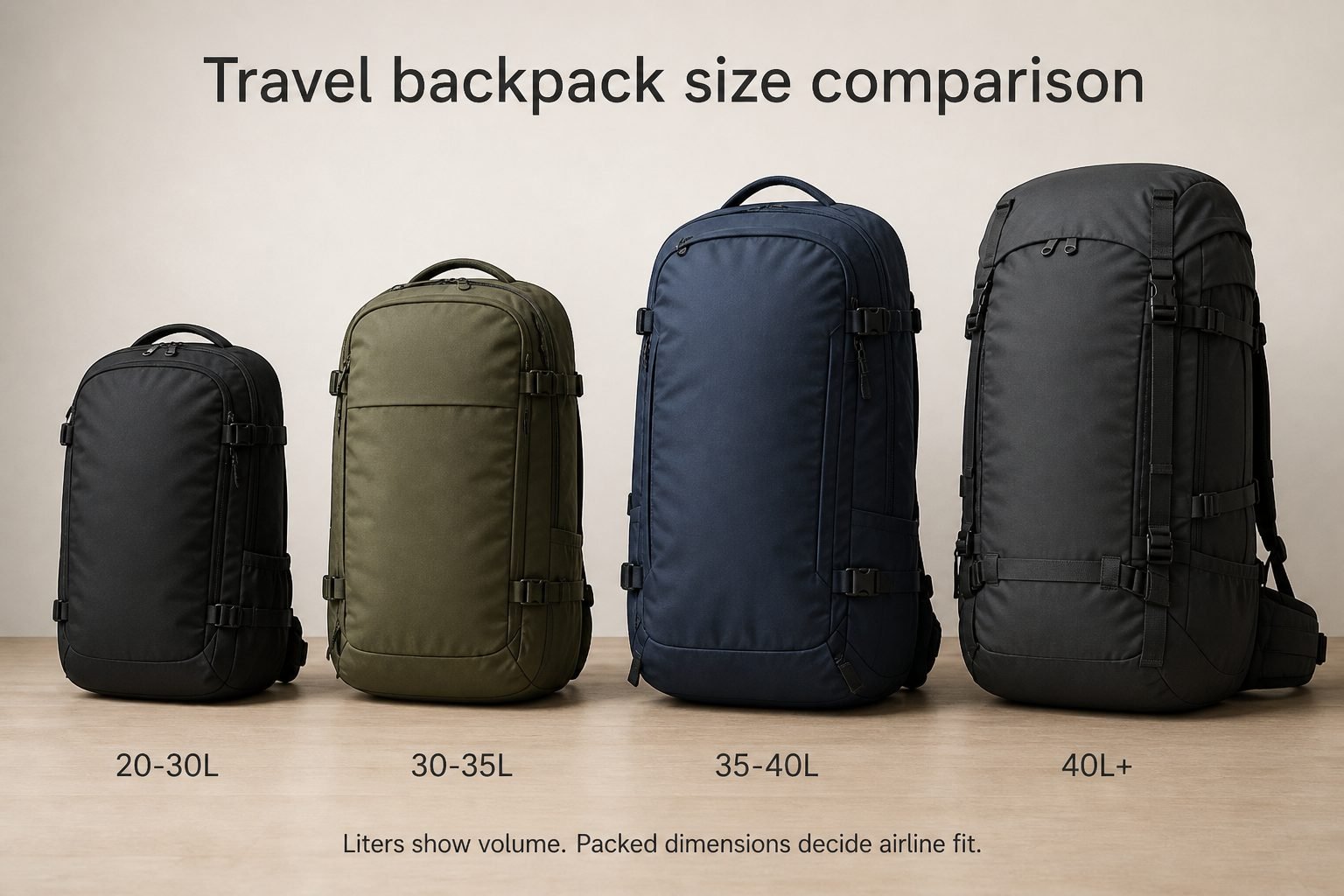
What size travel backpack should I buy? Use approximate bands, then verify external measurements. Liters describe an internal capacity concept. Dimensions describe the outside of the packed bag. They are not interchangeable, so this travel backpack buying guide treats volume as a starting range only.
20L–30L: light travel, personal electronics, short trips. The published NOMATIC 20L Travel Pack review is the laptop-first example in this band.
30L–35L: versatile range for a laptop plus several days of clothing, if packed depth stays honest.
35L–40L: larger carry-on-oriented trips with weather layers and shoes. See the published Tortuga 40L Travel Backpack Lite review.
40L+: more packing capacity and more airline-size risk. The published Peak Design Travel Backpack 45L review is the larger carry-on-oriented example—still not a boarding ticket.
See a current 20L-class laptop travel pack on Amazon →
Why Packed Dimensions Matter More Than Advertised Liters
Soft-sided bags bulge. Expansion zippers add depth. Stuffed pockets and bottle holsters add width. Compression helps a half-empty bag and does little once the pack is stuffed. Wheel housings and trolley handles count on hybrids. Manufacturer specs usually describe an empty or lightly packed snapshot.
A 35L bag may be physically larger than another 40L bag depending on shape. Do not infer airline compliance from liters. Measure the packed bag at its widest points, including pockets, wheels, and handles, then compare those numbers with the carrier’s current page.
Carry-On vs Personal Item: Know the Difference
What is the difference between a carry-on and a personal item? A carry-on is typically the larger cabin bag intended for the overhead bin. A personal item is usually smaller and intended to fit under the seat in front of you. Exact limits vary. The TSA states that cabin size restrictions vary by airline and that you should contact your airline about what fits in the bin or under the seat.
One published example: American Airlines currently lists a carry-on maximum of 22 × 14 × 9 inches including handles and wheels, plus a personal item that should not exceed 18 × 14 × 8 inches and must fit under the seat. That is one carrier’s chart, not a global rule. Other airlines, aircraft, cabins, and fare classes publish different numbers, and some add cabin-bag weight limits. Moon Picke recommends checking the operating carrier. Treat retailer “carry-on compliant” labels as positioning, not permission.
Fixed-Capacity vs Expandable Travel Backpack
Is an expandable backpack worth it? Expansion gives flexibility, not free capacity. More volume usually means more external depth and potentially more weight. Return-trip souvenirs are the honest use case. Overpacking on day one is the common failure.
| Factor | Fixed | Expandable |
|---|---|---|
| Dimensions | more predictable | can change |
| Capacity | fixed | flexible |
| Airline planning | simpler | requires more checking |
| Return-trip flexibility | lower | higher |
| Overpacking temptation | lower | higher |
| Complexity | simpler | more hardware |
If trip length varies, read the published NOMATIC Navigator Travel Backpack 32L review. Expanded mode is a second size, not a magic exemption from sizers.
See a current expandable travel backpack listing on Amazon →
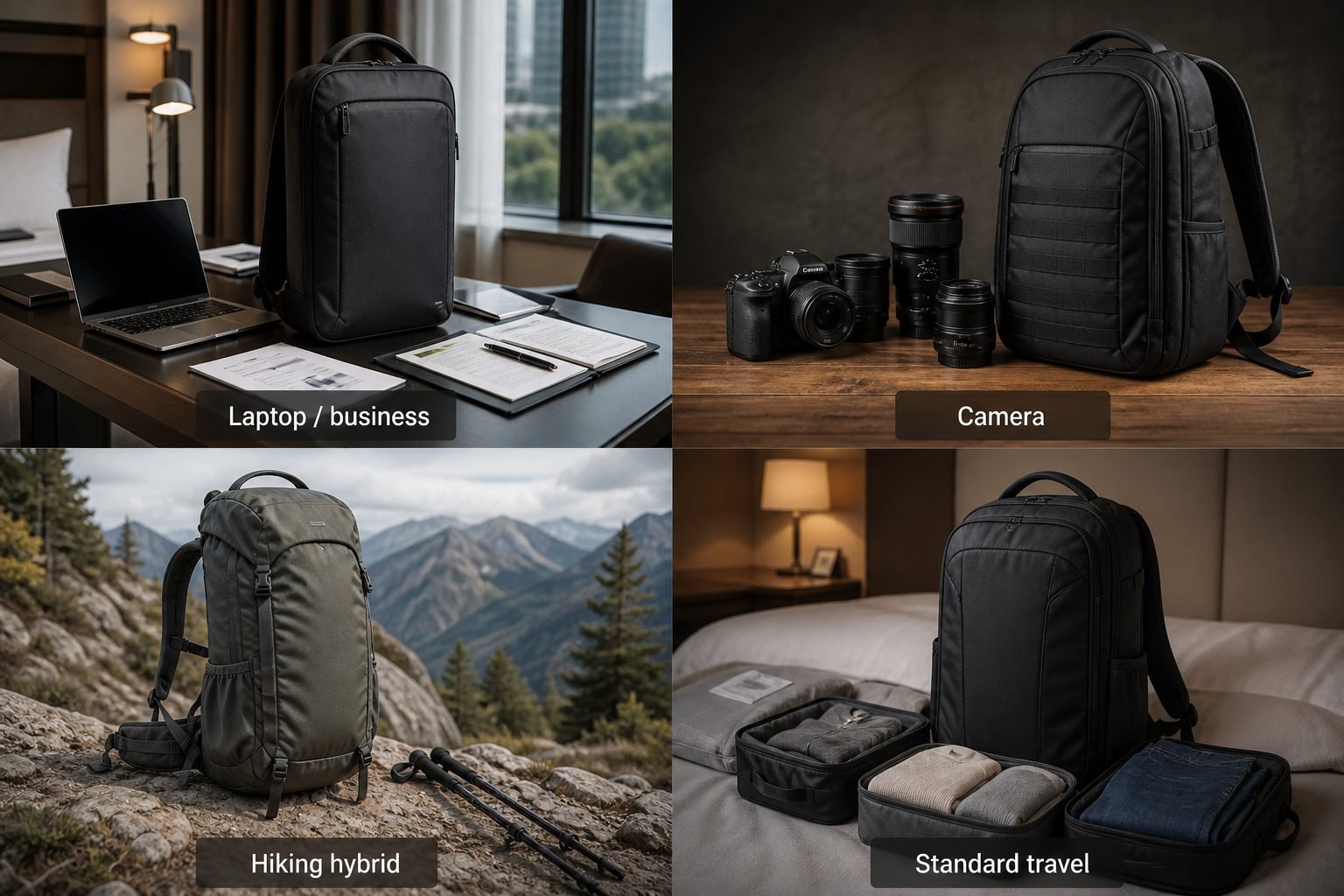
Laptop and Business Travel Backpacks
Do I need a laptop compartment? Yes if a computer is part of every transit day and you want it separated from clothes and bottles. No if the machine stays in a dedicated sleeve you already own, or if the trip is clothing-only.
“Fits a 16-inch laptop” does not guarantee every 16-inch device fits. Chassis width, thickness, and cases still decide clearance. Sleeve position, charger storage, documents, quick-access pockets, and a luggage pass-through are the useful extras. Professional styling is a meeting constraint, not a packing one.
Laptop-first and business-trip workflow are not the same job. The NOMATIC 20L review is laptop-first. A slim business backpack is usually smaller, document-heavy, and designed to ride a spinner. If clothes are the trip, neither replaces a 35L–40L clothing pack.
What Matters Most for International Flights?
International travelers should pay attention to bag weight as well as dimensions. A heavy premium backpack consumes part of the baggage allowance before anything is packed. Many carriers outside the United States publish cabin-bag kilogram limits even when U.S. domestic charts emphasize size.
Check the operating airline’s current dimension and weight pages, including codeshare partners. Passport access should not require emptying the main compartment. Long connections and train transfers reward a harness you will wear. For a clothing-first travel backpack for international travel, use the Tortuga 40L Lite review—still not universally airline approved.
See a current 40L international-oriented travel backpack on Amazon →
Specialized Workflows: Security, Cameras, Trails, and Wheels
Do You Need an Anti-Theft Travel Backpack?
Are anti-theft backpacks worth it? They can be worth considering if lockable zipper pulls, hidden pockets, RFID pockets, or cut-resistant components match a real theft-risk itinerary. They are deterrence, not theft-proof protection. Those features can add weight, cost, and slower access. For the security-focused example, see the published Pacsafe EXP45 review.
Traveling With Cameras and Creator Gear
Camera equipment is dense. A camera backpack can become heavy long before its volume is full. Dedicated camera backpacks spend liters on padded geometry. A camera cube inside a travel backpack keeps clothing flexibility. Choose the cube if clothes still dominate. Choose a dedicated photo pack if the kit is the trip. Treat divider counts as geometry, not a body-and-lens guarantee. Moon Picke has not packed a camera kit for this hub.
Travel Backpack or Hiking/Travel Hybrid?
Travel-focused features are clamshell opening, a laptop sleeve, and organization. Hiking-focused features are a load-bearing hip belt, load lifters, hydration, compression, and ventilation. A thin waist strap is not a true load-bearing hip belt. If airport-to-trail days are real, read the published Osprey Farpoint Trek 55 review. That hybrid is not a typical cabin bag—confirm packed size before you assume overhead-bin use.
Backpack, Wheeled Backpack or Roller?
Backpack or roller for international travel? Neither is universally better. Stairs and metro gaps reward straps. Smooth terminals reward wheels. A wheeled backpack adds wheels, chassis, and a telescoping handle, which also increases empty weight. You still carry that hardware in backpack mode.
| Factor | Backpack | Wheeled backpack | Roller |
|---|---|---|---|
| Smooth airports | carry load | roll | roll |
| Stairs | excellent | switch to straps | awkward |
| Rough streets | strong | mixed | weaker |
| Empty weight | often lower | usually higher | higher structure |
| Hands-free | yes | yes in backpack mode | no |
| Carry comfort | strongest potential | compromise | not carried |
| Moving parts | minimal | wheels + handle | wheels + handle |
If you will almost never wear the bag, a dedicated roller is usually simpler. If you will almost never roll, do not pay the chassis penalty.
What Actually Matters for Carry Comfort?
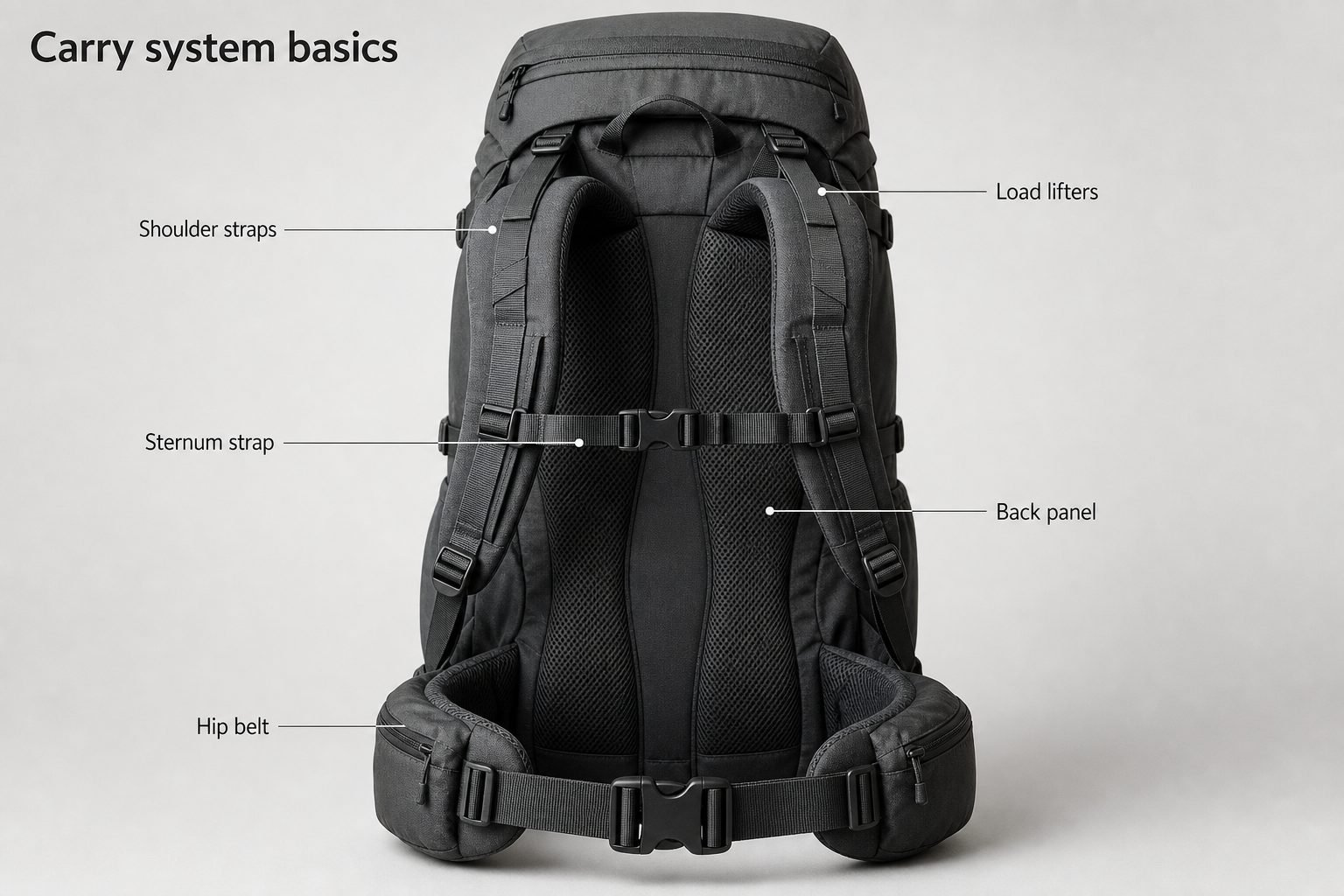
Padding alone does not determine comfort. Load distribution, torso fit, and total weight matter substantially. Look at shoulder straps, a sternum strap, a hip belt when the load is heavy, load lifters on hiking-oriented packs, back-panel shape, empty weight, and loaded weight. Moon Picke will not claim a specific design automatically guarantees comfort.
How Much Organization Is Too Much?
More pockets are not automatically better. Highly structured layouts can reduce flexibility for shoes, jackets, camera gear, and odd shapes. Clamshell openings help packing cubes. A passport pocket helps only if you can reach it without unpacking. Cubes often beat sewn-in clothing walls because you can remove them.
Materials and Weather Resistance
Fabric, zippers, coatings, a reinforced base, and a rain cover are different claims. Water-resistant usually means light moisture. Weather-resistant usually means a broader coating and zipper story. Waterproof requires an official rating or dry-bag construction. Do not upgrade marketing language.
The Travel Backpack Trade-Offs That Matter Most
| More of this | Usually means |
|---|---|
| More capacity | more dimensions and weight |
| More organization | less flexible space |
| More security | more hardware and slower access |
| Stronger hiking harness | more bulk |
| Camera protection | less clothing capacity |
| Wheels | more empty weight |
| Expansion | less predictable packed dimensions |
| Premium materials | higher cost, not automatically better fit |
Buy the constraint you actually have. Extra features are not free.
Which Travel Backpack Type Fits You?
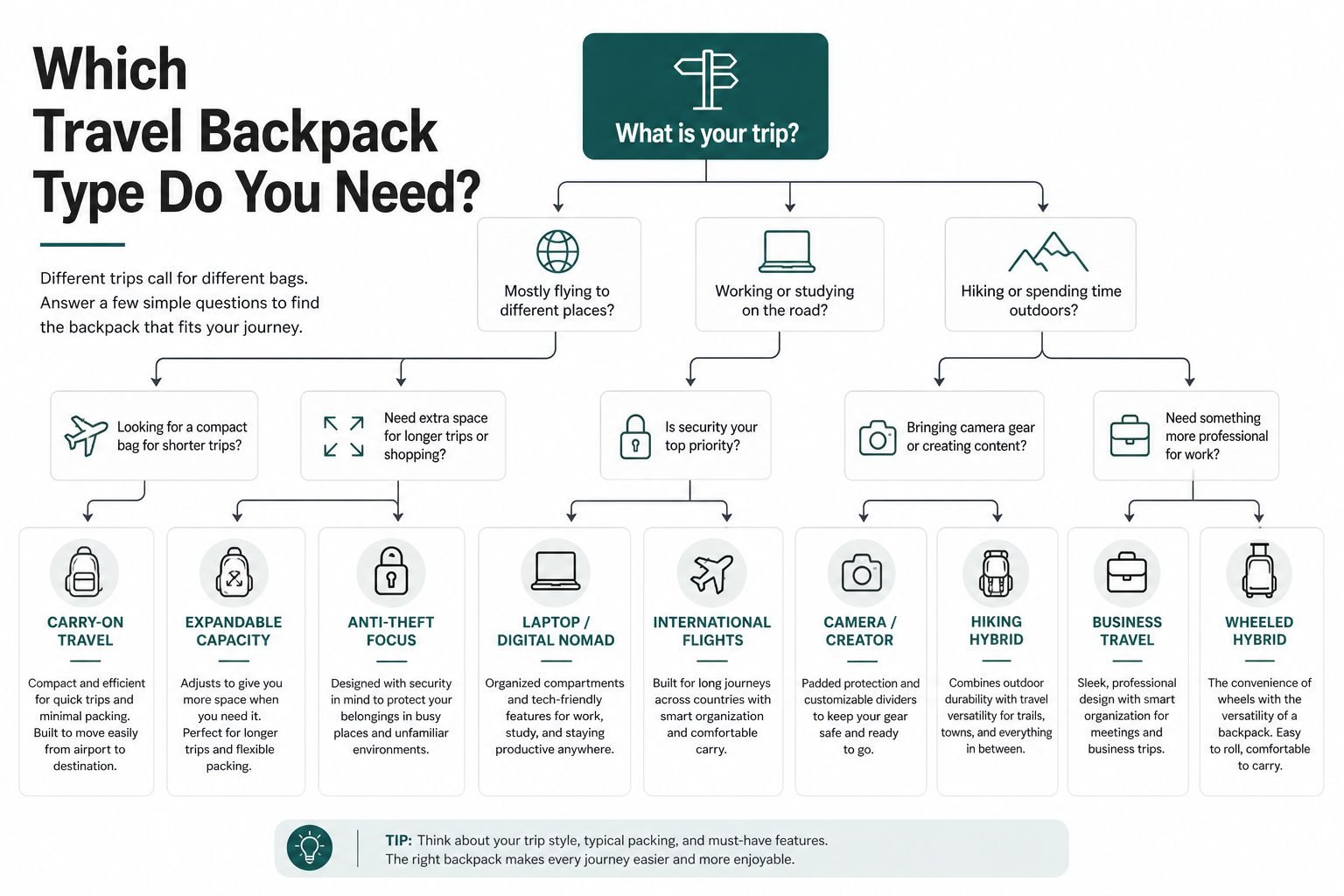
Carry-on traveler → Peak Design Travel Backpack 45L review.
Laptop / digital nomad → NOMATIC 20L Travel Pack review.
Variable trip length → NOMATIC Navigator 32L review.
Security-focused traveler → Pacsafe EXP45 review.
International traveler → Tortuga 40L Travel Backpack Lite review.
Airport-to-trail → Osprey Farpoint Trek 55 review.
Photographer / creator: dedicated camera backpack or a cube inside a clothing pack.
Business traveler: slim laptop backpack plus a roller if meetings dominate; clothing-first carry-on if the suitcase is not coming.
Roll + carry user: a wheeled backpack pays off only if you will switch modes.
Travel Backpack Buying Checklist
Use this travel backpack buying guide checklist before you buy. Measure the packed bag. Advertised empty dimensions are the starting sheet, not the boarding check.
TRIP ☐ trip length ☐ travel style ☐ weather ☐ airline
SIZE ☐ liters ☐ exact external dimensions ☐ expanded dimensions ☐ empty weight
CARRY ☐ shoulder straps ☐ sternum strap ☐ hip belt if needed ☐ back panel
PACKING ☐ opening style ☐ compression ☐ packing-cube compatibility ☐ pocket layout
TECH ☐ laptop dimensions ☐ charger storage ☐ quick access
TRAVEL ☐ passport access ☐ luggage pass-through ☐ stowable straps
SPECIAL USE ☐ anti-theft ☐ camera ☐ hiking ☐ wheels ☐ expansion
AIRLINE ☐ carry-on dimensions ☐ personal-item dimensions ☐ weight limit
Common Travel Backpack Buying Mistakes
1. Choosing by liters alone.
2. Ignoring empty backpack weight.
3. Assuming “carry-on” means every airline, route, and fare.
4. Confusing carry-on with personal item.
5. Buying too many pockets for a clothing-first trip.
6. Ignoring actual laptop dimensions and case thickness.
7. Overvaluing expansion and packing expanded from day one.
8. Buying a specialized backpack for a workflow you rarely use.
9. Ignoring how the bag behaves fully packed—bulge, pockets, wheels, and handles included.
What Should Most Travelers Prioritize?
1. Fit the trip type.
2. Verify packed dimensions against the airline you will fly.
3. Check empty weight, especially on international weight-limited cabin bags.
4. Evaluate the carry system you will actually wear.
5. Match opening and organization to the workflow.
6. Add specialized features only if needed.
Buy the bag that solves your travel constraints, not the bag with the longest feature list. That is the whole point of how to choose a travel backpack.
Final Thoughts
This travel backpack buying guide does not pick a universal winner. The right backpack depends on the trip, the airline, the load, the carry method, access needs, and any specialized workflow. There is no universally best travel backpack. There is a best-fitting backpack for a specific traveler and trip. Open the matching review, compare listed specs with your packed kit, and check the carrier before you fly.
Frequently Asked Questions
What size travel backpack should I buy? Roughly 20L–30L for light or laptop-led trips, 30L–40L for most clothing-first carry-on travel, and treat 40L+ as higher capacity with higher sizer risk. Confirm packed dimensions.
Is 40L too big for carry-on? Not automatically. Forty liters is a volume label. Packed height, width, depth, and sometimes weight decide. Some 40L packs pass a given chart; some 35L packs fail it.
Is 30L enough for a week? Sometimes, with packing cubes, laundry access, and a mild climate. A week of bulky layers, shoes, and a 16-inch laptop usually wants more clothing volume or a second bag.
What is the difference between carry-on and personal item? Carry-on is usually the overhead-bin bag. Personal item is usually the under-seat bag. Limits vary by airline. TSA does not publish one cabin-size rule for all carriers.
Is an expandable travel backpack worth it? Yes if return-trip volume is a real need and you will check expanded dimensions. No if expansion becomes an overpacking habit.
Is a backpack better than a suitcase? For stairs, cobblestones, and hands-free walking, usually yes. For long smooth terminals and heavy loads you do not want on your back, a roller often wins. Hybrid bags split the difference and add empty weight.
What should I look for in a laptop travel backpack? Measure the device against the listed sleeve, including the case. Check charger storage, quick access, and whether the remaining liters still hold clothes.
Are anti-theft backpacks worth it? They are deterrence features, not a theft-proof rating. Buy them for lockable hardware and hidden pockets if that risk is part of the trip; skip them if the extra weight and slower access are the larger cost.