
are expensive treadmills worth it only when the extra money buys hardware, grade range, controls, screen, software, or service you will actually use. A higher list price is not automatically a better treadmill, and it is not proof of longer life. A lower-priced machine is not automatically poor quality if belt, speed, capacity, and room already fit. Moon Picke used manufacturer spec pages, warranty tables, current iFIT membership pages, and Amazon.com US listings opened 15 September 2026. We did not invent durability, repair bills, resale, or a five-year ownership total.
Overall decks: best treadmills for home use. Walking hardware: treadmills for walking. Grade range: incline treadmills. Tight rooms: small spaces and folding treadmills. Desk walking instead of a full deck: walking pads for home office. Method: how we evaluate.
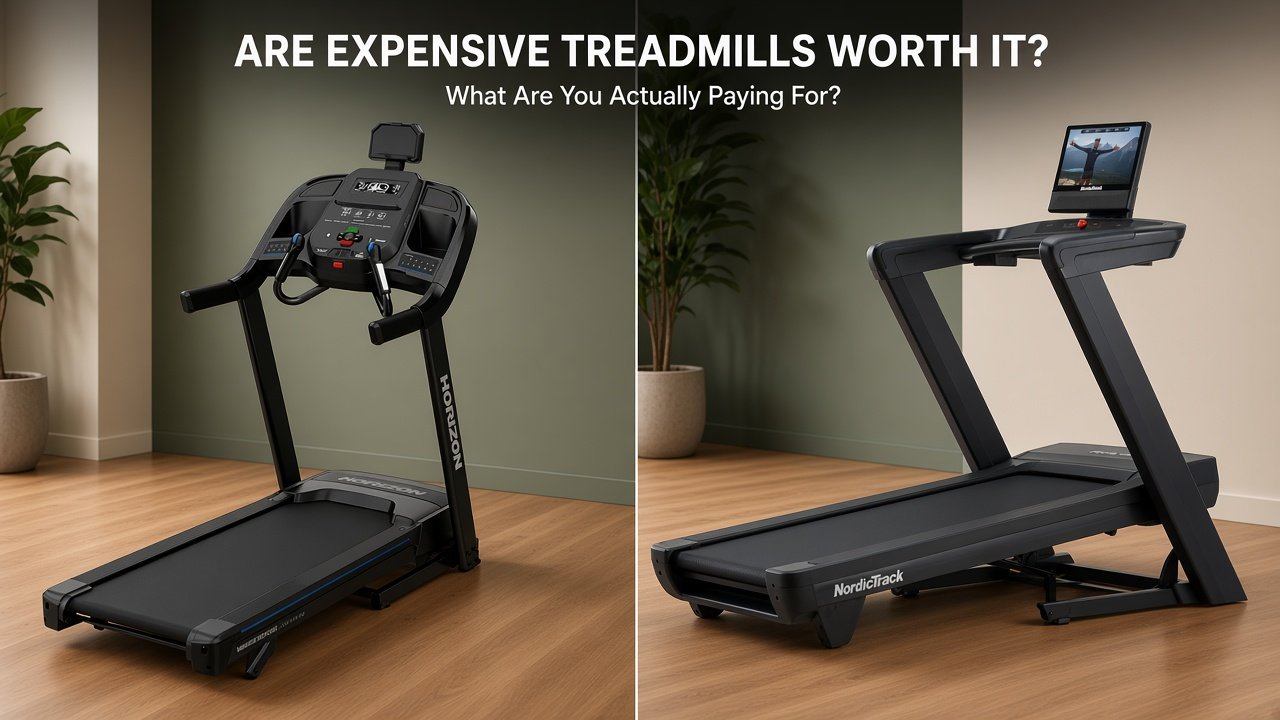
Are Expensive Treadmills Worth It? Quick Answer
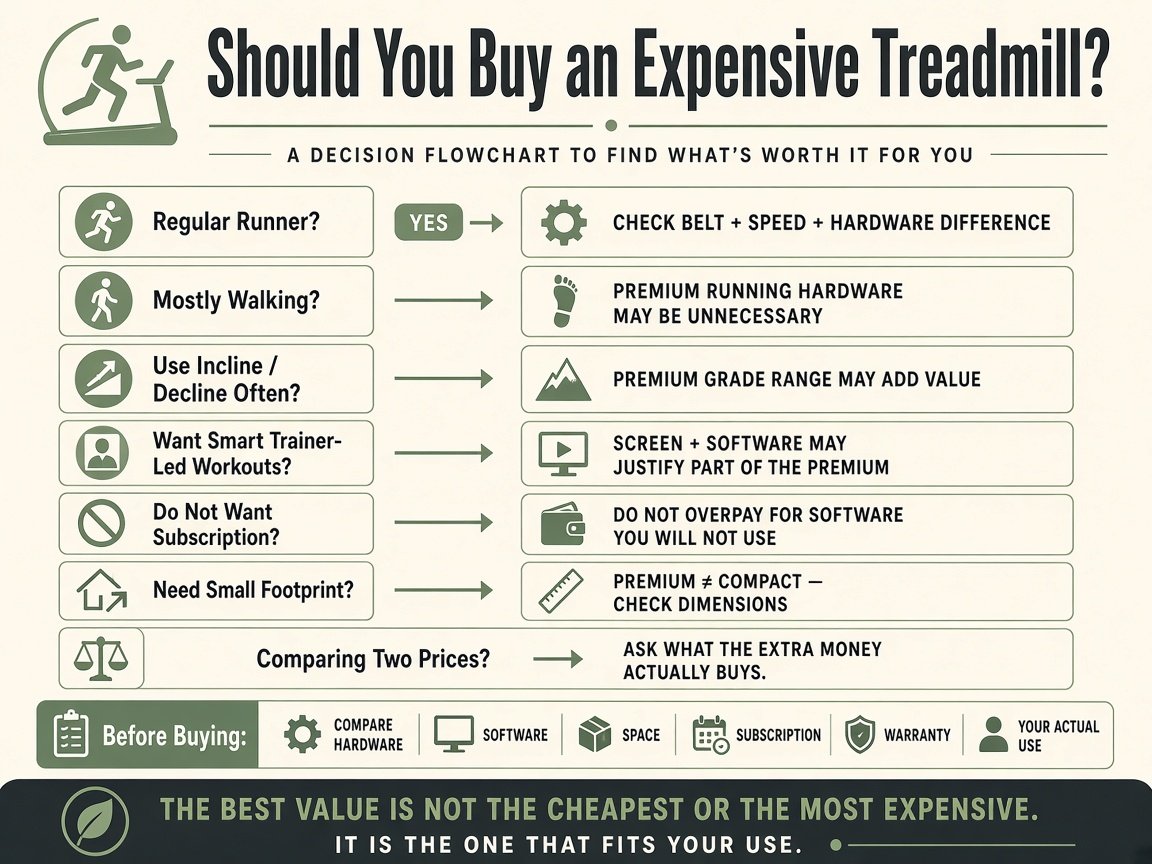
Yes for some buyers, no for others—that is the only honest answer to are expensive treadmills worth it. Paying more may be worth it if you use a larger belt, higher speed, incline/decline, physical controls, a folding workflow you actually use, or trainer-led software you will keep. Paying more may be a poor fit if you mostly walk, ignore the screen, refuse a membership, or need a smaller footprint. Split hardware from smart-tech, then match both to your routine.
| What You Pay More For | When It May Be Worth It | When It May Not Be |
|---|---|---|
| Larger running surface | Regular running, longer stride, mixed household use | Walking-only if a shorter current belt already fits |
| Higher speed | You actually run near the published top end | You never leave walking/jogging speeds |
| More incline / decline | You use grade in dedicated workouts | You stay nearly flat |
| Better physical controls | Intervals without hunting a touchscreen | You only change speed occasionally |
| Folding mechanism | You fold after sessions | The deck stays open permanently |
| Larger screen | You want onboard trainers/entertainment | You already use a tablet or TV |
| Smart training | You will follow auto-adjust workouts | You prefer manual workouts |
| Subscription ecosystem | You will keep paying for the library you use | You want hardware-only ownership |
| Warranty / service | The split coverage matches how you buy (direct vs Amazon) | You treat a long headline as lifespan proof |
| Premium convenience features | Fan, speakers, holders you will use | They outweigh belt, speed, and room fit |
| Current Example | Price Position (dated 15 Sep 2026) | Main Hardware Difference | Smart-Tech Difference | Main Buyer Fit |
|---|---|---|---|---|
| Sunny SF-T723030 | Entry/basic (Amazon NEW B0CR6WB19J) | 20.1″ × 53.1″; 0.6–10 MPH; 1.8–15%; 300 lb; 63.8″ × 30.9″ × 45.7″ | LED; SunnyFit optional | Shorter belt / 10 MPH if that matches |
| Horizon 7.0 AT (HTM1457-01) | Site 15 Sep 2026: $1,099 current / $2,100 regular | 20″ × 60″; 0.5–12 MPH; 0–15%; 325 lb; 277 lb; fold 44″ × 35″ × 68″ | 7.25″ LCD; no JRNY on Studio table | Hardware-first 60″ / 15% without a required coach plan |
| NordicTrack Commercial 1750 (NTL17125) | Checkout listed $2,499 | 22″ × 60″; 0–12 MPH; 12% to −3%; 400 lb; 4.25 CHP | 16″ pivoting screen; iFIT Pro for auto-follow / full library | Runners who want decline plus onboard iFIT they will use |
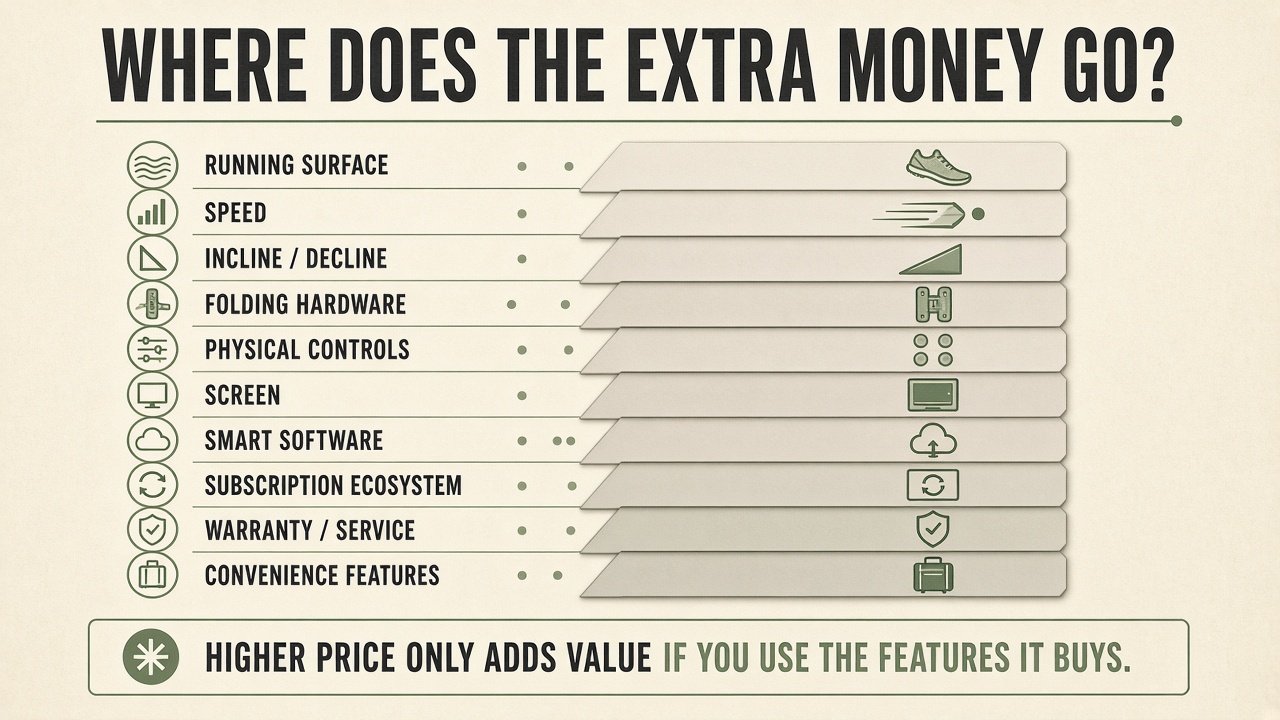
What Makes a Treadmill Expensive?
Price can bundle a larger running surface, broader incline or decline, a folding frame, a bigger display, a connected library, brand positioning, and a segmented warranty. Convenience extras sit on top. Do not assume every premium SKU buys all of those. Horizon 7.0 AT spends money on a 20″ × 60″ deck, 0–15%, QuickDial™, and lifetime frame/motor language—not a 16″ trainer screen. The 1750’s extra money vs that pattern includes a 22″ belt, −3% decline, and the 16″ iFIT console. Sunny SF-T723030 shows a 53.1″ belt and 10 MPH with 15 incline levels and LED. Labeled examples, not a ranking.
What Premium Treadmills Can Actually Give You
Hardware-first: more belt (1750 22″ × 60″ vs Horizon 20″ × 60″ vs Sunny 20.1″ × 53.1″), a speed ceiling you might use (12 vs 10 MPH), and grade you might use (Horizon 0–15% no listed decline; 1750 12% to −3%). Physical controls can be the real premium: Horizon QuickDial™ versus a touchscreen for every change. Folding is premium only if you fold. Capacity (300 / 325 / 400 lb) only matters if you need it—not durability. Motor labels (2.5 Peak HP vs 4.25 CHP) are not proof a costlier motor lasts longer.
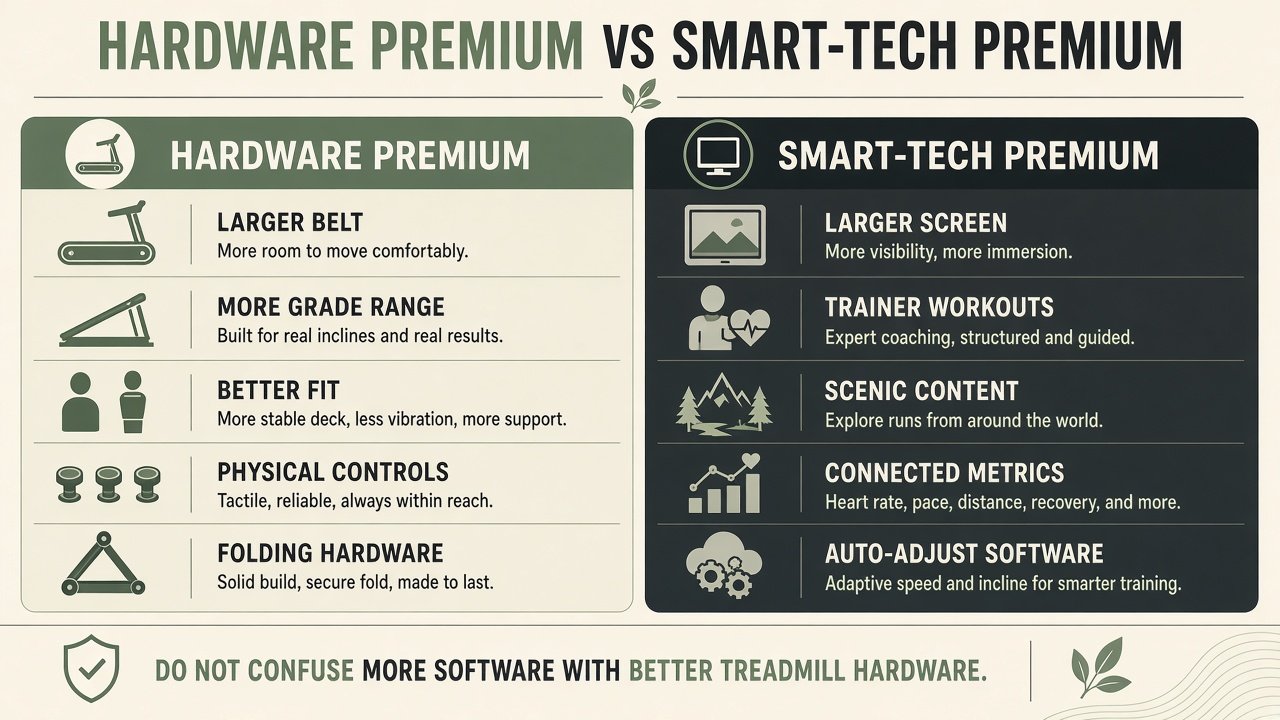
What You May Be Paying Extra for Without Realizing It
Screen, software, branding, and unused features. A 16″ display can help trainer-led sessions. It does not prove a stronger motor, larger deck, or better value. Ask whether you would still pay the gap if the screen were removed—an editorial question, not a fake calculator. Feature count is not value. Premium does not mean compact: Horizon 76″ × 35″ × 67″, 277 lb; 1750 77.3″ × 37″ × 59.5″, 311.5 lb in-box. Heavier is not higher quality. Horizon’s 30-day guarantee is direct-site, not Amazon.
Running Surface, Speed and Incline: When Hardware Is Worth More
Pay for the belt you need. A regular runner or mixed household may use 22″ × 60″ or even 20″ × 60″ in ways a 53″ walking/jog belt does not cover. A walking-only buyer may get little from paying solely for extra length. Higher top speed only matters if you use it; 12 vs 10 MPH is not an upgrade for every buyer. Incline/decline can justify a premium if you train on grade—see incline treadmills—but a flat walker may get little from −3% decline or a 15% ceiling. Walkers who still want a full deck: treadmills for walking. Do not treat motor HP/CHP as the reason to pay more unless the maker documents a buyer-facing difference you actually need.
Screen and Smart Features: Useful Upgrade or Expensive Extra?
Separate screen value from treadmill value. Onboard iFIT on the 1750 (and T Series 16, NTL16426: 20″ × 60″, 0–12%, 16″ tilting HD, no official decline, 3.60 CHP, 325 lb) can auto-adjust speed/incline with a paid Pro plan. Horizon 7.0 AT tells you to skip built-in subscriptions and use a tablet/phone with Bluetooth. If you already stream on your own device, a giant console may be a weak reason to pay more. If you want trainer-led scenic workouts without mounting a tablet, the screen may justify part of a smart-tech premium. Smarter is not better for every buyer. Connected features add accounts, updates, and a membership decision. That is an ownership trade-off, not a reliability ranking. We do not predict app shutdowns for a named model; connected features generally depend on ongoing service support.
Subscriptions: The Cost After You Buy the Treadmill
Upfront hardware is not the membership. Current U.S. iFIT pages opened 15 September 2026 list iFIT Pro at $39/month (or $396 for 1-year Pro on NordicTrack’s iFIT membership checkout), aimed at equipment with a built-in touchscreen. iFIT Train is listed at $15/month for iFIT-ready equipment without a built-in screen. NordicTrack states a paid iFIT membership is required for the full library and adaptive features such as SmartAdjust and ActivePulse, while machines include manual mode and a small number of onboard workouts. Do not add Pro into ownership cost unless you will use those features or you confirm basic belt use still works on your SKU. Horizon’s 7.0 AT Studio table marks JRNY as not included. SunnyFit is optional pairing on the SF-T723030 pages used—we do not invent a Sunny membership price. Optional software is not a required TCO line. We do not publish a five-year total.
Does Paying More Mean Better Durability?
Not necessarily. Price is not a failure-rate study. We have no comparable long-term evidence here that premium SKUs last longer, that cheaper decks wear out faster, or that a CHP number predicts motor life. Premium machines still need cleaning, belt/deck care, lubrication where the manual says so, and software updates if connected. Price does not prove less maintenance or fewer repairs. We do not publish generic motor, belt, or console replacement costs. A simpler console may involve fewer software-dependent features; that is not a reliability claim.
Does a Better Warranty Make a Premium Treadmill Worth It?
It can add purchase confidence. It is not lifespan and not durability proof. Read the split: Horizon 7.0 AT lists lifetime frame and motor, 3 years parts, 1 year labor. 1750 marketing highlights a lifetime motor warranty—do not assume every component matches that headline. T Series 16 notes in this cluster: 10-year frame, 2-year motor/parts, 1-year tablet/labor. Sunny’s extract used here states a manufacturer warranty without the same split. Direct-site labor and Amazon paths can differ.
When a Midrange Treadmill Is the Better Buy
Many buyers get the belt, speed, and incline they will use without paying for every premium display and coach ecosystem. Horizon 7.0 AT is a current hardware-balance example: 60″ belt, 12 MPH, 15% incline, physical QuickDial™, fold, no JRNY on the table—while its site showed $1,099 versus a $2,100 regular price on 15 September 2026. A large discount is not automatic proof of a good deal. There is no universal sweet-spot dollar amount. For a midrange shopper, are expensive treadmills worth it often means buy the 60″ class and controls, skip the 16″ trainer stack if you will not use iFIT Pro.
As an Amazon Associate I earn from qualifying purchases. Read the affiliate disclosure. Examples are not a best-list. Direct-site trials are not Amazon’s terms. Check current Amazon price.
Midrange hardware example: Horizon 7.0 AT, Amazon B0DJ3N5SY9 NEW when opened 15 September 2026. Check current Amazon price after confirming HTM1457-01. Premium smart example: Commercial 1750, Amazon B0GSH23JFC. See the current model on Amazon after confirming NTL17125. Entry/basic console example: Sunny SF-T723030, Amazon B0CR6WB19J. Compare current availability after confirming the exact model despite messy listing titles. Apartment fit is not a price tier: treadmills for apartments.
Who Should Consider a Premium Treadmill—and Who Should Spend Less?
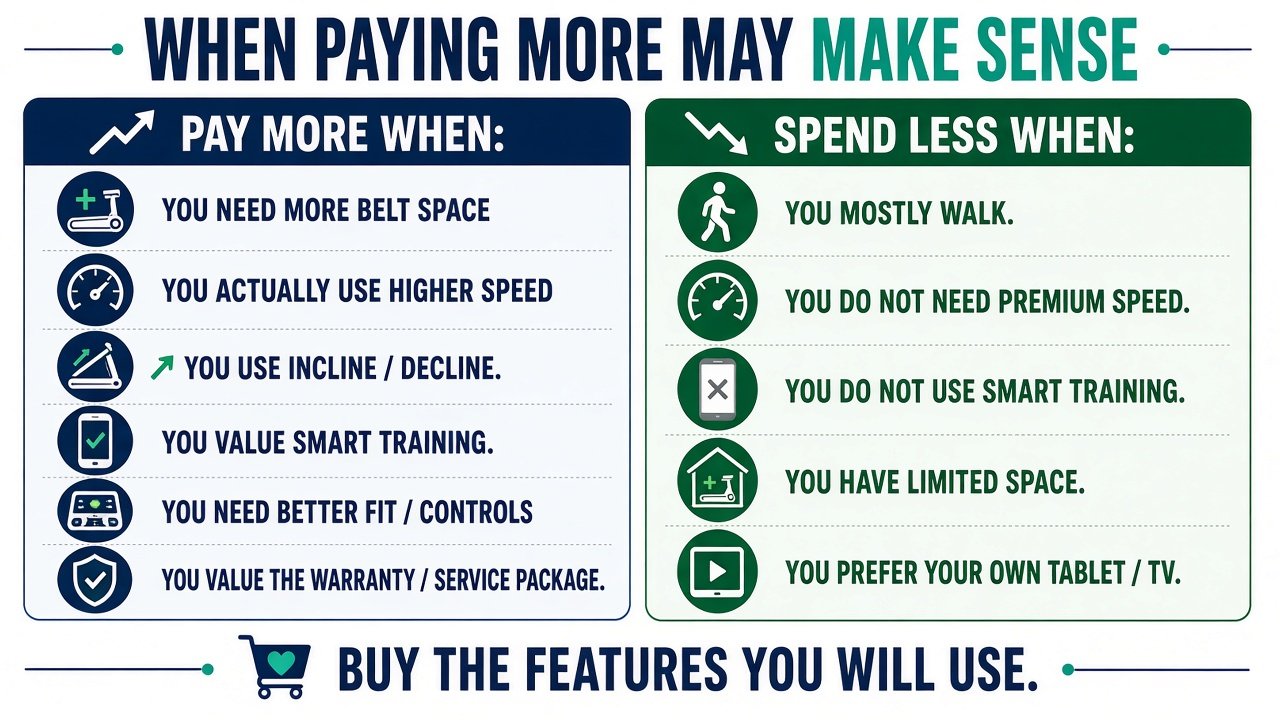
Consider paying more if a larger surface materially improves running fit, you use higher speed, you use incline/decline, smart training is genuinely important, physical controls matter, the warranty/service package matters for how you buy, or a household needs a broader speed/grade set. Do not infer extra durability from more users.
Consider spending less if you mostly walk, have modest speed needs, have limited space (premium ≠ compact), have no interest in a smart ecosystem, do not need steep or negative grade, already use a tablet/TV, or prefer simple controls. A walking pad can be the cheaper category if the job is under-desk walking—see home-office walking pads—without turning this page into a pad roundup. Capacity: do not pay for a 400 lb rating if a 325 lb current rating already covers you; no invented buffer. Heavy-user hardware is a different article if capacity is the actual constraint.
How to Compare Two Treadmills at Different Prices
Stay on value, not a full buying guide. (1) Belt width × length. (2) Speed you will use. (3) Incline/decline you will use. (4) Fit/capacity without treating the number as strength. (5) Space and whether you will fold. (6) Separate screen/software from hardware. (7) Subscription vs manual mode. (8) Warranty split and channel. (9) Current selling price, not only MSRP. (10) Which extras you will use. Financing is not affordability proof. Sale stickers are not value proof.
Final Verdict: Are Expensive Treadmills Worth It?
Do not ask whether a $3,000 machine is better than a $1,000 machine. Ask what the extra money buys, which differences are hardware, which are software, and which you will use. For this are expensive treadmills worth it question, a premium 1750-class stack can be rational for a runner who wants 22″ × 60″, decline, and iFIT auto-follow they will pay for. A Horizon-class 20″ × 60″ / 15% / QuickDial™ deck can be the better purchase if you will not fund a touchscreen ecosystem. An entry console with a shorter belt can fit if 10 MPH and 53″ of length match the user. Expensive treadmill worth it is buyer-specific. Cheap vs expensive treadmill is the wrong frame if the cheap one fits and the expensive one is unused software.
FAQ
Are expensive treadmills really better?
Not automatically. Better only for the differences you use. Price is not a quality score. Repeat: are expensive treadmills worth it only as a fit question.
Do premium treadmills last longer?
Not as a fact we can support here. Warranty length is not lifespan.
Is a bigger treadmill motor worth paying for?
Only if the maker’s exact term maps to a need you have. HP vs CHP is not durability proof and is not, by itself, a premium-value proof.
Is a large touchscreen worth it?
If you will use onboard trainers and entertainment. If you already have a tablet or TV, maybe not. Screen ≠ better treadmill.
Are treadmill subscriptions worth it?
If you will keep using the library and auto-adjust features at current published prices. If not, do not overpay for software you will not use.
Is a midrange treadmill enough for running?
It can be if belt and speed match—Horizon’s 20″ × 60″ and 12 MPH are a current running-capable hardware example. Match the runner, not the label.
Should walkers buy expensive treadmills?
Not required. Some walkers still want incline or a longer belt. Many do not need premium running hardware or a 16″ coach screen.
Does a longer warranty mean better quality?
No. It is coverage language, often split by part. Read the table.