
The usual shopping question is not “what is the best first-aid kit on earth.” It is: why buy something like The Roadie instead of keeping a normal first-aid kit in the car? This Redi Roadie vs car first aid kit comparison treats those as different product scopes. Moon Picke checked The Roadie’s live page on October 4, 2026. We did not carry both kits, time access, or use medical supplies. See how we evaluate and our editorial standards.
This article compares consumer readiness products and does not provide medical or emergency-care instruction. Appropriate training and professional emergency services remain important in an actual emergency.
Quick answer
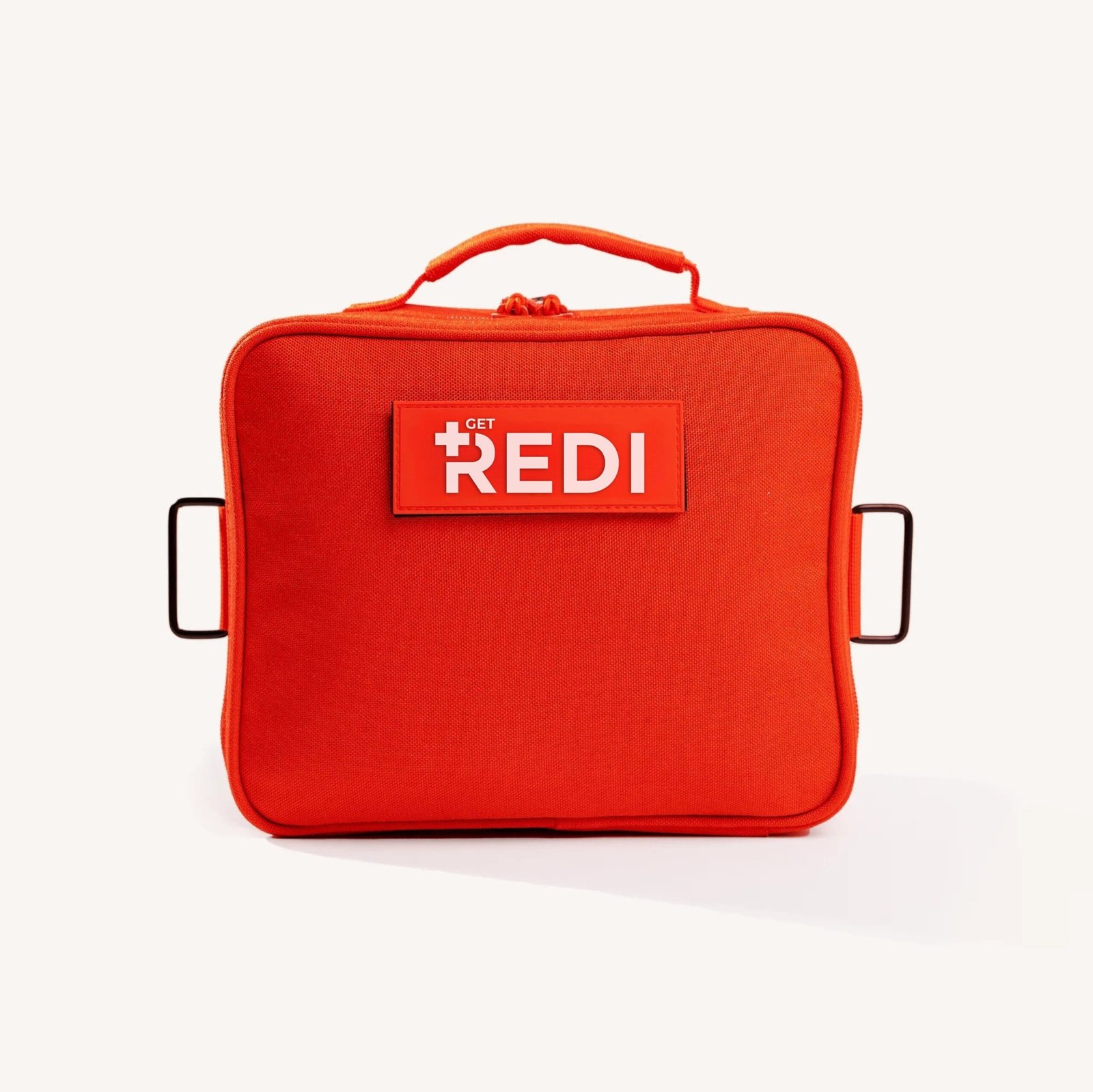
The Roadie and a conventional car first-aid kit are not automatic equivalents. Live Roadie (October 4, 2026): $159.99, in stock, 115 counted items, 9.4″ × 8″ × 3.3″ 1000D Cordura bag plus three car attachments. Weight is not listed on the specs block. Scope: mixed first-aid, OTC packets, small tools, a pen flashlight, mounts, refill QR codes, and expiration-reminder copy. A typical basic car first-aid kit is a narrower category—often bandages, gauze, and wipes in a small case, with contents that vary widely. Main difference: extra categories (tools, mounts, restock workflow), not a claim of better medical care. Main Roadie advantage: one labeled bag for supplies plus limited vehicle-readiness extras. Main trade-off: higher price and more bulk than a glovebox tin. Choose Roadie if you want that preassembled mix and do not already own most of it. Choose a simpler kit if first-aid supplies were the only gap. Pricing checked October 4, 2026. Prices and availability may change.
Disclosure: Moon Picke may earn a commission if you purchase through links on this page, at no additional cost to you. See our affiliate disclosure.
Check Current Redi Roadie Price
Roadie vs first aid kit: at a glance
| Factor | Redi Roadie (live) | Traditional car first-aid kit (category) |
|---|---|---|
| Primary purpose | Readiness Kit mixing first aid, everyday packets, and tools | Usually injury-oriented supplies; exact mix varies |
| Medical supplies | Bandages, gauze, PPE, OTC packets, booklet (as listed) | Common: bandages/gauze/wipes; extras depend on kit |
| Non-medical gear | Knife, tape, flashlight, mounts, poncho, whistle, and more on Redi’s tools list | Less common in basic kits; some add a light or scissors |
| Organization | Book-style opening, mesh, labels, color-coded pouches (Redi) | Varies: tin, pouch, or hard case; often simpler |
| Training | First-aid booklet; QR for refill packs on this page | Varies by manufacturer; some include a paper guide |
| Refills | QR plus website refill packs (Redi) | Usually buy replacements from any store; branded refills uncommon |
| Expiration management | FAQ: average 2–4 years plus email reminders | Owner typically inspects dates; systems vary |
| Size | 9.4″ × 8″ × 3.3″ | Often smaller; no single category size |
| Price | $159.99 (no compare-at listed) | No universal price; many basic kits cost less |
| Best for | One preassembled car bag if you lack that mix | Drivers who only wanted first-aid supplies |
The Short Version
Choose Roadie if: you want one labeled bag that mixes first-aid supplies with tools, a listed flashlight, and car mounts; you value Redi’s refill QR and expiration-email FAQ; you are starting with little existing vehicle gear.
Choose a simpler first-aid kit if: your only goal is bandages and basic wound supplies; you already own lights, tape, and tools; you want minimum size and spend; you prefer to pick every component yourself.
Neither replaces EMS, roadside assistance, or training. A smaller kit is not “junk.” A higher price is not automatically better care.
What is the Redi Roadie?
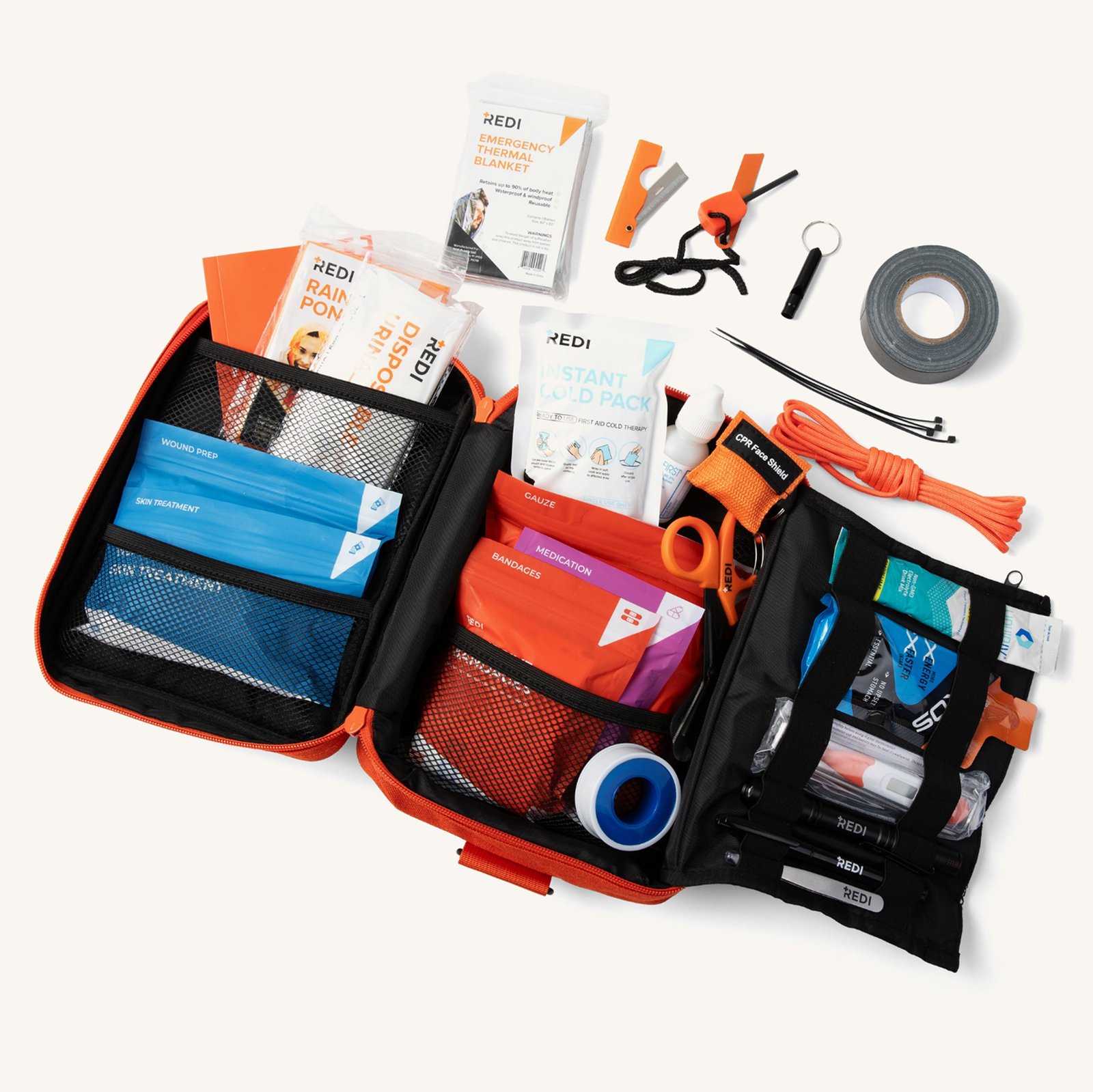
Exact current name: The Roadie. SKU ROAD-RET-OR-02-111. Type: Readiness Kit. Redi describes 115 items as a blend of lifestyle, first aid, and helpful tools, with a purpose-built case, book-style opening, and three car attachments. This page is not a second full Redi Roadie vs car first aid kit dump of every packet. Categories matter more than reciting 115 lines.
What do we mean by a “traditional car first aid kit”?
That phrase is a product category, not one standardized SKU. Contents, piece counts, and prices vary. Many basic consumer kits focus more narrowly on adhesive bandages, gauze, antiseptic wipes, and a small pair of scissors or tweezers. Some also include a booklet, gloves, or a cold pack. Some are 12-piece travel tins; others are 80-plus-piece hard cases. Premium standalone first-aid kits can be larger and more organized without becoming a vehicle-readiness bag.
Illustrative current U.S. examples—not a definition of the entire category, and not this article’s subject: a Lifeline AAA-branded 85-piece commuter kit listed around $16–$25 in recent retail listings, in a roughly 7″ × 6″ × 3″ hard case; Johnson & Johnson mini “to-go” kits often sold well under $10. Those figures will change. Do not treat them as the price of “all first-aid kits.”
Roadie and a first aid kit solve different-sized problems
A first-aid kit is generally health- and injury-oriented, depending on the exact box. The Roadie, on current Redi copy and contents headings, is a broader readiness bag: first-aid pouches plus essential tools, medications, glucose/electrolytes, and vehicle mounts. Extra equipment—not raw item count—drives this comparison. 115 pieces includes multiples of bandages and wipes; it is not 115 distinct capabilities. Roadie is not a better medical-treatment product, not certified as a workplace kit, and not a treatment platform.
The biggest difference: product scope
| Capability | Redi Roadie (verified listing) | Typical basic car first-aid kit |
|---|---|---|
| Basic first-aid supplies | Yes — bandage pouch, creams, wipes, booklet | Common |
| Dressings / gauze | Yes — pads, roll, abdominal pad, wrap | Common, assortment varies |
| PPE | Yes — two pairs nitrile gloves; CPR shield | Depends on kit |
| Trauma-focused supplies | Limited: 6″ trauma shears, abdominal pad, wound-closure strips. Tourniquet/chest seal not listed | Usually limited or absent in basic kits |
| Lighting | Pen flashlight, batteries included | Less common |
| Vehicle-readiness equipment | Three listed car attachments | Usually none |
| Emergency tools | Knife, tape, zip ties, paracord, tweezers, shears, marker, flint, urinal | Often scissors/tweezers only |
| Weather-related supplies | Poncho listed. Thermal blanket not on the written list | Less common |
| Power | No listed jump starter or power bank | Typically none |
| Organization system | Mesh, labels, color-coded pouches | Varies; often one compartment |
| Training resources | Booklet; QR for refills on this page | Varies |
| Refill support | Yes — Redi refill packs | Usually generic replacements |
| Expiration management | Average 2–4 years + email (FAQ) | Owner-managed, varies |
What Roadie adds beyond first aid
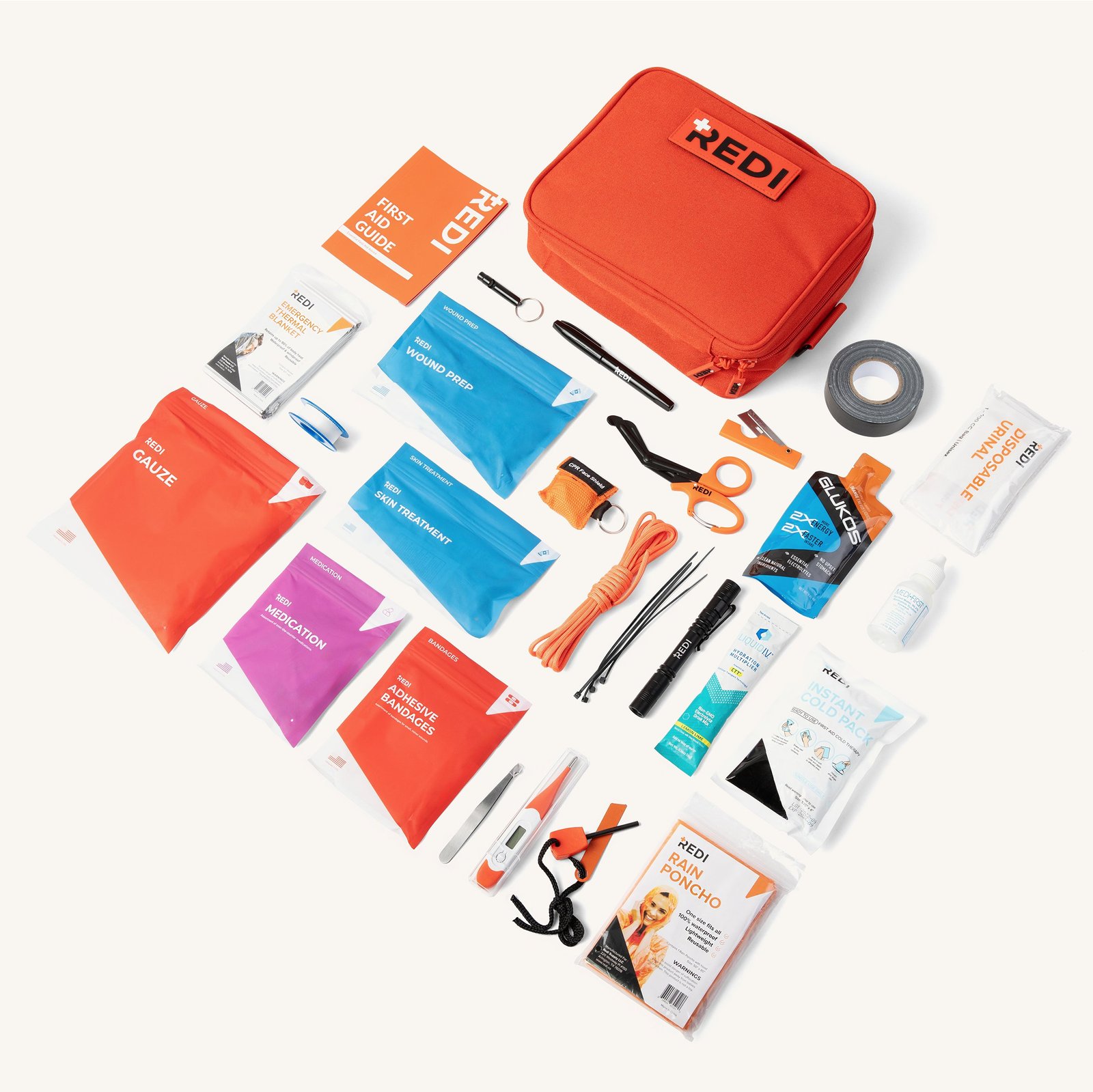
Verified items outside ordinary bandage-box categories include: a pen flashlight; whistle; poncho; fixed-blade knife; duct tape; zip ties; paracord; flint; emergency urinal; instant cold pack; three car-mount pieces. One flashlight is not a roadside lighting system. One knife and tape are not a repair shop. One poncho is not a winter survival kit. Power equipment is not listed. Those extras still change the shopping question from “tiny medical tin” to “organized catch-all bag.”
First-aid and trauma-focused contents
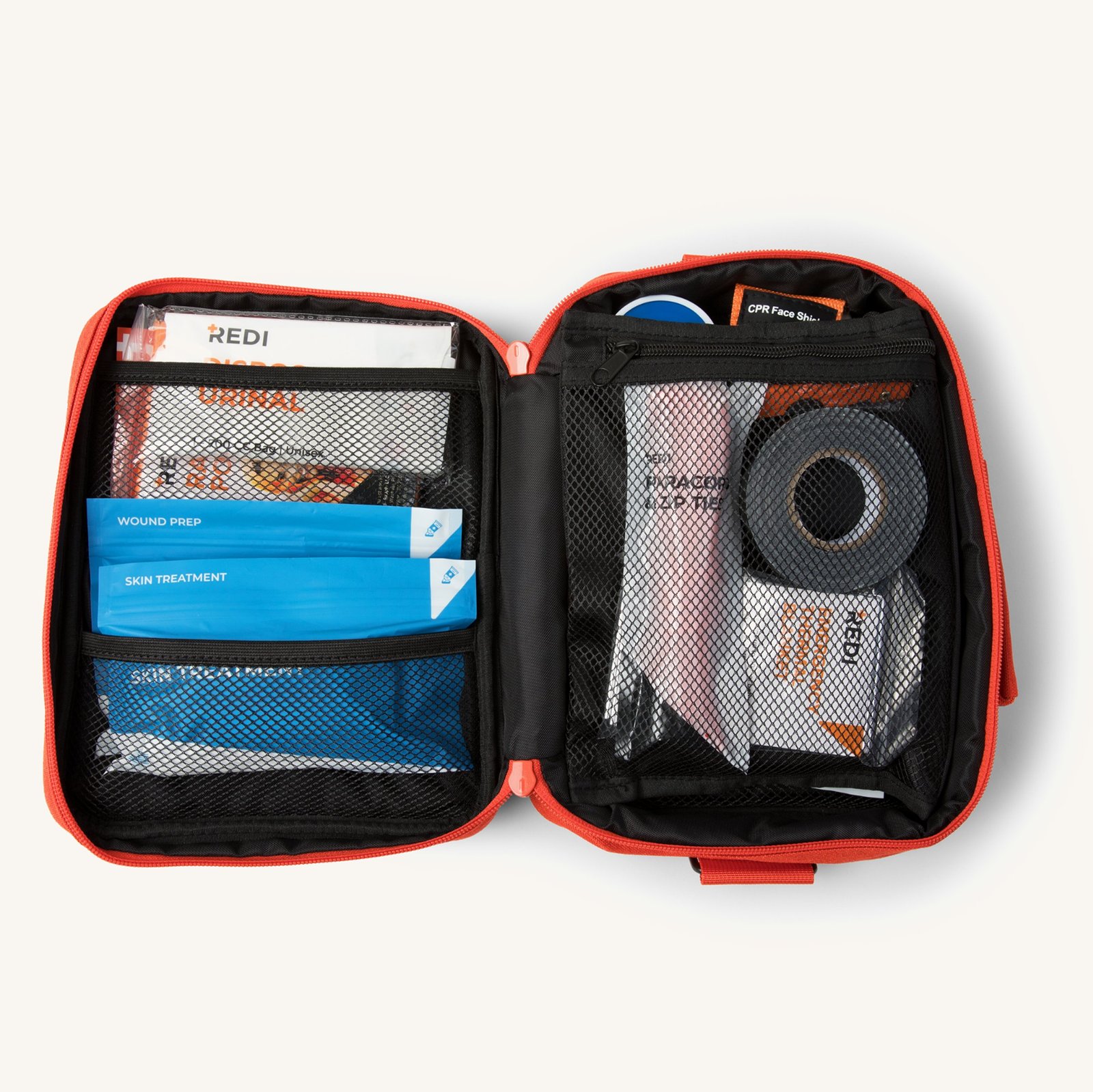
Redi’s first-aid block covers assorted latex-free adhesive bandages, blister pads, gauze pads and a roll, non-adherent pads, eye pads, an abdominal pad, cohesive wrap, skin-treatment and wound-prep packets, gloves, a CPR shield, thermometer, tape, eye wash, and a first-aid booklet. OTC packets are named with “comparable to” brand notes. This comparison does not list every count—future contents explainers can—and it does not say how or when to use any item.
Trauma-oriented pieces on this SKU are limited: 6″ trauma shears, an abdominal pad, wound-closure strips. A tourniquet is not listed. Do not treat “trauma shears” as a full bleed-control module. FAQ language about an “emergency pressure bandage” being latex-free is not the same as a named tourniquet brand. Cohesive wrap is not latex-free per the FAQ.
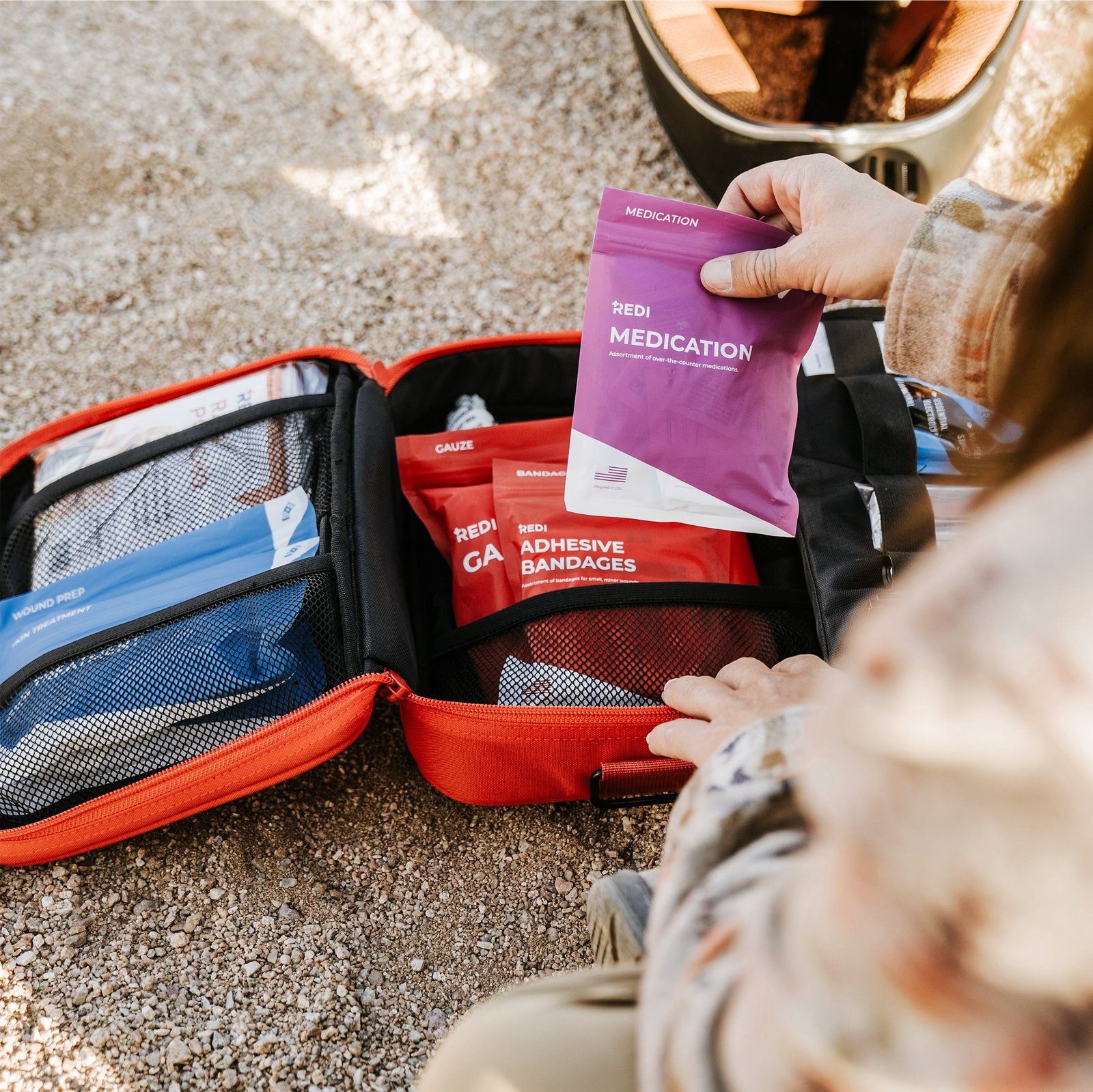
Non-medical vehicle-readiness contents
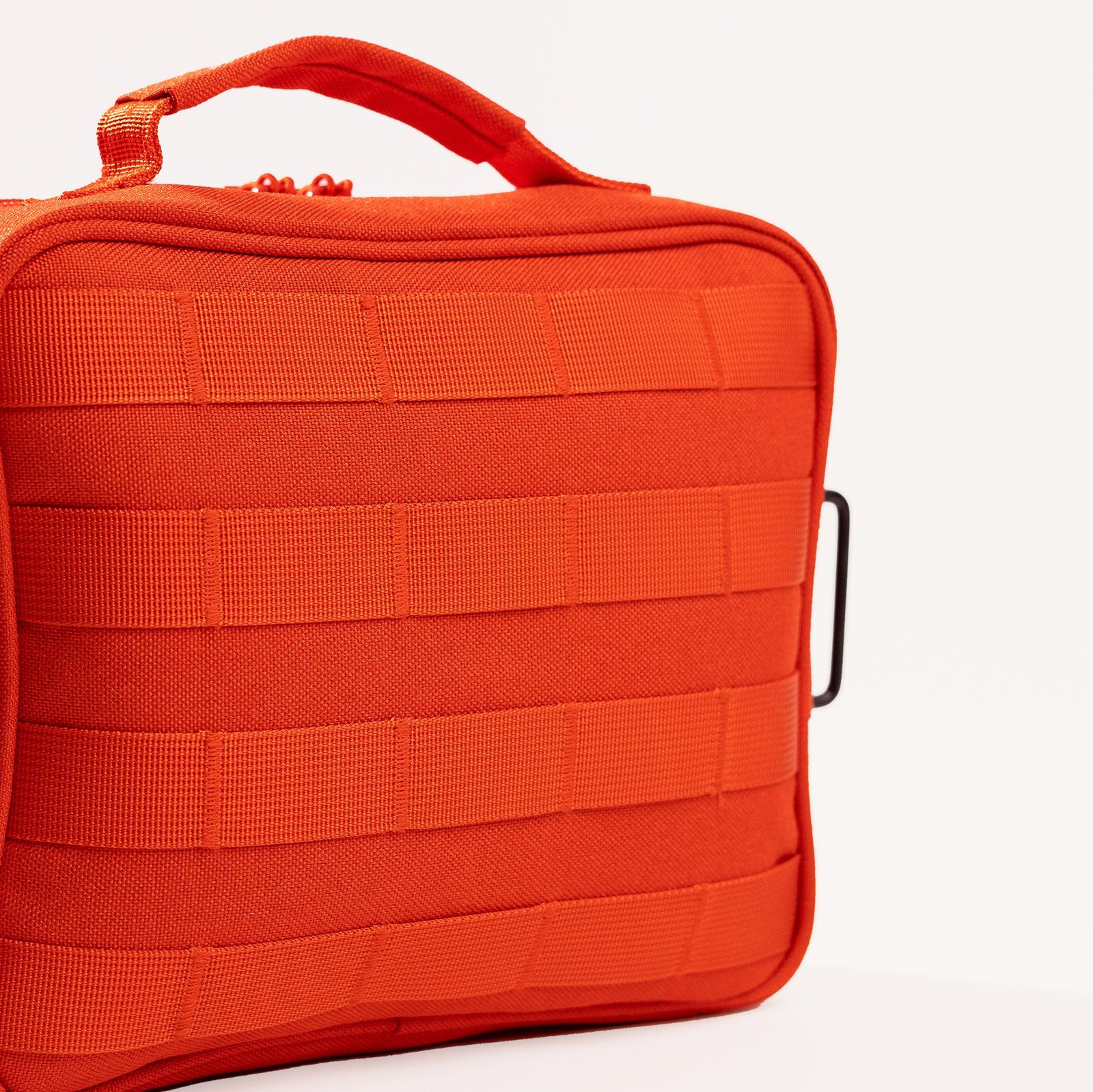
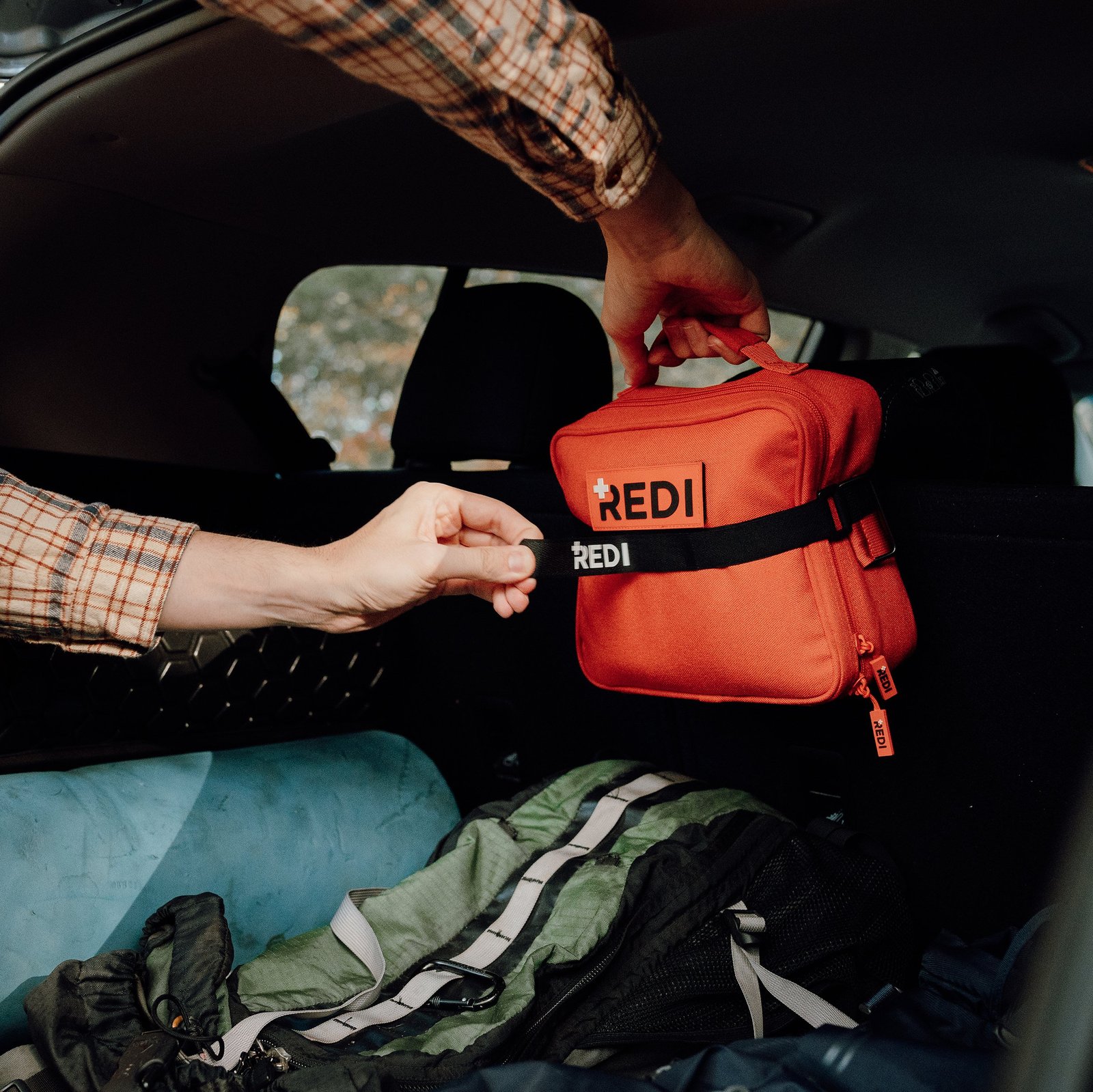
Mounts: Velcro pad (Redi: carpeted interiors / seat back), Velcro strap, buckle strap. Tools as above. Signaling: whistle. Lighting: pen light. Hydration-adjacent: electrolyte and glucose packets—not drinking water. No jumper cables, inflator, or tow strap on the current list.
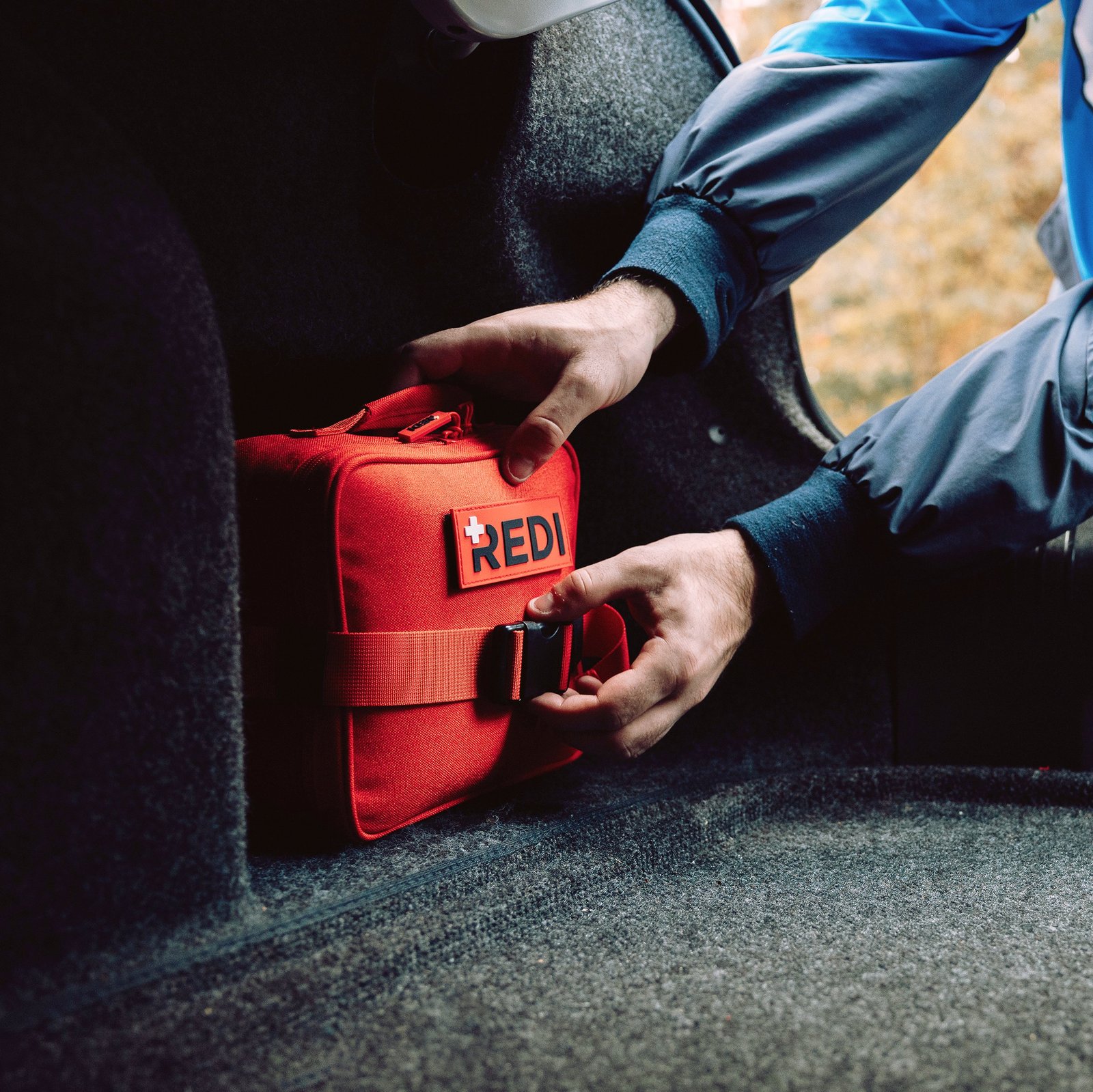
Organization
Redi: see-through mesh, readable labels, compartments color-coded by product type, book-style opening. Content lists and quantities are printed to support replenishing. Many compact first-aid kits use a single tray or a few elastic loops. That is a design difference, not a timed Moon Picke usability test. Labeled organization may appeal to buyers who dislike digging through a stuffed tin. It does not prove faster access in an emergency.
Training
On The Roadie page: a listed first-aid booklet, plus QR codes inside the kit for refill packs. This SKU’s page does not list the video-trainer roster used on some other Redi products. Training resources on generic first-aid kits vary by manufacturer; some include a folded guide, some do not. Do not write that “normal kits provide no training.” Redi’s booklet and QR are not CPR, first-aid, or EMS certification.
Refills and expiration management
Redi: restock via in-kit QR and website refill packs. That matters if you will actually use wipes and bandages and want matching pouches. Any kit with consumables needs inspection, replacement after use, and attention to dates—not only Roadie. FAQ: average expiration 2–4 years, with emails when items nears those dates. That average is not one lifespan for the whole bag. Warranty is not listed on the product page.
Size and portability
Roadie: 9.4″ × 8″ × 3.3″. Weight: NOT LISTED on the specs block. Broader scope means more bulk than many glovebox tins. That is a real disadvantage if you wanted something that disappears under a seat. Transfer between cars is plausible as a zippered bag with straps; backpack carry is possible but 9.4″ × 8″ is not pocket-sized. Redi’s FAQ says the Roadie is designed to be left in the car year-round. The kit still contains medications and adhesives; this article will not invent a temperature chart. Report Redi’s year-round sentence and the presence of dated consumables together.
Price and value
Live Roadie: $159.99, no compare-at. There is no universal first-aid-kit price. Illustrative current examples (not a category floor or ceiling): mini travel kits often under $10; an 85-piece AAA-branded commuter case recently listed in the high teens to mid-twenties. Larger branded boxes vary. The extra money versus a basic tin can reflect more content categories, a Cordura case, mounts, labels, refill SKUs, and reminder emails—not “more items” as a quality score. Higher price does not mean better medicine.
Check Current Roadie Availability
Do you actually need more than a first aid kit in your car?
If the job is carrying basic first-aid supplies, a conventional kit can be the rational buy. If you already own a flashlight, tape, knife, and a first-aid box, Roadie’s incremental value shrinks—you would be paying for curation, one-case storage, and Redi’s restock workflow as much as for new hardware. If you own almost none of that and want it pre-sorted, Roadie’s extra categories are easier to justify. If you expected jump-start or inflation hardware, neither a basic first-aid kit nor this Roadie listing is that product.
Roadie vs building your own car readiness setup
Roadie: convenience, preselection, labeled bag, booklet, refill QR, reminder emails. DIY: choose brands, skip the urinal or flint, use gear you own, control budget. This is not a “25 things every car must carry” list. Moon Picke did not price a clone cart, so there is no invented “build Roadie for $70” claim.
Who is Roadie better for?
Drivers who want one broader preassembled bag; households transferring a kit between cars; buyers who value labels, mounts, and Redi refills; people starting with little existing vehicle gear. Specialized medical items still benefit from training you get elsewhere.
Who should choose a simpler first aid kit?
Minimalists; budget-focused shoppers; anyone who already has roadside tools and only needed bandages; people who want to specify every component. A small kit can be the better purchase. Premium first-aid kits exist too: the split is content scope, not “cheap versus expensive.”
Who should buy neither as a complete answer?
Anyone who needs occupation-specific or workplace-mandated equipment, or who expects a consumer bag to replace professional roadside help or emergency medical care.
Roadie advantages
- Broader published scope than many bandage-only tins (tools, light, mounts).
- Book-style, labeled, color-coded organization on the current page.
- QR refill path and a named refill catalog.
- Expiration-average FAQ plus email reminders.
- One-case convenience if you do not already own the extras.
- Three documented car-attachment options.
Roadie trade-offs
- Higher live price than many basic kits.
- More bulk (9.4″ × 8″ × 3.3″) than a travel tin.
- Duplication if you already own lights, tape, and a first-aid box.
- More consumables to watch and restock.
- Not everyone needs flint, an urinal, or 115 counted pieces.
- Limited trauma hardware; no listed tourniquet or jump starter.
FAQ
Is the Redi Roadie a first aid kit?
It includes first-aid supplies, but Redi types it as a Readiness Kit with tools and mounts. It is broader than many first-aid-only products and is not a professional medical kit.
How is Roadie different from a regular car first aid kit?
This Redi Roadie vs car first aid kit split is scope: extra non-medical categories and a labeled case, not proven better treatment.
How many items are in the Roadie?
Redi lists 115. Multiples of bandages and wipes count separately.
Does Roadie include first-aid supplies or a tourniquet?
Yes to listed first-aid supplies. A tourniquet is not listed on the current page.
Does Roadie include roadside or power equipment?
It lists car mounts, tape, ties, a light, and similar tools. No jump starter or inflator is listed.
Does Roadie provide training?
A first-aid booklet and refill QR codes are listed. That is not a certification course. Generic kits’ instructions vary.
Do supplies expire, and can Roadie be refilled?
FAQ: average 2–4 years with email reminders; restock via QR and website packs. Any consumable kit needs checks.
How big is the Roadie, and is it worth the extra cost?
9.4″ × 8″ × 3.3″; weight not listed on the specs block. Extra cost is easier to justify for the case, mounts, and mixed categories—not for item count alone.
Do I need Roadie if I already have a first-aid kit?
Only if you still want the non-medical extras, organization, and refill system. Otherwise a simpler kit plus gear you own may be enough.
Final verdict
Buy The Roadie instead of a normal car first-aid kit when you want one pre-labeled bag that mixes first-aid supplies with tools, a small light, and vehicle mounts, plus Redi’s refill and reminder workflow, at $159.99. Keep a simpler first-aid kit when that medical-supply category is the only gap, or when you already own the extras. Roadie is not safer medicine, not a 115-skill system, and not a substitute for professional help.
Sources: getredi.com The Roadie (checked October 4, 2026). Illustrative first-aid-kit examples cited as category context only, not as a roundup.