
The best dash cam is not simply the model with the highest resolution. Video quality, night performance, parking coverage, camera configuration, storage, power requirements, app reliability, and installation all matter when choosing the right setup for your vehicle.
Moon Picke reviewed current manufacturer specifications, manuals, support material, and current product availability for this guide. We have not independently road-tested every model below, so manufacturer performance claims remain manufacturer claims. Read more about how we evaluate products.
Amazon disclosure: As an Amazon Associate I earn from qualifying purchases. Commercial links do not determine our editorial conclusions. See our Affiliate Disclosure.
Best Dash Cams for 2026: Quick Picks
| Model | Best fit | Configuration | Documented headline capability | Main commitment |
|---|---|---|---|---|
| Thinkware U3000 PRO 2CH | Parking-focused ownership | Front + rear | 4K front, 2K rear; dual radar parking modes | OBD or hardwire setup; optional LTE module |
| BlackVue ELITE 10-2CH | Premium dual-4K coverage | Front + rear | 4K front and 4K rear at 30 fps | High storage use; parking add-on required |
| BlackVue DR970X-2CH LTE Plus II | Built-in cellular connectivity | Front + rear | 4K front, Full HD rear, built-in LTE | Compatible SIM/data service and cloud setup |
| BlackVue DR970X Box-2CH Plus | Discreet, tamper-resistant installation | Front + rear + separate recorder | 4K front, Full HD rear, lockable recording unit | More complex professional installation |
If parking protection leads your list, start with the Thinkware. For maximum resolution at both ends, consider the ELITE 10. BlackVue’s LTE model suits buyers who understand its carrier and cloud requirements; the Box version prioritizes a hidden recorder.
See the current premium dash-cam shortlist on Amazon →
Thinkware U3000 PRO 2CH
Thinkware U3000 PRO 2CH — Best for parking-focused owners
- Recommendation context documented in the article
- Relevant use case covered in the guide
- Trade-offs discussed in the surrounding analysis
Affiliate link. Moon Picke may earn a commission from qualifying purchases.
BlackVue ELITE 10-2CH
BlackVue ELITE 10-2CH — Best for dual-4K recording
- Recommendation context documented in the article
- Relevant use case covered in the guide
- Trade-offs discussed in the surrounding analysis
Affiliate link. Moon Picke may earn a commission from qualifying purchases.
BlackVue DR970X-2CH LTE Plus II
BlackVue DR970X-2CH LTE Plus II — Best for built-in LTE
- Recommendation context documented in the article
- Relevant use case covered in the guide
- Trade-offs discussed in the surrounding analysis
Affiliate link. Moon Picke may earn a commission from qualifying purchases.
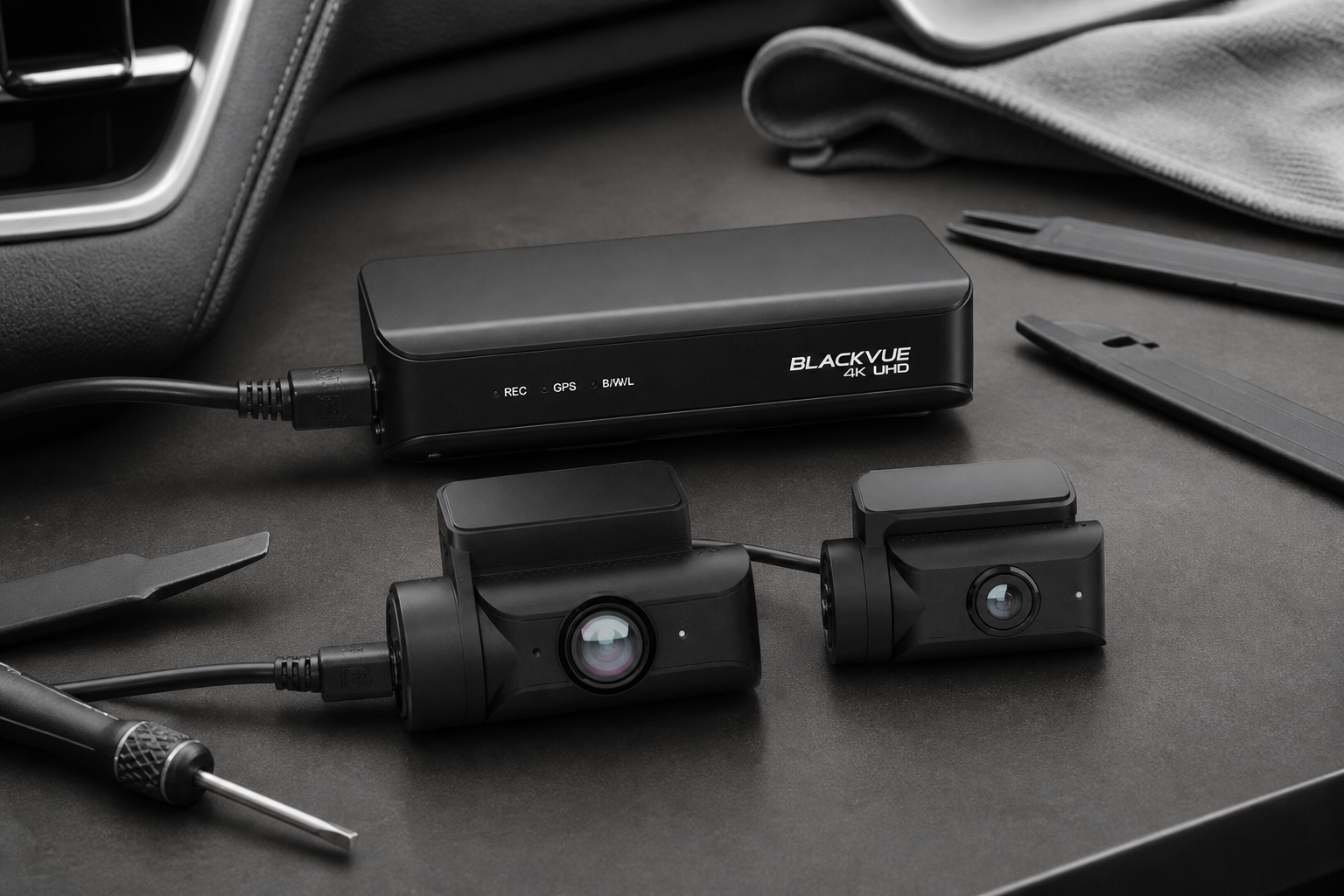
BlackVue DR970X Box-2CH Plus
BlackVue DR970X Box-2CH Plus — Best for a discreet recorder
- Recommendation context documented in the article
- Relevant use case covered in the guide
- Trade-offs discussed in the surrounding analysis
Affiliate link. Moon Picke may earn a commission from qualifying purchases.
How We Chose These Dash Cams
We compared current premium systems by their documented channel layout, sensor and recording specifications, HDR support, parking modes, GPS, wireless features, storage limits, thermal and battery safeguards, included power accessories, support documentation, and current availability. We also looked for a distinct buyer fit rather than filling the list with near-identical cameras.
A spec sheet cannot reproduce real traffic, windshield reflections, heat, app behavior, or a difficult installation. Resolution and sensor names help describe a system, but they are not substitute test results. We therefore avoid unsupported claims about plate-reading distance, night superiority, or reliability.
What Actually Matters When Choosing a Dash Cam
Front-only vs front-and-rear vs three-channel
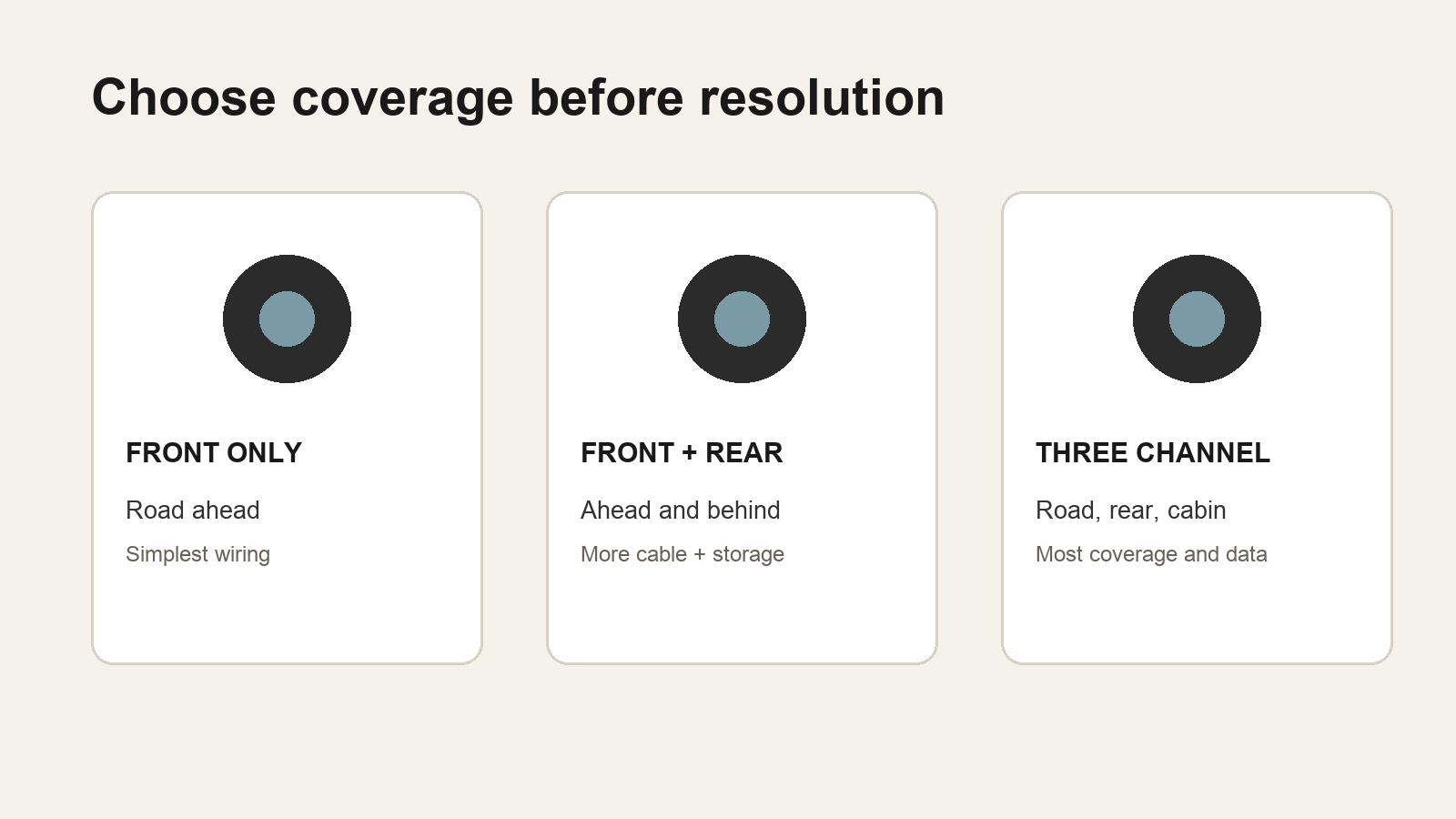
A front camera covers the road ahead with the least wiring and storage demand. Adding a rear camera records what approaches from behind but requires a cable through the cabin. A third interior camera can be useful for rideshare, taxi, fleet, or cabin documentation, while adding privacy considerations, file volume, and installation work.
Resolution and image sensor
4K gives a camera more pixels to work with, but useful detail also depends on sensor size, lens, exposure, bitrate, compression, processing, motion, and lighting. A strong front channel with a weaker rear channel is a different proposition from dual 4K. Review the simultaneous recording mode; the maximum front-only frame rate may change when other channels or HDR are active.
Night recording and HDR
HDR can help balance bright lights and darker road areas, but results vary by implementation and conditions. Avoid treating a sensor brand or “night vision” label as proof. Cabin cameras may use infrared illumination; exterior cameras generally work with available light and processing.
Parking mode
Parking recording usually needs constant power through an approved hardwire cable, OBD cable, or external battery. Event, buffered, time-lapse, low-bitrate, and low-power radar modes behave differently. Confirm what triggers a clip, how much activity comes before the trigger, and how the system protects the vehicle battery.
GPS and speed data
GPS can add location, route, time, and speed information. That context can be useful, but buyers should understand local rules and whether speed data can be disabled or omitted from exported footage.
Wi-Fi and mobile apps
Wi-Fi helps with setup and file transfer. Cloud access is a separate feature and may need an internet connection, compatible hotspot or LTE hardware, an account, and a subscription. App quality can change with firmware and phone updates, so keep a practical method for removing the card and reading files directly.
Storage capacity
Dash cams overwrite older files in a loop. More channels, higher resolution, and higher bitrate consume capacity faster. Use the exact manufacturer’s supported card type and maximum capacity, and choose a card intended for sustained video recording.
Power and hardwiring
A 12-volt plug is easier for driving recording. True ignition-aware parking behavior often needs three-wire hardwiring, an approved OBD cable, or compatible battery pack. Professional fitting can improve cable routing and reduce the risk of interfering with airbags or trim.
Best Dash Cam Recommendations
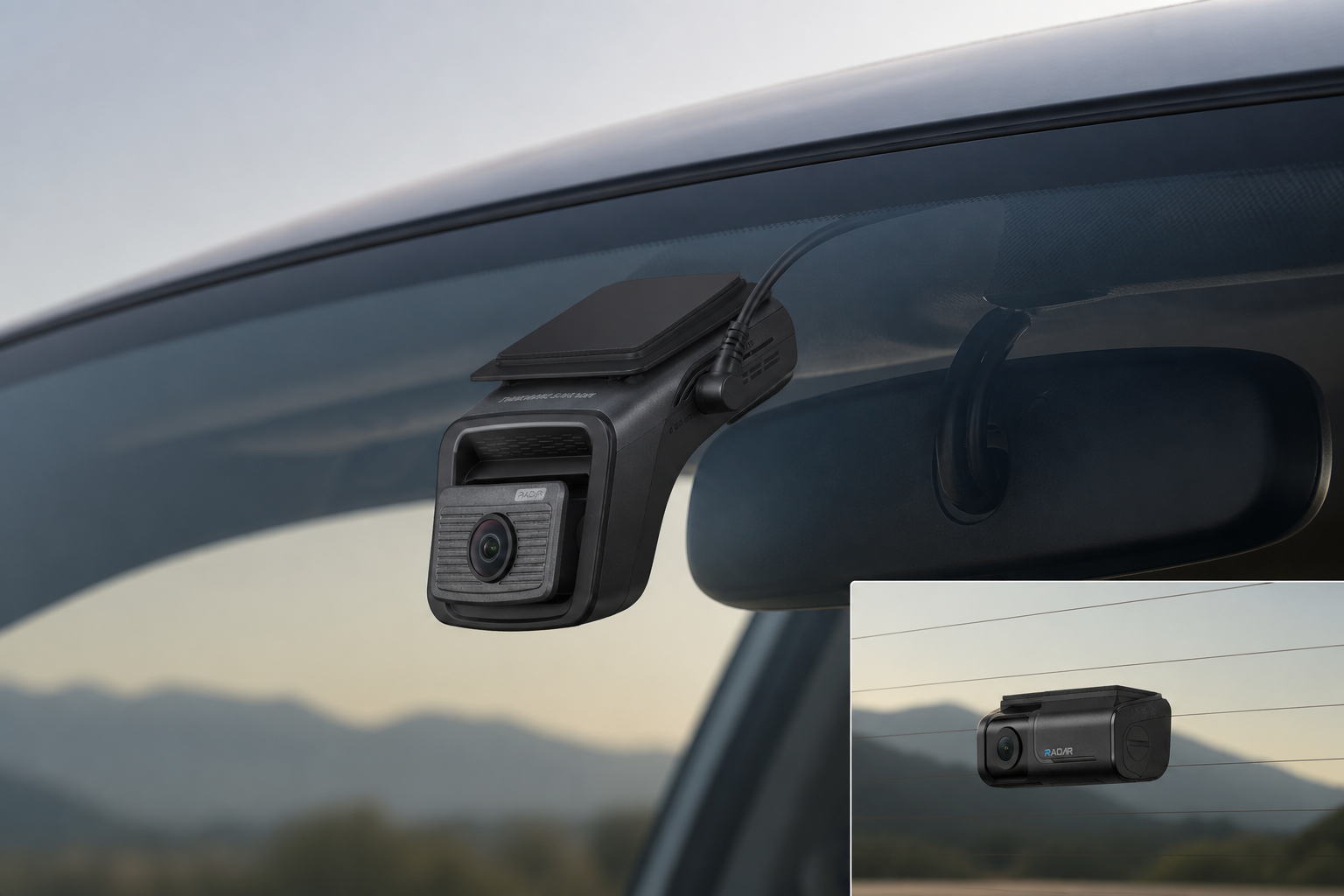
Thinkware U3000 PRO 2CH — Best for parking-focused owners
The U3000 PRO makes the shortlist because its design centers on parking coverage rather than resolution alone. Thinkware documents a 4K front channel and 2K rear channel using STARVIS 2 sensors, 5GHz Wi-Fi, GPS, support for microSD cards up to 512GB, and dual radar parking features. The current Amazon configuration includes a 64GB card and OBD cable; verify the exact package at checkout.
Its strongest fit is a driver who parks for long periods and wants low-power detection with a supported constant-power setup. The optional LTE module is separate and requires service, so do not buy the base bundle expecting cellular monitoring out of the box. Buyers who only need simple driving footage may find the setup and price excessive.
Check current Thinkware U3000 PRO price and availability on Amazon →
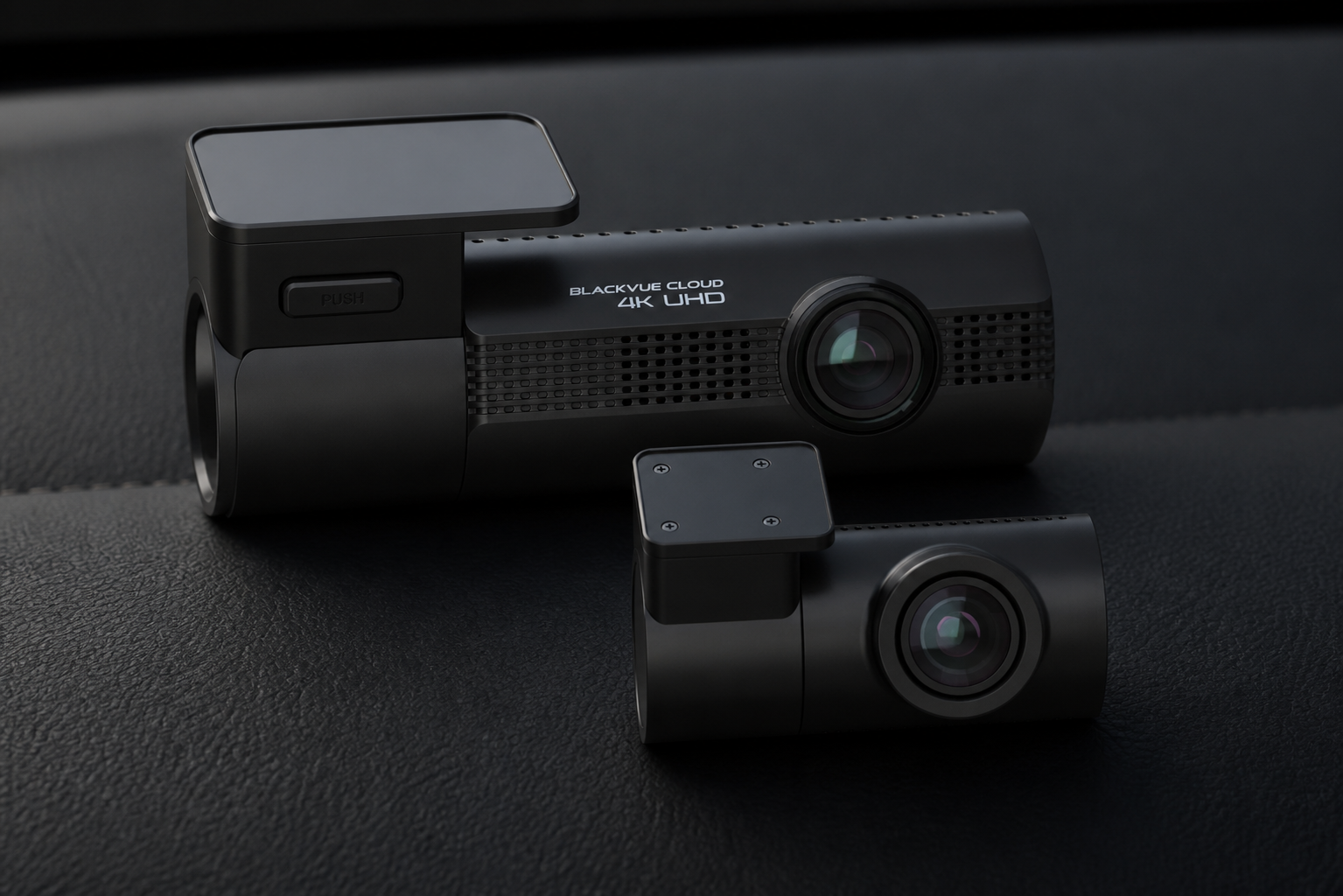
BlackVue ELITE 10-2CH — Best for dual-4K recording
The ELITE 10 stands apart with documented 4K recording at 30 fps from both front and rear cameras, each using an IMX678 STARVIS 2 sensor. BlackVue lists HDR on the front, dual-band Wi-Fi, built-in dual-band GPS, cloud compatibility, and microSD support up to 1TB. Its published parking choices include power-saving, motion-detection, and time-lapse modes, with a parking-mode add-on required.
This is the clearest fit for buyers who prioritize high-resolution rear coverage as much as the front. The trade-off is predictable: dual 4K can create large files, increase card demands, and raise the importance of correct heat, power, and storage management. Skip it if a 2K or Full HD rear view meets your needs.
Check current BlackVue ELITE 10-2CH price and availability on Amazon →
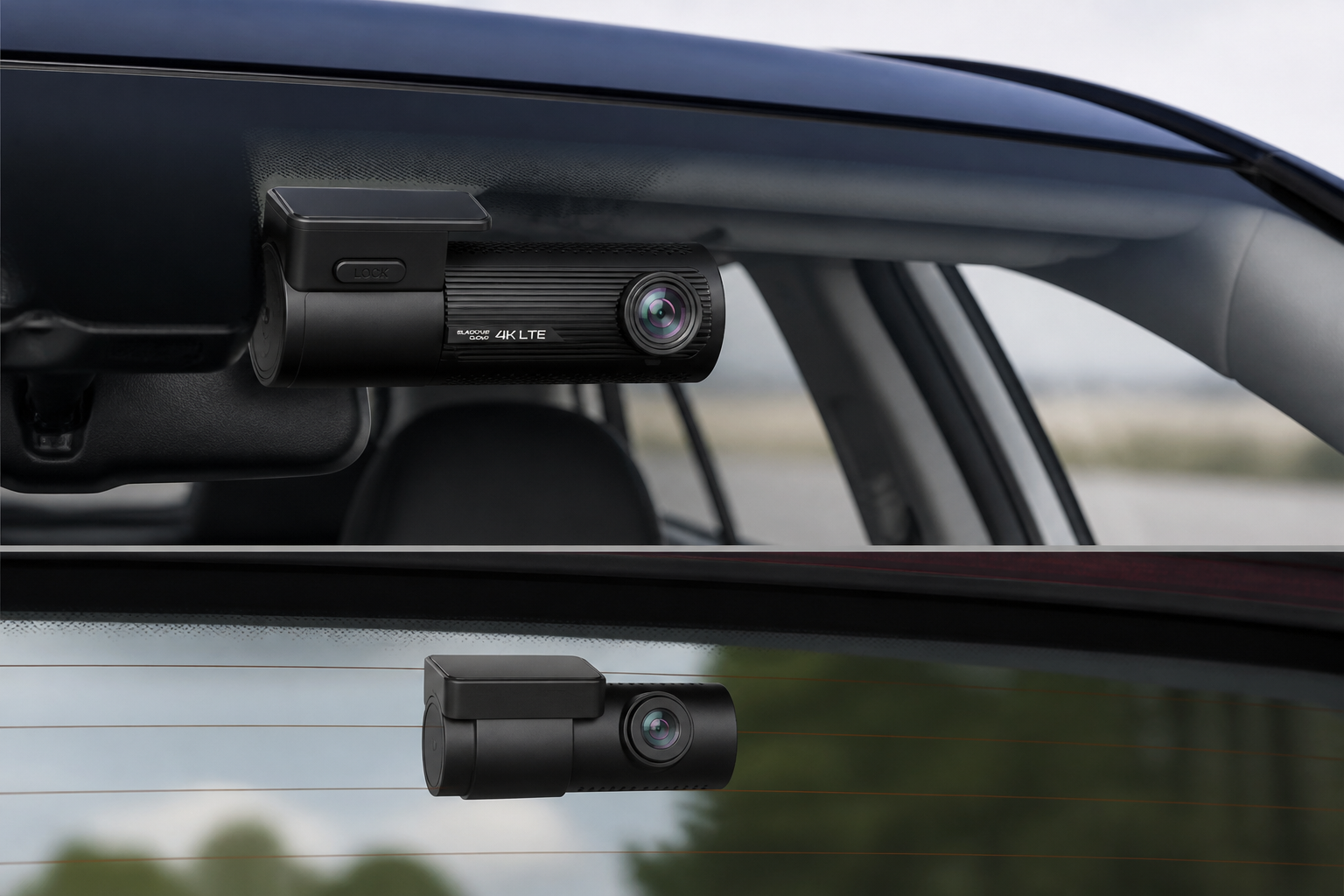
BlackVue DR970X-2CH LTE Plus II — Best for built-in LTE
The DR970X LTE Plus II combines a 4K front camera, Full HD rear camera, built-in Wi-Fi and GPS, a nano-SIM reader, cloud compatibility, parking mode, and battery-discharge prevention. The North American model’s official page specifies LTE band and carrier limits; it currently names T-Mobile support in the United States and states that a SIM card is not included.
Choose it when remote connectivity is a real requirement and you are willing to manage cellular service, cloud configuration, and power. Its rear channel is Full HD rather than the ELITE 10’s 4K, so buyers interested only in local recording may be paying for connectivity they will not use.
Check current BlackVue DR970X LTE Plus II price and availability on Amazon →
BlackVue DR970X Box-2CH Plus — Best for a discreet recorder
The Box system separates its recording unit from the visible cameras. BlackVue documents a 4K STARVIS 2 front camera, Full HD rear camera, Wi-Fi, GPS, G-sensor, cloud compatibility, up to 512GB microSD support, and a lock-protected main unit with screw-locked camera mounts. Both a 12-volt adapter and hardwiring cable are included according to BlackVue’s support material.
That layout suits buyers who value a hidden recorder and tamper resistance. It also creates more components and cable runs, making professional installation especially sensible. Buyers seeking the simplest self-install should choose a conventional two-camera system.
Check current BlackVue DR970X Box-2CH Plus price and availability on Amazon →
Front vs Front-and-Rear vs Three-Channel Dash Cams
Two-channel coverage is the practical center of this shortlist: it documents the road ahead and activity behind without recording the cabin. A three-channel system becomes worthwhile when interior evidence has a defined purpose. More cameras are not automatically better; they consume more storage, require more wiring, and can make installation and privacy management harder.
Is 4K Worth Paying More For?
4K can preserve more front-camera detail and provide more cropping flexibility, but it cannot guarantee a readable plate in glare, darkness, rain, or motion. The ELITE 10’s dual-4K layout is meaningful for buyers who place equal value on rear detail. The Thinkware and DR970X models prioritize other strengths while using lower-resolution secondary channels.
Consider the complete recording mode and card requirements. Higher bitrate and more channels reduce recording time before loop overwrite. A carefully installed 2K rear camera can be more useful than an ambitious specification paired with poor placement or a dirty window.
Parking Mode: What Buyers Often Miss
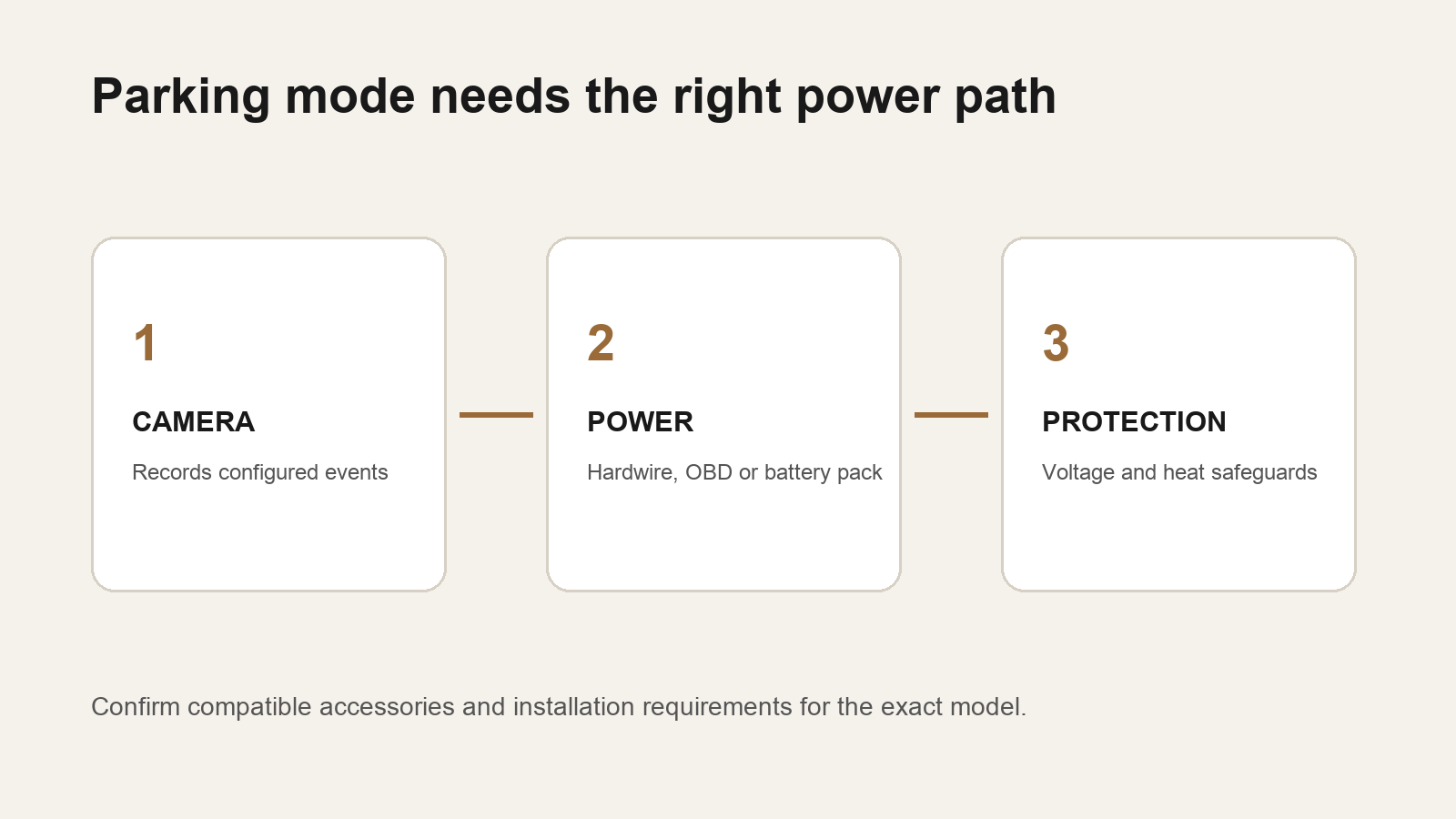
Parking mode is a system, not a checkbox. The camera needs an appropriate trigger, reliable power, correct cutoff settings, and enough storage. Thinkware’s radar-based modes emphasize lower-power detection. BlackVue supports model-specific motion, time-lapse, event, and power-saving behavior, but the required cable or add-on varies.
Check vehicle compatibility before using an OBD port, and do not route wiring across airbag deployment paths. A voltage cutoff reduces risk but does not make battery condition irrelevant. Long parking periods, cold starts, and an aging battery justify conservative settings or a dedicated dash-cam battery pack.
Dash Cam Storage and Memory Cards
Use high-endurance cards from the model’s supported list. The U3000 PRO supports up to 512GB; the DR970X Box Plus documentation also lists up to 512GB, while the ELITE 10 supports up to 1TB. Capacity alone is insufficient: speed class, endurance, file system, firmware support, and routine formatting matter.
Protect important clips promptly because loop recording overwrites older footage. Keep firmware current, respond to card-error alerts, and replace a card that develops repeated recording or formatting failures.
What Does a Good Dash Cam Setup Really Cost?
The real setup can include the camera package, high-endurance card, hardwire or OBD cable, optional LTE hardware and data plan, parking battery, CPL filter, professional installation, and replacement adhesive or cables. Included accessories differ by listing. Use Amazon’s current product page and the manufacturer’s package list rather than assuming every photographed accessory is included.
Which Dash Cam Should You Choose?
Choose the Thinkware U3000 PRO if parking protection and radar-assisted low-power behavior lead your priorities. Choose the ELITE 10 when dual-4K front-and-rear recording and large storage support justify the cost. Choose the DR970X LTE Plus II for built-in cellular connectivity after confirming carrier support. Choose the DR970X Box Plus when a separate, lockable recorder and discreet cameras matter more than easy installation.
None is universally best. Start with coverage and parking requirements, then accept only the installation, subscription, storage, and maintenance burden you will actually manage.
Final Verdict
For most premium buyers in this group, the Thinkware U3000 PRO offers the most differentiated parking-focused package, while the BlackVue ELITE 10 is the stronger fit for dual-4K coverage. The DR970X LTE Plus II is a specialist choice for connected monitoring, and the Box Plus is the installation-led option for discretion.
Compare the current premium options on Amazon →
Frequently Asked Questions
Is a 4K dash cam worth it?
It can be when the rest of the imaging system, bitrate, installation, and storage support the resolution. 4K does not guarantee readable detail in every condition.
Should I get a front and rear dash cam?
Yes if incidents behind the vehicle are important enough to justify the extra cable and storage. Front-only remains reasonable for a simpler setup.
Do dash cams record when the car is parked?
Only when the model supports parking recording and receives the required constant power. Modes and accessories vary by product.
How much storage does a dash cam need?
It depends on channels, resolution, bitrate, and how long you want footage retained before overwrite. Stay within the exact model’s supported capacity.
Do I need to hardwire a dash cam?
Not always for driving recording. Parking features often require hardwiring, a compatible OBD cable, or a dedicated battery pack.
Can a dash cam drain a car battery?
A constantly powered camera can consume battery energy. Use documented voltage protection, conservative settings, and a healthy vehicle battery; consider a dedicated pack for extended parking.