
The ChargePoint Home Flex is aimed at homeowners who want a premium, connected Level 2 charger with enough electrical flexibility to suit both today’s EV and a possible future upgrade. Choosing a home charger is not simply a contest for the highest kilowatt figure: the available circuit, charger amperage, vehicle’s onboard AC charging limit, connector, installation method, cable reach, smart features, and long-term ownership all shape the result.
This ChargePoint Home Flex review covers the hardwired J1772 configuration, model CPH50-HARDWIRE-L23-K, sold on Amazon under ASIN B0C6YMS4KH. Moon Picke has not independently installed, electrically tested, or used this charger or its app. The assessment below is based on current manufacturer specifications, installation guidance, and support documentation.
As an Amazon Associate I earn from qualifying purchases.
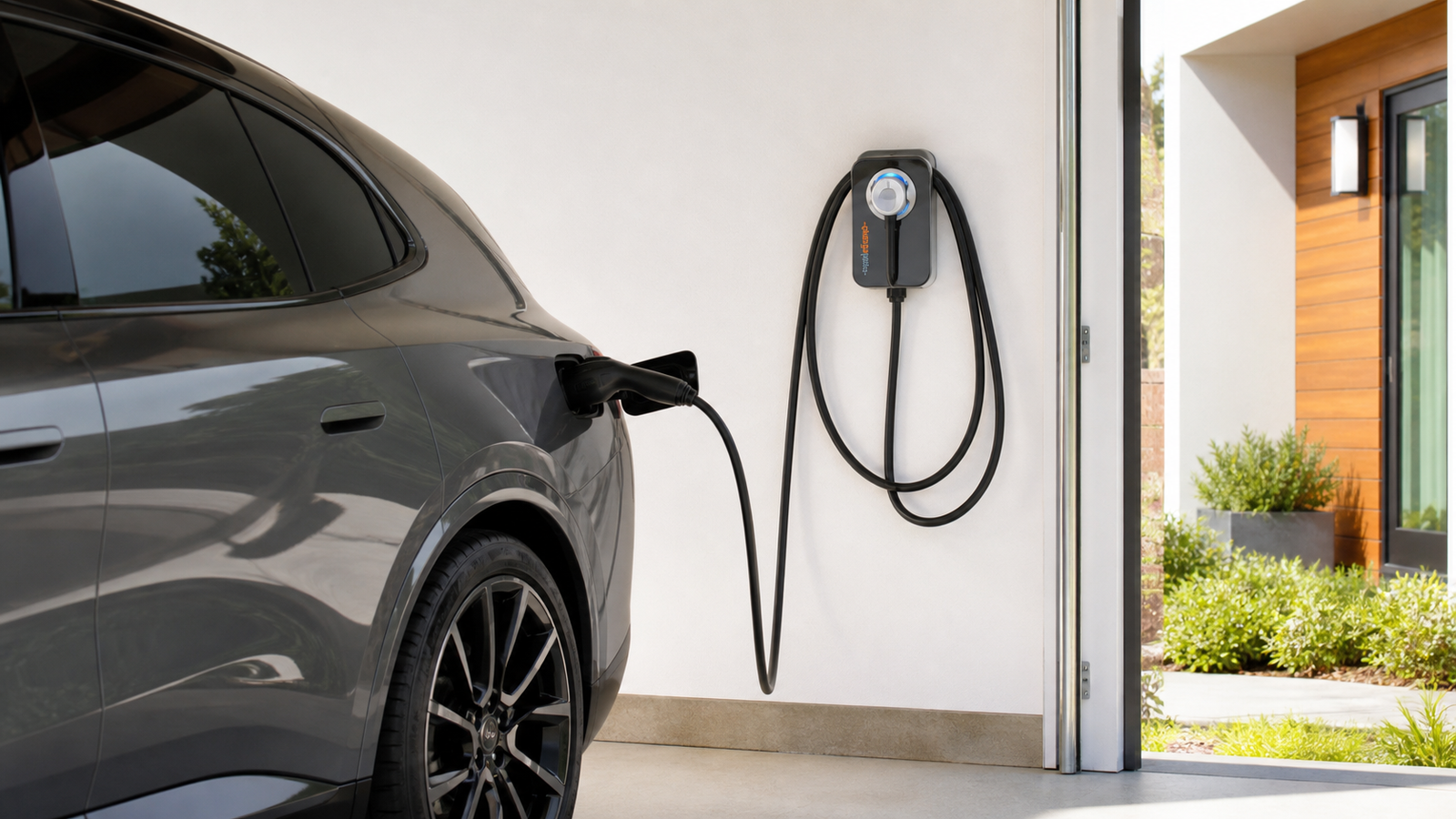
Quick Verdict
The ChargePoint Home Flex is a strong fit for a homeowner who wants adjustable output, a well-developed charging app, and a hardwired station suitable for indoor or outdoor placement. Its main appeal is flexibility: the manufacturer supports settings from 16A to 50A, so a qualified electrician can match the unit to the home’s available capacity. The biggest limitation is that unlocking the maximum 50A output may demand a high-capacity dedicated circuit—and the vehicle must also accept that much AC power to benefit.
It is best for an owner with dedicated parking, a J1772-equipped EV, reliable Wi-Fi, and room in the electrical service for an appropriate circuit. Skip it if you rent without installation permission, need a native NACS connector, or only want basic plug-and-charge hardware without premium connected features.
Check current price & availability on Amazon →
ChargePoint Home Flex
The ChargePoint Home Flex is a strong fit for a homeowner who wants adjustable output, a well-developed charging app, and a hardwired station suitable…
- Confirm the vehicle’s exact AC connector and supported adapters.
- Check the vehicle’s onboard AC charging limit.
- Have an electrician assess panel capacity and the available dedicated circuit.
Affiliate link. Moon Picke may earn a commission from qualifying purchases.
What Is the ChargePoint Home Flex?
Home Flex is a wall-mounted Level 2 EV supply equipment unit for residential charging at 208/240V AC. The exact version reviewed here is the hardwired CPH50 with a 23-foot J1772 cable. It has no wall plug: a qualified electrician connects it as a fixed appliance following ChargePoint’s installation instructions and local codes.
This distinction matters because ChargePoint also sells NACS and NEMA 6-50 or 14-50 plug-in versions. Those are not interchangeable purchasing choices. The hardwired J1772 model is the version to consider when the vehicle has a J1772 inlet, when the owner wants the broadest supported amperage range, or when hardwiring is preferable for outdoor placement.
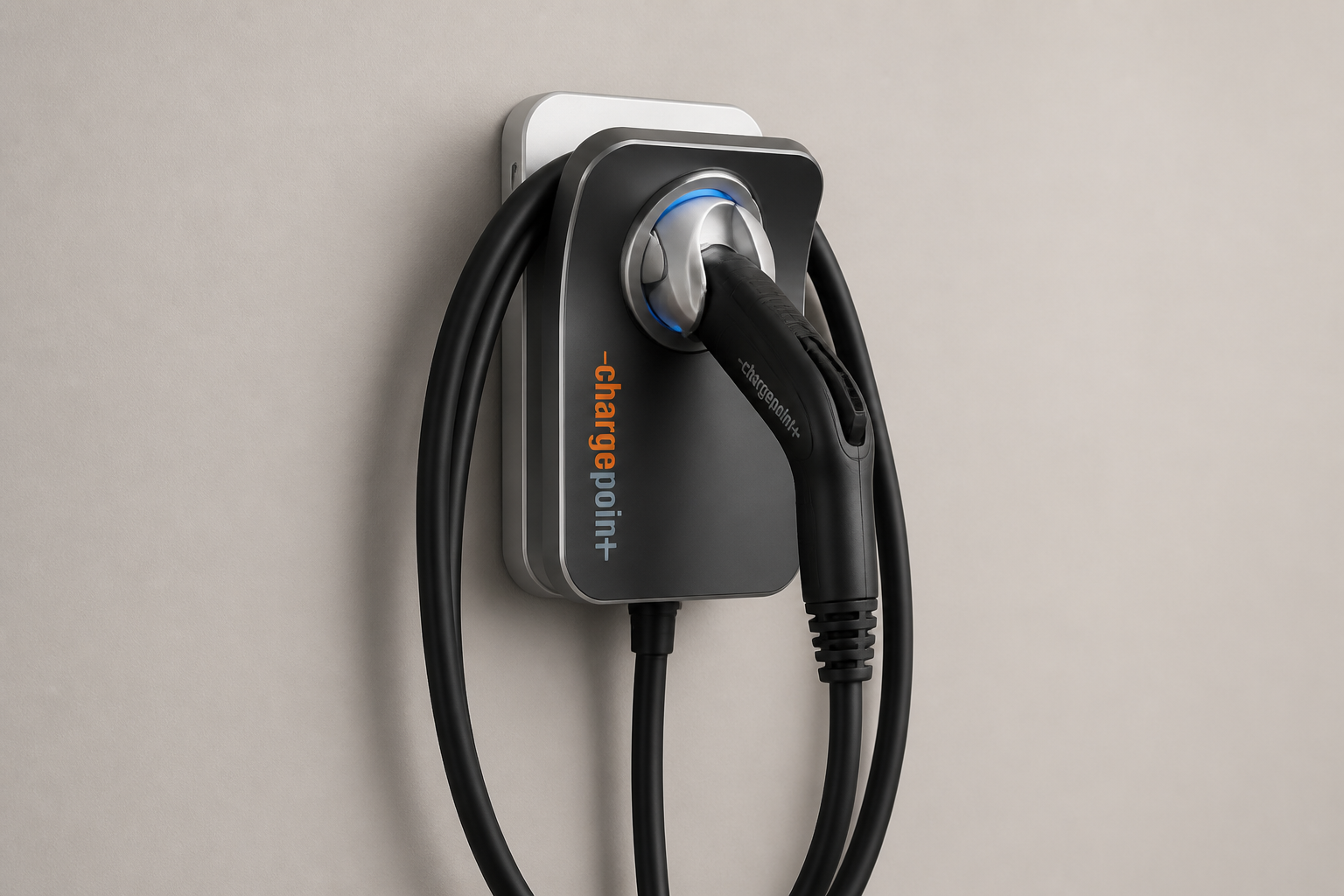
Key Specifications
| Specification | Verified detail |
|---|---|
| Charging level | Level 2 AC |
| Exact configuration | CPH50-HARDWIRE-L23-K |
| Connector | SAE J1772 |
| Maximum current | 50A |
| Maximum rated output | 12 kW at 240V/50A |
| Input | 208/240V AC, 60Hz, single phase |
| Installation | Hardwired; no plug |
| Adjustable output | 16A, 24A, 32A, 40A, 48A, or 50A |
| Charging cable | 23 ft |
| Indoor/outdoor rating | NEMA 3R |
| Connectivity | 2.4/5GHz Wi-Fi and Bluetooth |
| App | ChargePoint app |
| Smart functions | Scheduling, reminders, home/public charge history, energy use and cost tracking |
| Dimensions | Approximately 11.2 × 7.1 × 7.1 in with connector docked |
| Weight | 13.8 lb with cable |
| Warranty | 3-year limited parts warranty |
These are manufacturer-rated specifications, not Moon Picke test results. The charging power available to a particular car can be lower.
See the exact hardwired J1772 configuration on Amazon →
Charging Power and Real Vehicle Compatibility
ChargePoint rates Home Flex for up to 50A and 12 kW at 240V. That number describes the station’s ceiling, not a guaranteed rate for every vehicle. An EV’s onboard AC charger converts the station’s AC supply into energy for the battery and sets its own maximum. A car limited to 7.2 or 11 kW will not suddenly accept 12 kW because it is connected to a higher-rated station.
The circuit is the other boundary. ChargePoint documents 16A, 24A, 32A, 40A, 48A, and 50A station settings, with corresponding dedicated breaker ratings from 20A through 80A. Continuous-load requirements mean the charging setting is below the circuit rating. A licensed electrician should determine the correct setting from the panel capacity, conductor sizing, manufacturer instructions, local code, and vehicle needs.
In practical buying terms, the adjustable range is more valuable than the headline maximum for many homes. It can allow installation at a lower supported setting now while retaining hardware headroom, provided any later circuit upgrade and charger adjustment are handled correctly by an electrician.
Installation Requirements
This reviewed model is hardwired and requires a dedicated 208/240V circuit. Manufacturer guidance lists a 20A breaker for 16A charging, 30A for 24A, 40A for 32A, 50A for 40A, 60A for 48A, and 70A or 80A for 50A. Treat those as planning information, not DIY wiring instructions.
Before purchase, an electrician should assess service-panel capacity, the route from panel to charger, mounting surface, parking position, cable reach, and local inspection or permitting rules. Homes with limited spare capacity, a long cable run, or an older panel may involve more work than mounting the charger itself.
ChargePoint allows bottom or rear conduit entry, which can help produce a tidy installation. The station should be positioned so the cable reaches the car’s inlet without creating a trip or strain hazard. Follow the current ChargePoint installation guide and local electrical codes, and use a qualified electrician for fixed high-voltage work.
Connector and Vehicle Compatibility
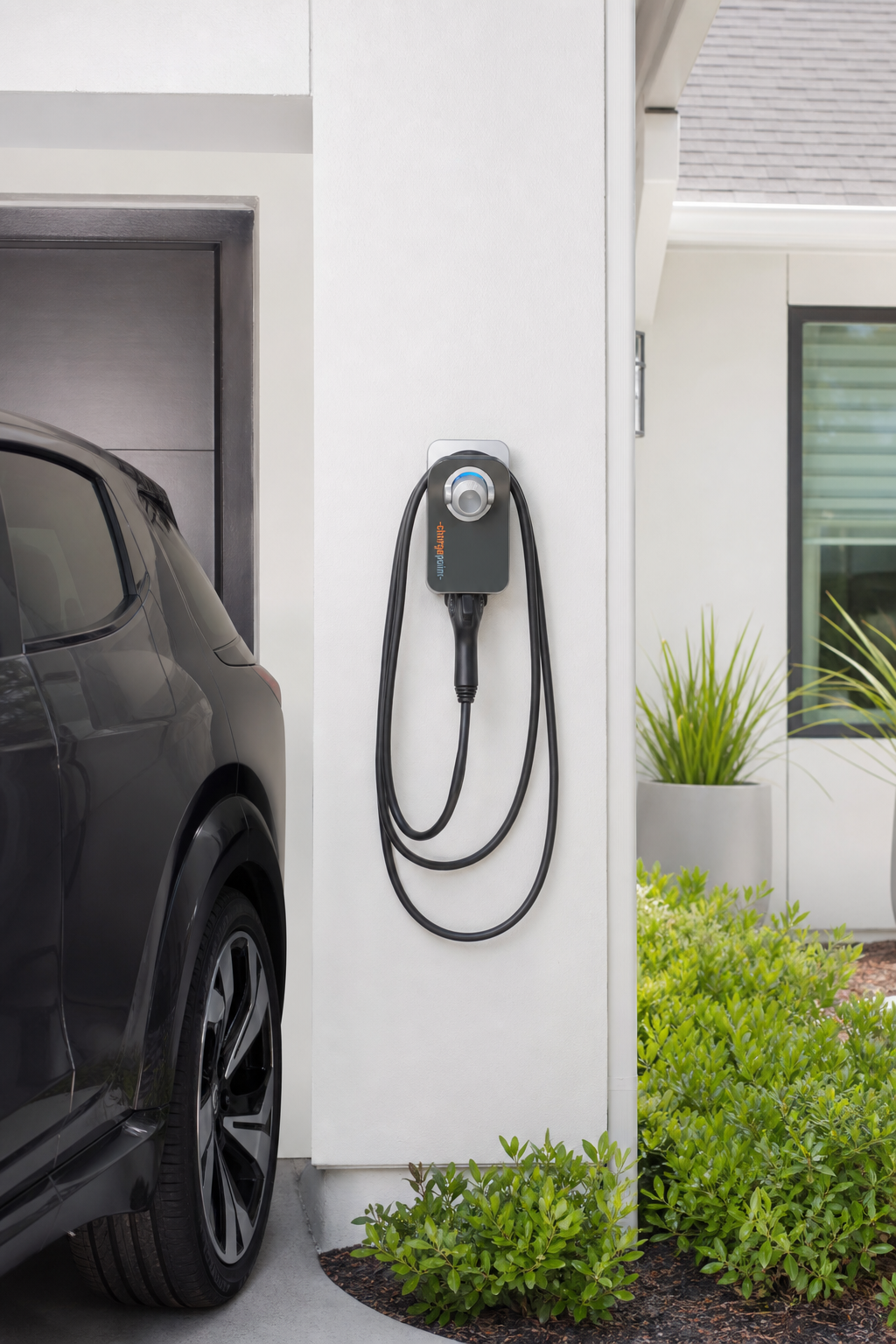
The cable on this exact configuration ends in SAE J1772. It directly fits vehicles with a J1772 AC inlet. Many Tesla vehicles can charge from J1772 using the appropriate Tesla-provided or officially supported adapter, but adapter availability and compatibility should be confirmed for the specific vehicle.
Do not buy this version merely because the Home Flex name appears correct. ChargePoint also sells a native NACS cable version. Check the vehicle inlet, any supported adapter, the model code, and the selected Amazon variation before ordering.
Smart Features and App Experience
Home Flex connects through 2.4 or 5GHz Wi-Fi and uses Bluetooth during setup or when Wi-Fi is unavailable for setting amperage. ChargePoint’s documentation describes scheduling, charging reminders, energy-use and cost tracking, charge history, remote status, and management of home and public ChargePoint activity in one app.
Scheduling can help a household align charging with a preferred utility time window, but actual savings depend on the owner’s electricity tariff. ChargePoint also supports utility integrations in participating areas; availability is location- and program-specific and should be verified rather than assumed.
Wi-Fi is strongly recommended for the connected functions and firmware updates. The charger can still be configured through Bluetooth by the installer when Wi-Fi is unavailable, but buyers paying for the smart ecosystem get more value with dependable coverage at the installation point. Moon Picke has not personally evaluated the app’s responsiveness or usability.
Cable Length and Everyday Practicality
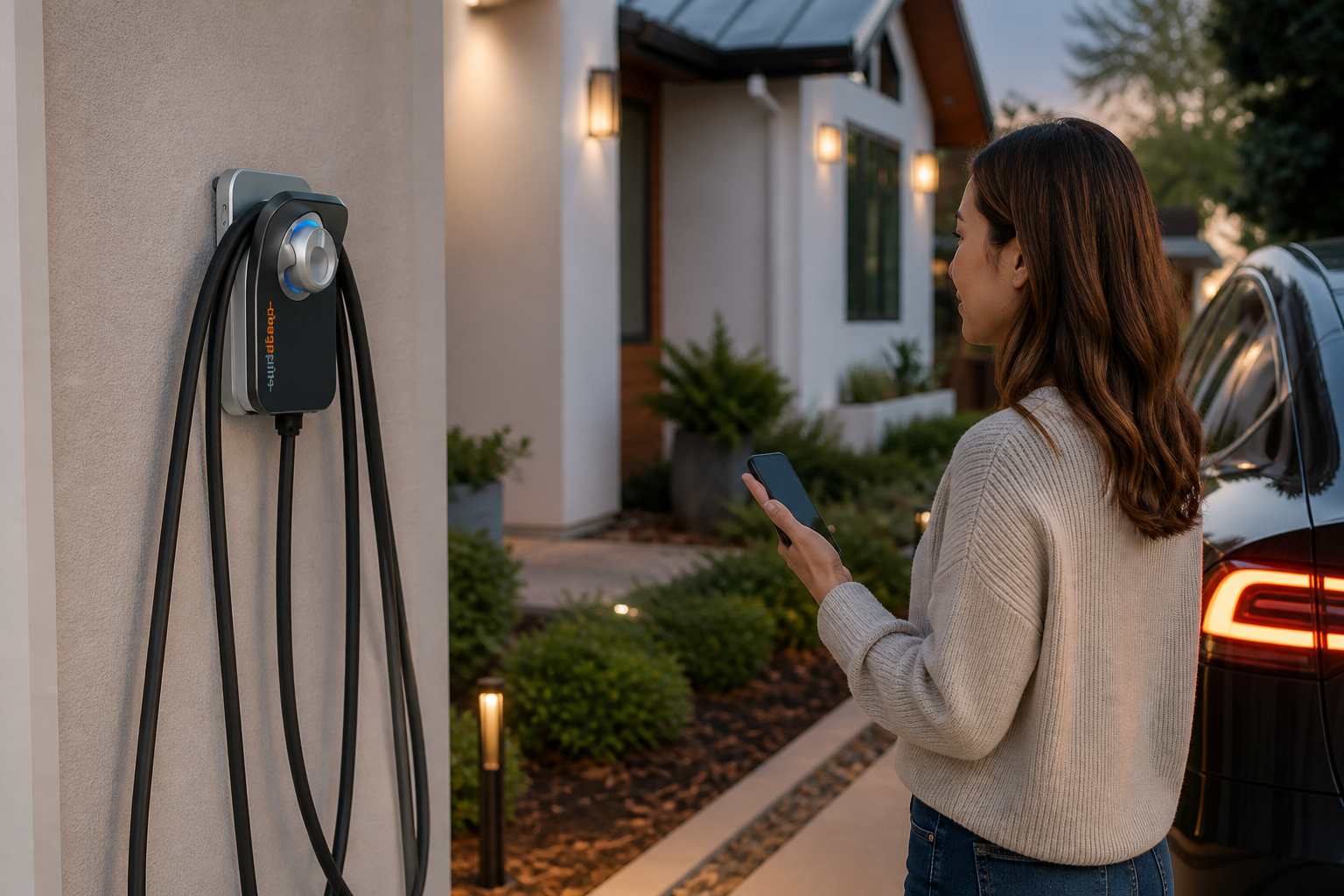
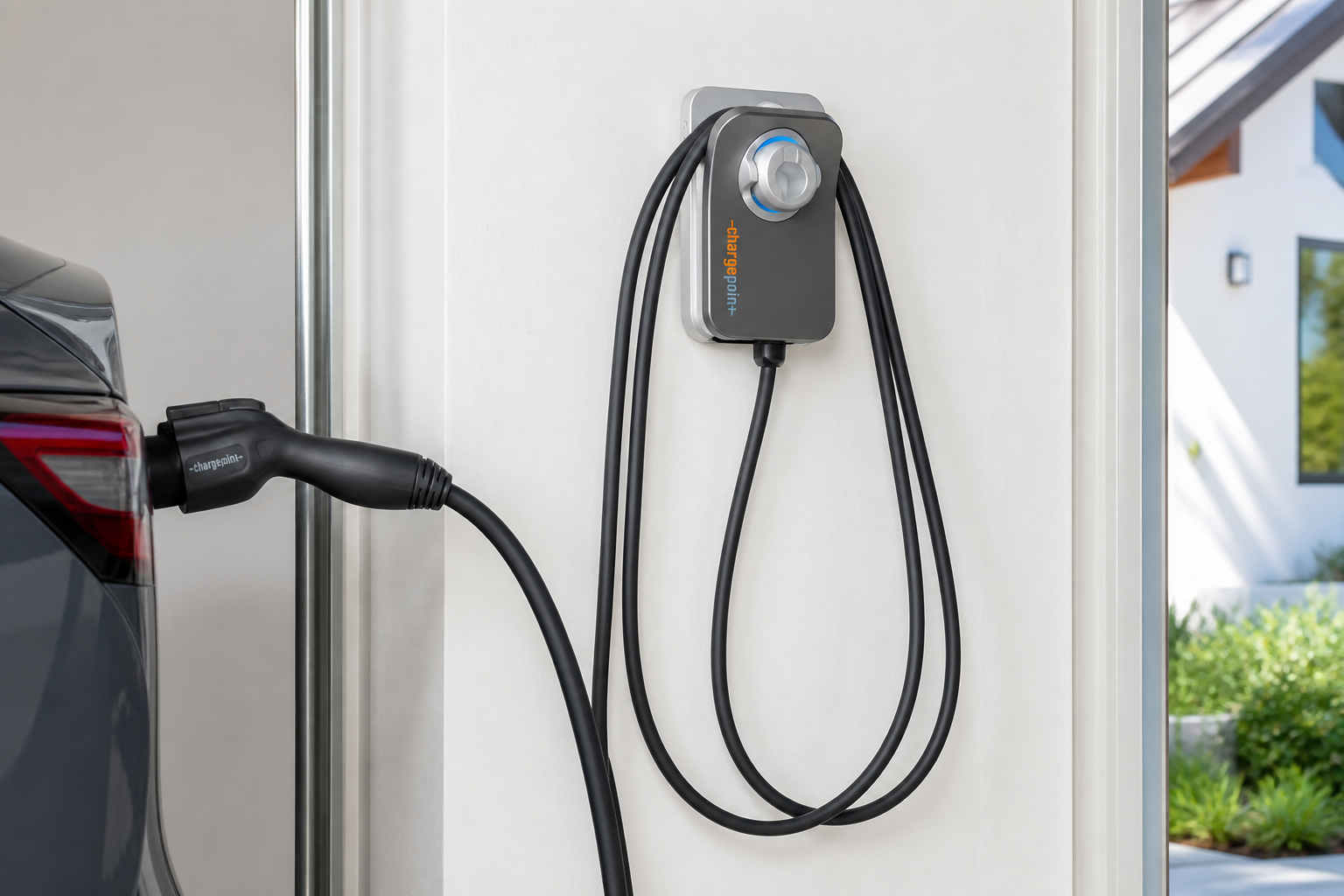
The supplied cable is 23 feet long. That gives useful placement latitude in a typical garage or driveway, but it is not automatically long enough for every layout. Measure the wall location to the vehicle’s charge port in the actual parking orientation, allowing a comfortable route rather than a straight-line estimate.
The connector docks into the circular holster on the station, while the cable can be looped around the enclosure. This integrated storage keeps the installation compact, although a separate cable hook may be preferable in some layouts. Avoid placing the unit where the stored cable blocks a walkway or rubs against a sharp corner.
Check availability for the 23-foot hardwired model →
Outdoor Use and Weather Resistance
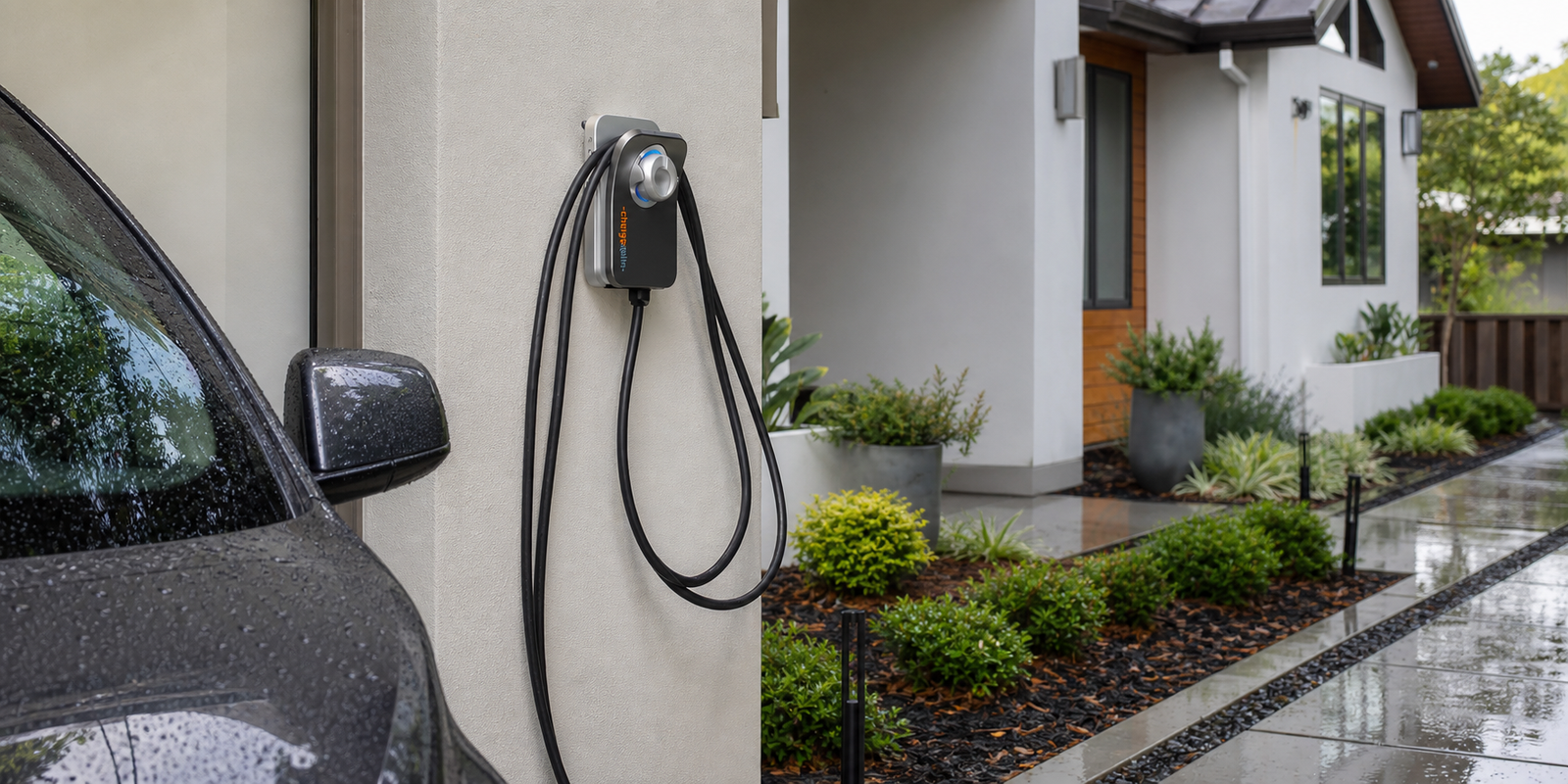
ChargePoint rates Home Flex NEMA 3R and documents it for indoor or outdoor use. NEMA 3R indicates protection appropriate for outdoor exposure including falling rain, sleet, snow, and external ice formation; it does not mean the unit is “fully waterproof” or suitable for immersion.
The manufacturer recommends hardwiring as the best outdoor installation option. Site drainage, mounting surface, cable storage, impact exposure, and local electrical requirements still matter. A qualified electrician should select the location and complete the installation according to the current guide and codes.
What the ChargePoint Home Flex Does Well
Its strongest attribute is electrical adaptability. One enclosure can be configured across a wide amperage range, so the buyer is not forced to choose between only one low and one high output. The 50A/12 kW ceiling also leaves useful headroom for vehicles with capable onboard AC chargers.
The smart platform is another meaningful advantage. Scheduling, reminders, energy tracking, and combined home/public charging history address ownership tasks beyond simply delivering electricity. The 23-foot cable, built-in holster, compact wall footprint, NEMA 3R rating, and three-year limited parts warranty round out a practical premium package.
Important Limitations and Trade-Offs
The purchase price is only one part of the commitment. This hardwired model needs professional installation, and maximum output can require a substantial dedicated circuit. If a home lacks capacity, the electrician may recommend a lower setting, load-management solution, or broader service work.
The J1772 cable is also a deliberate connector choice. Buyers wanting native NACS should select the separate NACS configuration rather than planning around an adapter by default. ChargePoint offers a cable conversion kit for compatible Home Flex units, but it is an additional purchase and should be verified for the exact station revision.
Connected features depend on the ChargePoint app and benefit from stable Wi-Fi. One Home Flex can currently be activated to only one ChargePoint driver account, which may be inconvenient for some multi-driver households. Finally, a vehicle with a modest onboard AC limit may gain no speed advantage from the charger’s top setting.
What Does It Really Cost to Own?
Budget for the charger, electrician labor, a dedicated circuit, conductor and conduit, mounting materials, possible permits or inspection, and any necessary panel or load-management work. The route length and existing electrical service can affect installation far more than the charger’s box price.
Optional ownership costs may include a cable conversion kit, replacement cable outside warranty coverage, a separate cable organizer, or compatible energy-management equipment. ChargePoint does not require a subscription for the core home charging functions described here, but utility rates and optional third-party services are separate. Obtain a site-specific electrician quote instead of relying on a universal installation estimate.
Who Is the ChargePoint Home Flex Best For?
It makes the most sense for a homeowner with dedicated parking and a J1772 vehicle who wants scheduled charging and energy records in a mature public-charging app. It also suits buyers who need an outdoor-rated hardwired station or want the electrician to match output to available capacity without replacing the EVSE later.
Households expecting a future EV with faster AC charging may value the 50A ceiling, even if the current car draws less. The benefit is flexibility, not a promise that every vehicle will charge at 12 kW.
View the ChargePoint Home Flex hardwired J1772 model on Amazon →
Who Should Skip It?
Renters without written installation permission should generally avoid fixed charging hardware. It is also a poor fit for homes where the required electrical work is disproportionate to driving needs, drivers satisfied with Level 1 charging, or buyers whose vehicle cannot benefit from higher Level 2 output.
Choose a native NACS model if adapter-free NACS charging is the priority. A simpler non-networked charger may also make more sense for someone who will never use scheduling, monitoring, reminders, or the ChargePoint ecosystem.
What to Check Before Buying
- Confirm the vehicle’s exact AC connector and supported adapters.
- Check the vehicle’s onboard AC charging limit.
- Have an electrician assess panel capacity and the available dedicated circuit.
- Verify that you want hardwired installation, not a NEMA 6-50 or 14-50 plug.
- Measure the route from mounting point to charge port for the 23-foot cable.
- Confirm indoor or outdoor placement and local requirements.
- Test Wi-Fi coverage where the station will be mounted if smart functions matter.
- Select the exact hardwired J1772 Amazon configuration and ASIN B0C6YMS4KH.
- Recheck the current three-year limited parts warranty.
- Confirm the current package contents and whether any organizer or conversion kit is included.
Final Verdict
The ChargePoint Home Flex hardwired J1772 is worth considering when adjustable electrical output and a connected charging ecosystem matter more than getting the lowest upfront price. Its strongest reason to buy is the combination of a 16–50A range, 12 kW maximum rating, useful app functions, and indoor/outdoor installation support.
The ownership commitment is professional hardwired installation and whatever circuit work the property requires. For a homeowner with compatible service capacity, a J1772 EV, dedicated parking, and reliable Wi-Fi, that trade-off can be reasonable. A plug-in, native NACS, lower-output, or non-networked charger makes more sense when those needs differ.
Check current price & availability on Amazon →
Frequently Asked Questions
Is the ChargePoint Home Flex a Level 2 charger?
Yes. It is a 208/240V AC Level 2 EV charger. The hardwired model reviewed here supports output settings from 16A to 50A.
How fast can the ChargePoint Home Flex charge an EV?
ChargePoint rates it for up to 12 kW at 240V and 50A. Actual power is limited by the configured circuit, the station setting, the vehicle’s onboard AC charger, battery conditions, and vehicle controls.
Does this ChargePoint Home Flex need to be hardwired?
Yes. Model CPH50-HARDWIRE-L23-K has no wall plug and is intended for fixed installation by a qualified electrician. Separate NEMA 6-50 and 14-50 versions exist.
Can the ChargePoint Home Flex be installed outdoors?
ChargePoint rates it NEMA 3R for indoor or outdoor use and recommends hardwiring for outdoor installations. Placement and installation must still follow the manufacturer guide and local code.
Does this model work with Tesla or native NACS vehicles?
Its cable is J1772, so a compatible, officially supported J1772-to-NACS adapter is required for a NACS vehicle. Buyers wanting adapter-free use should consider ChargePoint’s separate native NACS configuration.
Does it require Wi-Fi or a subscription?
Wi-Fi is recommended for connected features and updates, but an installer can use Bluetooth for initial configuration when Wi-Fi is unavailable. ChargePoint does not list a required subscription for the core home charging features covered here.