
Higgsfield vs Runway is not a universal quality contest. For September 2026, Higgsfield fits creators who want a multi-model workspace; Runway fits creators who want an integrated generation-plus-production account. They differ in architecture first. This comparison uses official product, pricing, and help pages—not demo-video appearance and not a Moon Picke side-by-side generation test. Methods: How We Evaluate and editorial standards.
Higgsfield vs Runway: Quick Verdict
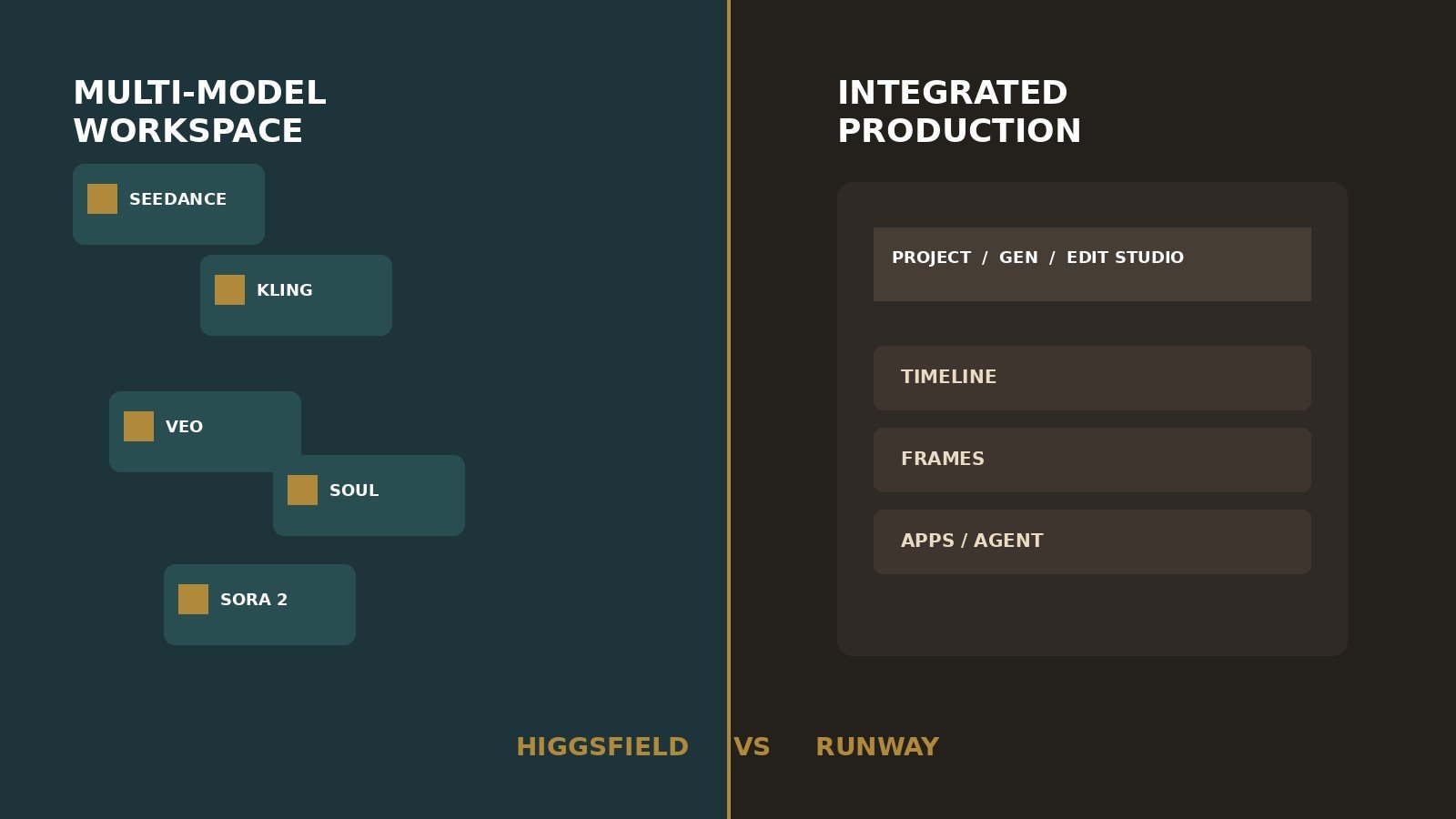
Is Higgsfield better than Runway? Only if model optionality and Higgsfield-specific studios are the job. Is Runway better than Higgsfield for AI video? Only if you will use Runway’s Gen line, Edit Studio, Agent, and projects. Choose neither if you need a script-to-finished long video (see InVideo AI review) or a generation-only clip engine (see Kling AI review). Pricing, plans, and current model access were verified in September 2026.
Moon Picke may earn a commission if you purchase through some links on this page, at no additional cost to you. Affiliate Disclosure. See current Higgsfield plans. See current Runway plans.
| Category | Higgsfield | Runway | Better fit |
|---|---|---|---|
| Platform type | Multi-model creative suite | Integrated generation + production | Depends on workflow |
| Model access | Soul plus listed third-party engines | Gen-4.5 / Aleph plus partners | Higgsfield for breadth |
| Text-to-video | Via tools and selected engines | Gen-4.5 and partners | Depends |
| Image-to-video | Documented in studios / generate | Gen-4.5 image as first frame | Depends |
| Reference controls | Cinema Studio up to 50 refs; Soul ID | Frames, Gen-4 image refs (up to 3) | Depends |
| Camera/motion | Cinema Studio camera tags / library | Mostly prompted on Gen-4.5 | Depends |
| Editing | Scene tools; not a long-form NLE | Aleph 2.0 Edit Studio; Timeline Studio | Runway |
| Project organization | Assets, studios, Canvas | Projects, brand kits, storage caps | Runway |
| Product-ad fit | Marketing Studio from URL/image | References + Aleph variants | Depends |
| Long-form fit | Shots; Montage Pacing ≠ 12-min cut | Short sequences; local editor for long | Tie / neither |
| Pricing model | Subscription + credits; promo Unlimited windows | Subscription + credits; yearly billed annually | Depends |
| Credit complexity | High (Unlimited rules, MCP always spends) | High (rates by model; Max ≠ unlimited) | Tie |
| Free access | Limited models; no credit allotment | One-time 125 credits; watermark | Depends |
| Commercial use | Terms: outputs not restricted; not exclusive | Help: no non-commercial restriction from Runway | Tie (check terms) |
| Main limitation | Aggregation ≠ native-provider parity | Value depends on using Runway’s stack | — |
This Higgsfield vs Runway page sits under the best AI video generators for creators pillar. Full product breakdowns: Higgsfield AI review and Runway review. Vs-Kling and alternatives pages are not live yet.
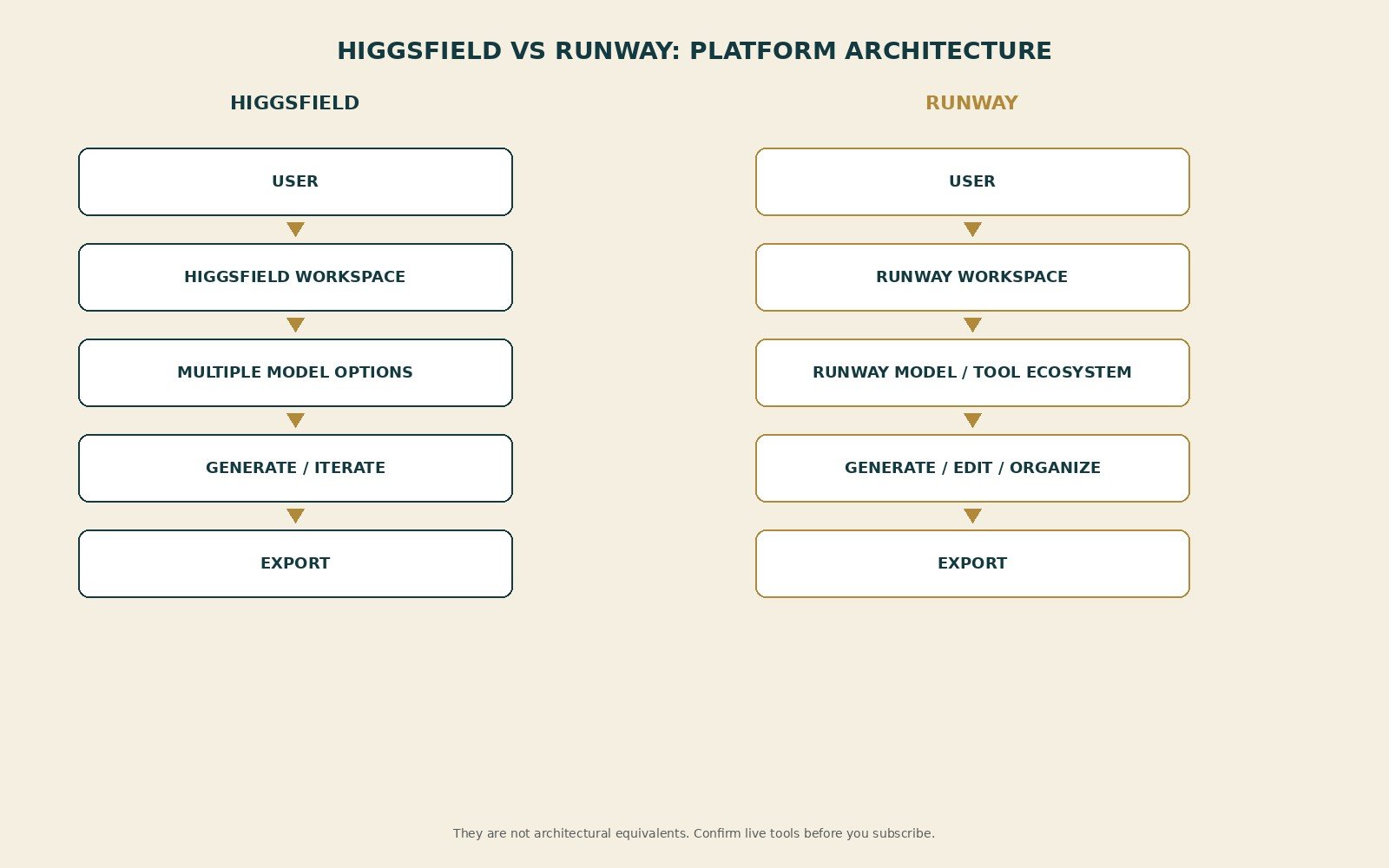
The Biggest Difference: Multi-Model Workspace vs Integrated Platform
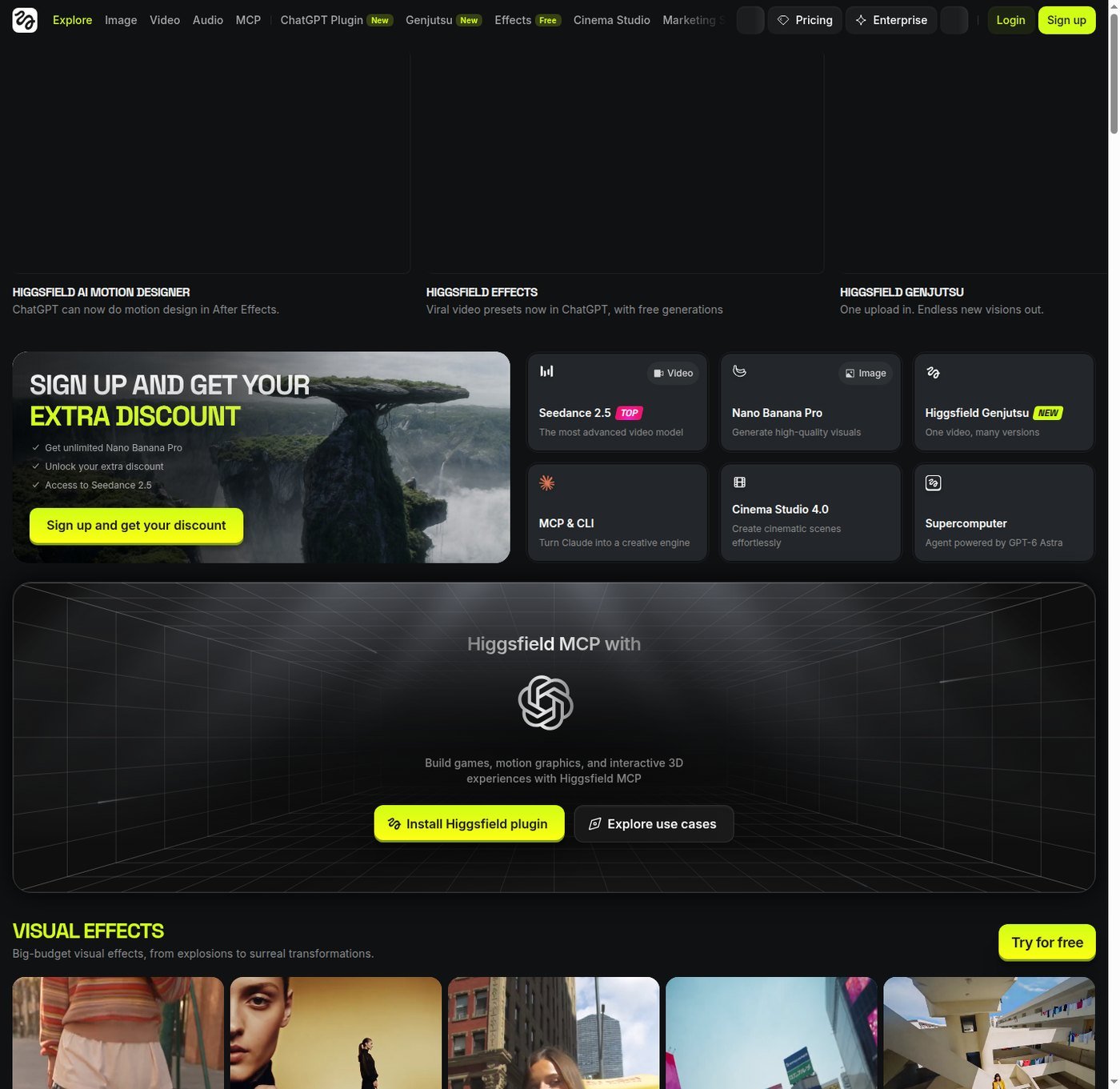
Higgsfield’s help (updated August 2026) describes an AI-native creative suite: proprietary tools plus a library of external models under one subscription. The September 2026 public nav showed Explore, Image, Video, Audio, MCP, Effects, Cinema Studio, Marketing Studio, plus related apps. Higgsfield is the access layer. Kling, Veo, Seedance, or Sora 2 inside Higgsfield are not automatically “Higgsfield’s model.”
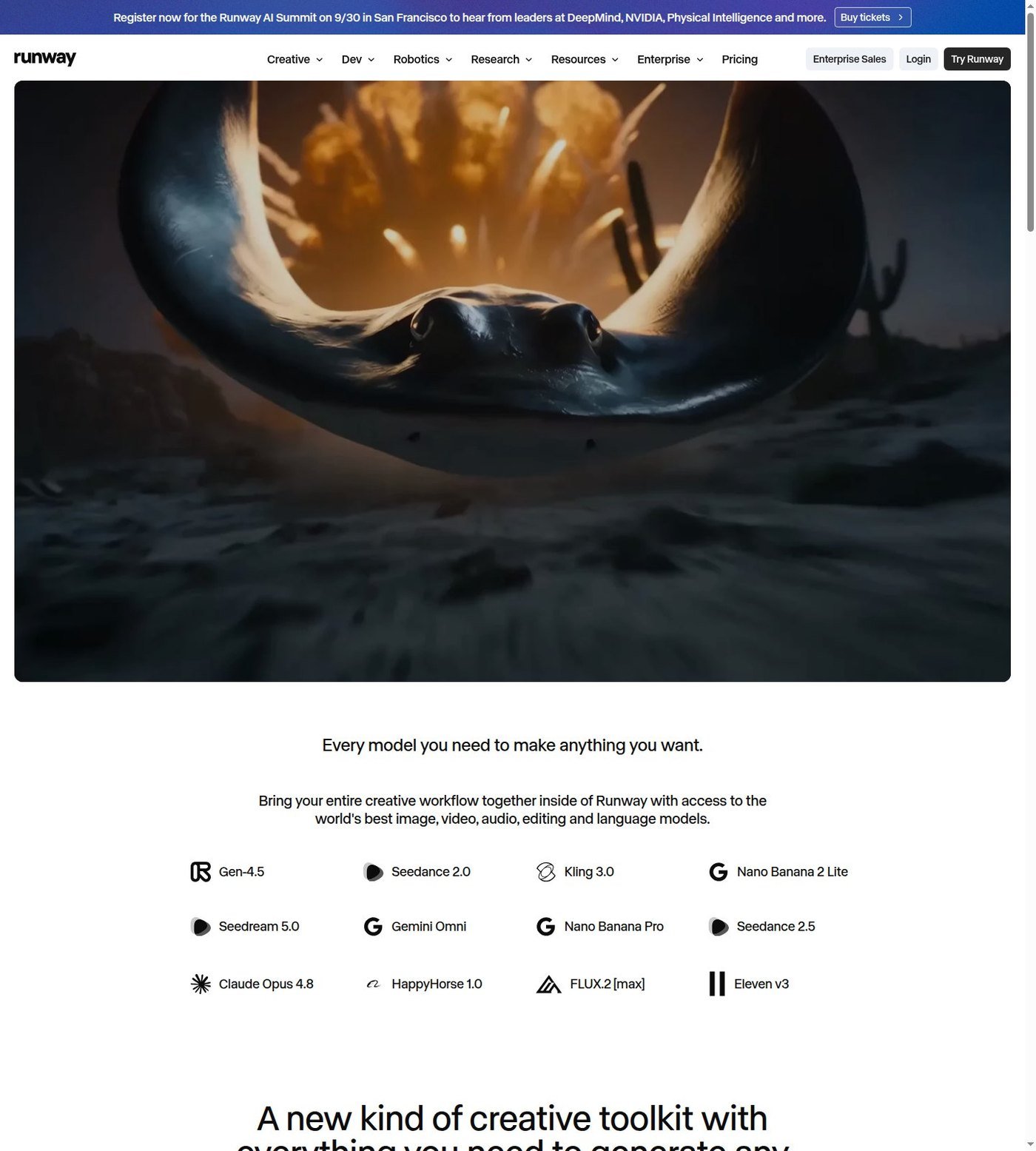
Runway’s product copy describes a creative platform that gathers image, video, audio, editing, and language models. The platform is projects, Apps, Agent, Edit Studio, plugins, and MCP. Proprietary-or-first-party video includes Gen-4.5 and Aleph 2.0. Pricing cards also list partner access such as Kling 3.0, Seedance 2.0/2.5, and Nano Banana. Partner names are access, not proof Runway trained those weights.
Editorial interpretation: more models are not automatically better. Higgsfield reduces provider switching if you actually switch engines. Runway reduces tool switching if you stay inside Gen, Aleph, Agent, and projects. Third-party access is not guaranteed native-provider feature parity on either side—version timing, controls, credits, and UI can differ from Kling.com or Google’s own Veo surface. If you only need one engine, compare that provider’s native product before you pay for a workspace.
AI Models and Generation Options
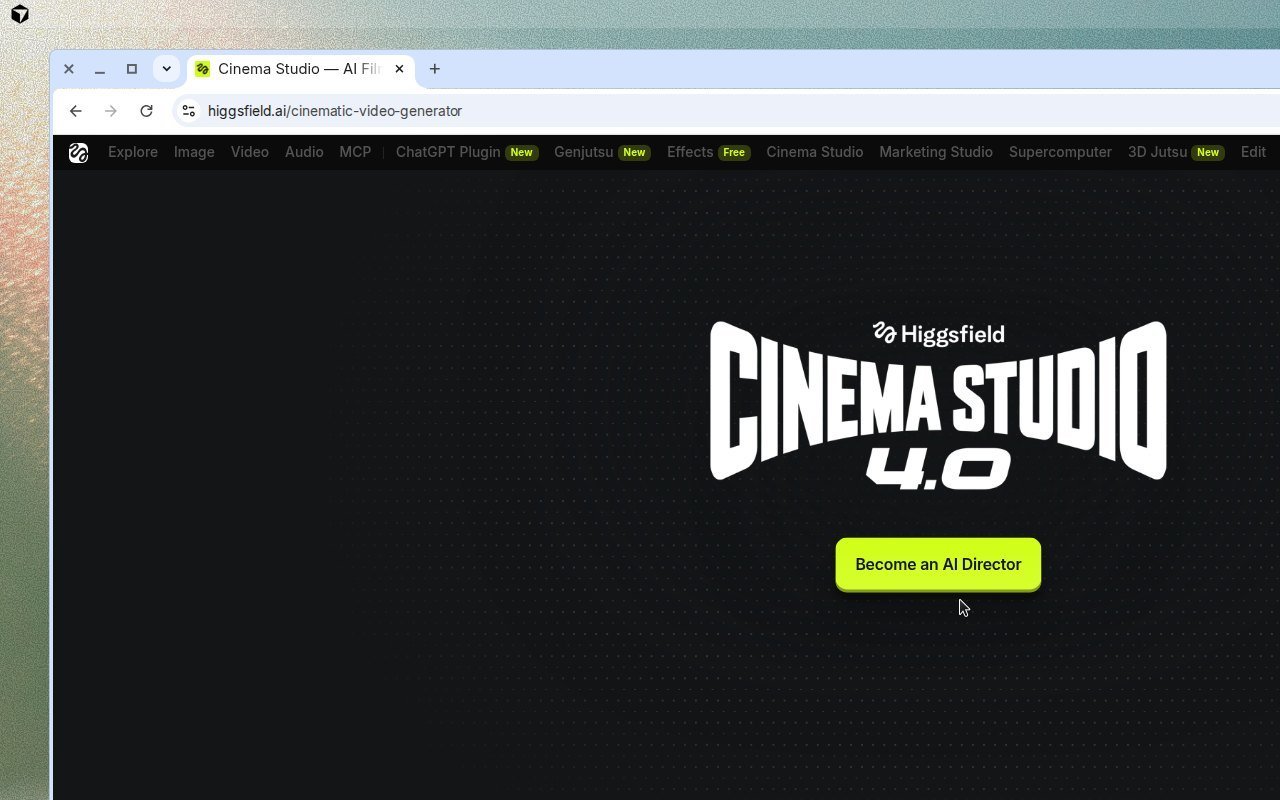
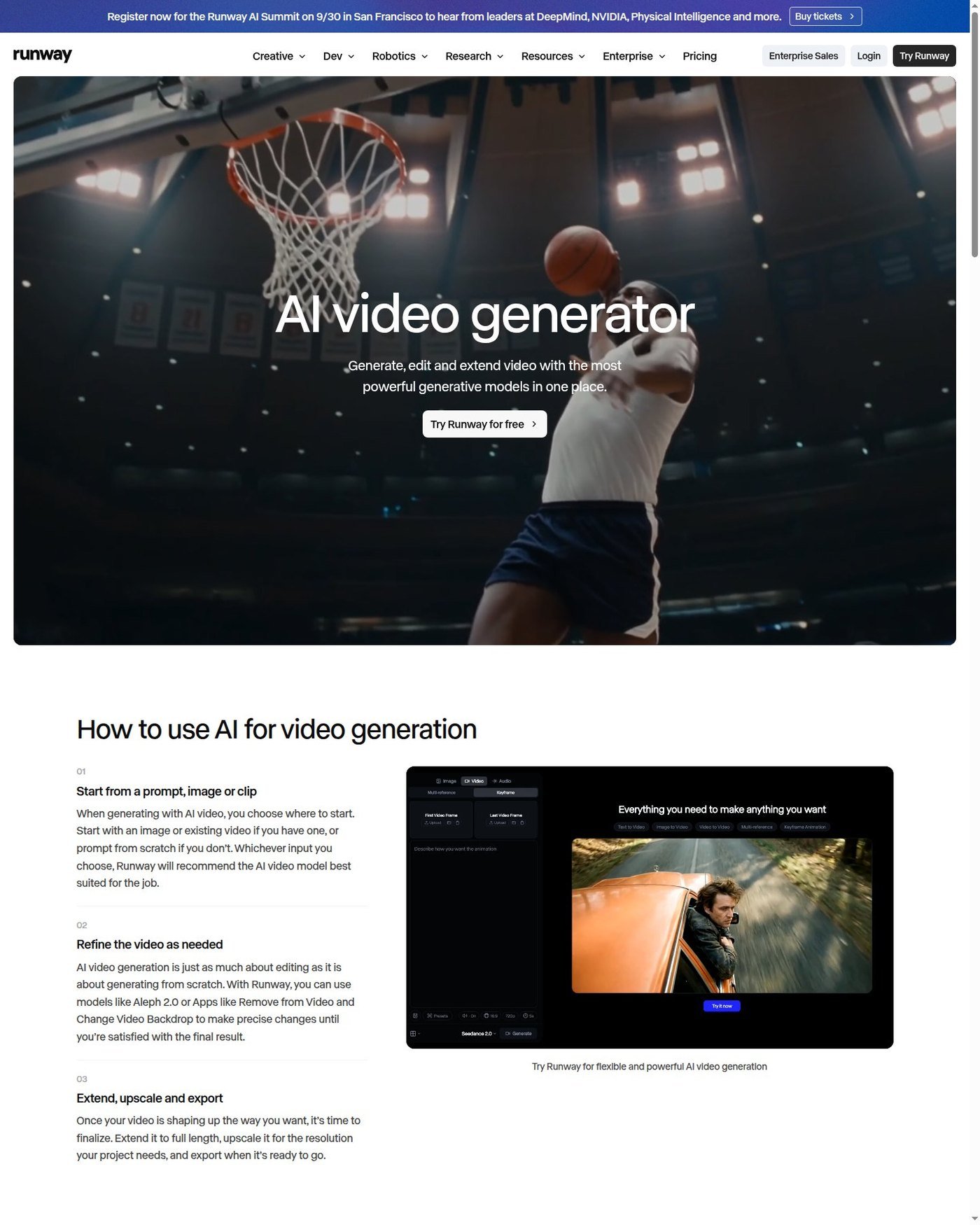
Which has more AI video models? Higgsfield currently names a wider third-party roster in help and Cinema Studio marketing (Seedance, Kling, Veo, Sora 2, Nano Banana, and others, plan-gated). Runway’s buyer-relevant stack as of September 2026 is Gen-4.5 (T2V/I2V, 2–10 seconds, 12 credits/second, 720p native on Standard+), Aleph 2.0 for in-context edits, and partners on plan cards. Gen-3 Alpha is retired (July 2026).
Breadth vs integration: Higgsfield’s Cinema Studio 4.0 copy says leading video models run inside the studio—pick an engine per shot. Runway’s generator starts from a prompt, image, or clip, then can move work to Aleph, Apps, extend, or upscale. Confirm the live selector the day you subscribe. This is not a model encyclopedia.
Text-to-Video and Image-to-Video
Both document text-to-video and image-to-video. Do not compare “Higgsfield quality” with “Runway quality” unless you name the underlying model. A Seedance clip on Higgsfield is not a Higgsfield-trained look; a Kling 3.0 clip on Runway is partner access. Neither gets a fake quality winner from a trailer.
For many commercial jobs, a still is the more useful start: composition, product, and lighting stay in the frame while the prompt describes motion. Runway Gen-4.5 treats the image as a first frame; I2V aspects include 16:9, 9:16, 1:1, 4:3, 3:4, 21:9. Higgsfield documents aspect ratio as a generation setting; confirm 9:16 on the live UI. Start/end frames: Runway documents them on Animate Frames and shows first/last slots on a public generator still—not as native Gen-4.5. Higgsfield start/end behavior should be confirmed in the generate UI, not inferred from marketing video. Video-to-video on Runway is not the same as Aleph’s prompt edit of existing footage.
References, Camera Controls and Creative Direction
Higgsfield Cinema Studio documents genre, camera movement (static, handheld, zoom, pan as tags or library picks), Montage Pacing, era/grade, up to fifty references per generation, AI Cast, and project briefs. Soul ID is the documented character path. Runway documents Gen-4 Image References (up to three images for character, style, object, or environment) and mainly prompted camera grammar on Gen-4.5 (dolly, pan, handheld, locked-off). Controls improve direction. They do not prove realism, identity lock, logo preservation, or cinematic quality. Reference is not perfect consistency on either platform.
Which Is Better for Product Ads and Creative Campaigns?
Which is better for product ads? Higgsfield maps URL- or image-based ads to Marketing Studio, with native lip sync in help. Cinema Studio is the heavier camera path. Runway’s ad-relevant tools are stills, references, Aleph variants, and camera prompts—not a dedicated product-URL studio. Neither promises catalog-perfect packaging. This is not the product-ads roundup.
Editing and Production Workflow
Which has better editing? Runway, if “editing” means in-product generative and short assembly tools. Edit Studio hosts Aleph 2.0 (paid; product FAQ: up to 30 seconds at 1080p). Timeline Studio covers shorter assembly. Agent’s Final Cut can trim, split, and arrange. Apps include Act-Two / lip sync. The Video Editor Project retired July 30, 2026. Higgsfield’s Cinema Studio FAQ: Montage Pacing delivers an assembled scene—“No timeline, no post.” That is scene generation, not Premiere. Canvas chains models; Supercomputer plans assets on paid plans. Neither natively covers script → many scenes → VO → music → captions → full timeline → delivery as a complete YouTube machine. A strong clip generator is not automatically better for complete production.
Which Is Better for YouTube and Social Video?
Which is better for YouTube? For B-roll and short sequences, either can supply shots. For a 10–30 minute assembled video, both still point you toward an external editor or a builder like InVideo. Social: 9:16 is documented on Runway Gen-4.5 I2V; Higgsfield lists aspect ratio as a setting. Fast iteration favors whichever credit rules you can actually afford. This is not the Shorts or faceless-YouTube roundup.
Higgsfield vs Runway Pricing and Credits
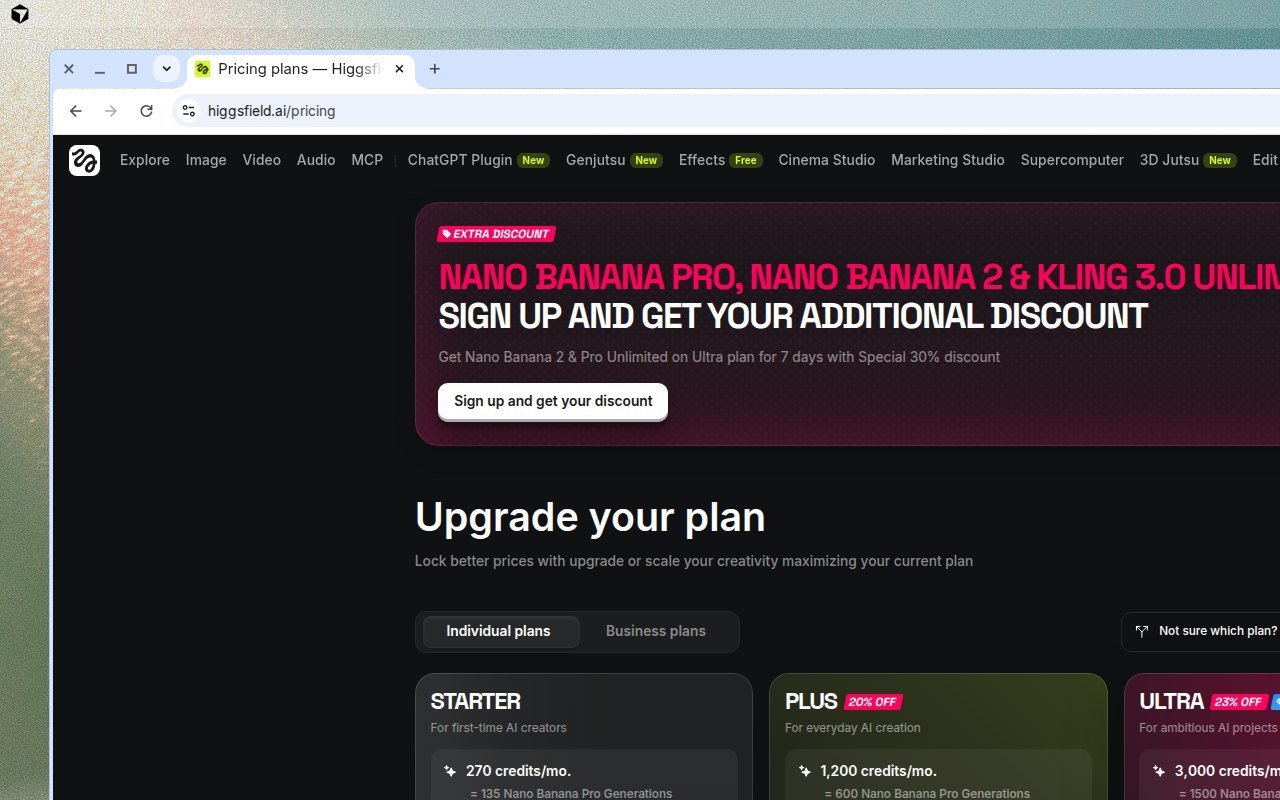
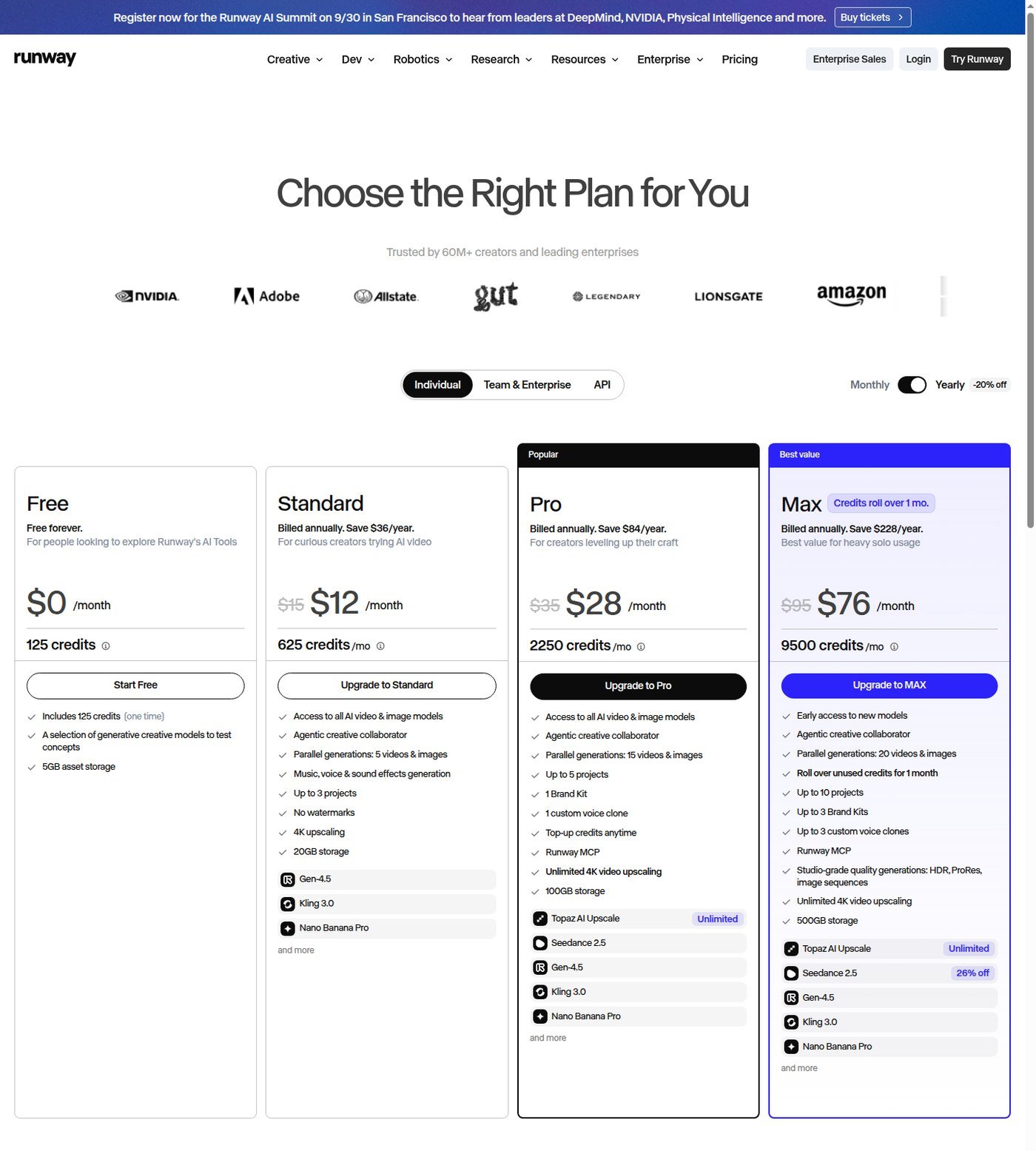
Which is cheaper? You cannot compare sticker price or credit counts directly. One Higgsfield credit is not one Runway credit. Compare what you can generate, iterate, and finish. Pricing, plans, and current model access were verified in September 2026.
| Platform | Entry paid plan | Usage system | Model access | Best for | Main cost caveat |
|---|---|---|---|---|---|
| Higgsfield | Starter (270 credits/mo on Sep 2026 card) | Credits; rotating Unlimited windows on mid/top cards | Core models on Starter; broader library higher | Multi-engine experimentation | Unlimited is model-, site-, and period-specific; MCP always spends credits |
| Runway | Standard $12/mo billed annually (625 credits/mo) | Credits; extras on paid plans | Gen-4.5, Kling 3.0, Nano Banana Pro listed on Standard | Integrated Gen + light production | Do not treat $12 as month-to-month; Standard/Pro credits expire |
Higgsfield help: individual plans monthly or annual (annual costs less per month); confirm live dollars—checkout discounts move. Plus 1,200 and Ultra 3,000 credits/mo on the captured cards. Subscription credits do not roll over on individual plans. Unlimited listed models skip credits only on higgsfield.ai for that window, on a standard queue; credit mode is described as priority. Fair use: personal, human use. Do not read promo Unlimited as “unlimited AI video.”
Runway yearly Individual cards captured September 12, 2026: Free $0 with 125 one-time credits; Standard $12/month billed annually (625/mo); Pro $28 billed annually (2,250); Max $76 billed annually (9,500, one-month rollover). Paid cards advertise no watermarks. Max is not Explore Mode and is not unlimited generation. Legacy Unlimited/Explore was queued and restricted. Iteration includes first generation, retries, prompt variants, extensions, upscales, and model switches, and it draws the same wallet on both platforms. A cheaper monthly card can cost more if the engine you need is expensive per second or if Unlimited does not cover it. Buyers care about the cost of a usable asset; Moon Picke will not invent a universal cost-per-clip. Budget an iteration envelope, not one generation. Cost per usable shot is not published here as a universal number. Check current Higgsfield pricing. Check current Runway pricing.
Free: Higgsfield limited models, no credit allotment, no trial in help. Runway one-time 125 credits and watermark. Commercial: according to Higgsfield Terms §4.4, outputs are not restricted and not exclusive; standard plans may use content for training unless Enterprise. According to Runway usage-rights help, no non-commercial restriction from Runway as between you and Runway. Platform permission is not a copyright or likeness guarantee. API tables are separate from these consumer plans.
Where Higgsfield Is Better
Multi-model optionality in one login. Cinema Studio and Marketing Studio as Higgsfield-specific workflows. Experimentation across engines without keeping five native subscriptions—if you actually use them. Product/ad URL-to-spot path in Marketing Studio. Promo Unlimited windows can lower cost for listed models when the rules fit.
Where Runway Is Better
A tighter Runway-centered ecosystem: Gen-4.5 for new shots, Aleph 2.0 for in-context edits. More documented in-product editing and short assembly. Project caps, brand kits, and storage on plan cards. Clearer annual dollar cards (with the billed-annually caveat). Partner models exist, but the subscription’s unique value is the integrated stack, not the longest model list.
Who Should Choose Higgsfield?
Creators who will switch engines. Visual advertisers checking Marketing Studio. Teams that want Cinema Studio references, Cast, and Canvas. Buyers who dislike maintaining many direct model accounts. Explore Higgsfield if that is the job—not if you only wanted one native generator.
Who Should Choose Runway?
Shot-based filmmakers who will also use Edit Studio or Agent. Ad teams iterating with Aleph rather than a URL studio. Social makers who confirm 9:16 on Gen-4.5. Agencies that need projects and an in-app first pass. Explore Runway if generation plus that pass is the bottleneck.
Who Should Choose Neither?
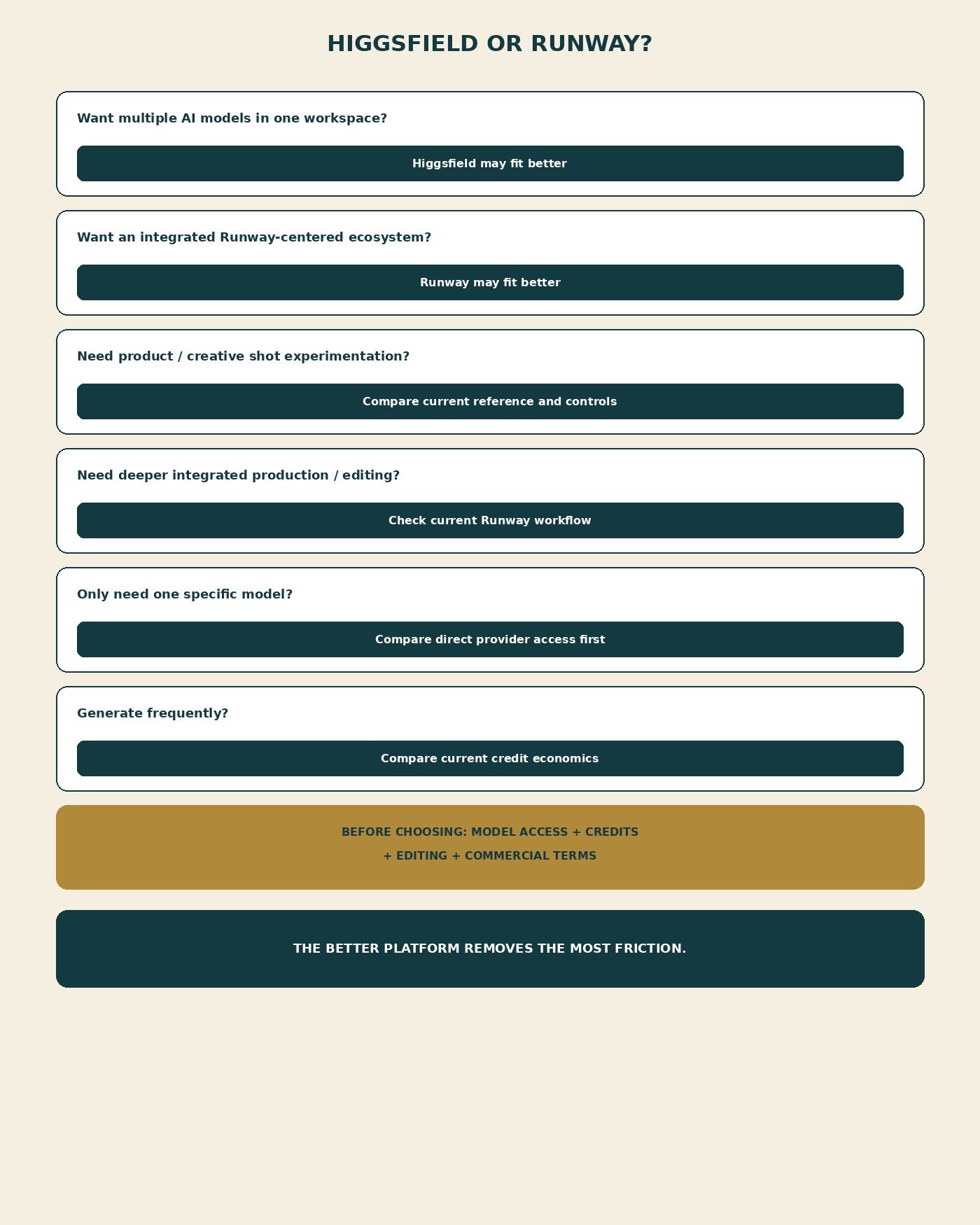
Skip both if you need prompt-to-finished long YouTube (InVideo’s category). Skip avatar-first UGC. Skip very low volume if free/trial limits cover curiosity. Skip if you only need simple social templates. Skip if a traditional NLE is the real job and you will not generate clips. Direct Kling may fit generation-only buyers who do not want Higgsfield’s roster or Runway’s editor stack. Two subscriptions stacked on top of Premiere does not automatically save time. Recheck commercial terms before client delivery on either platform.
Final Verdict
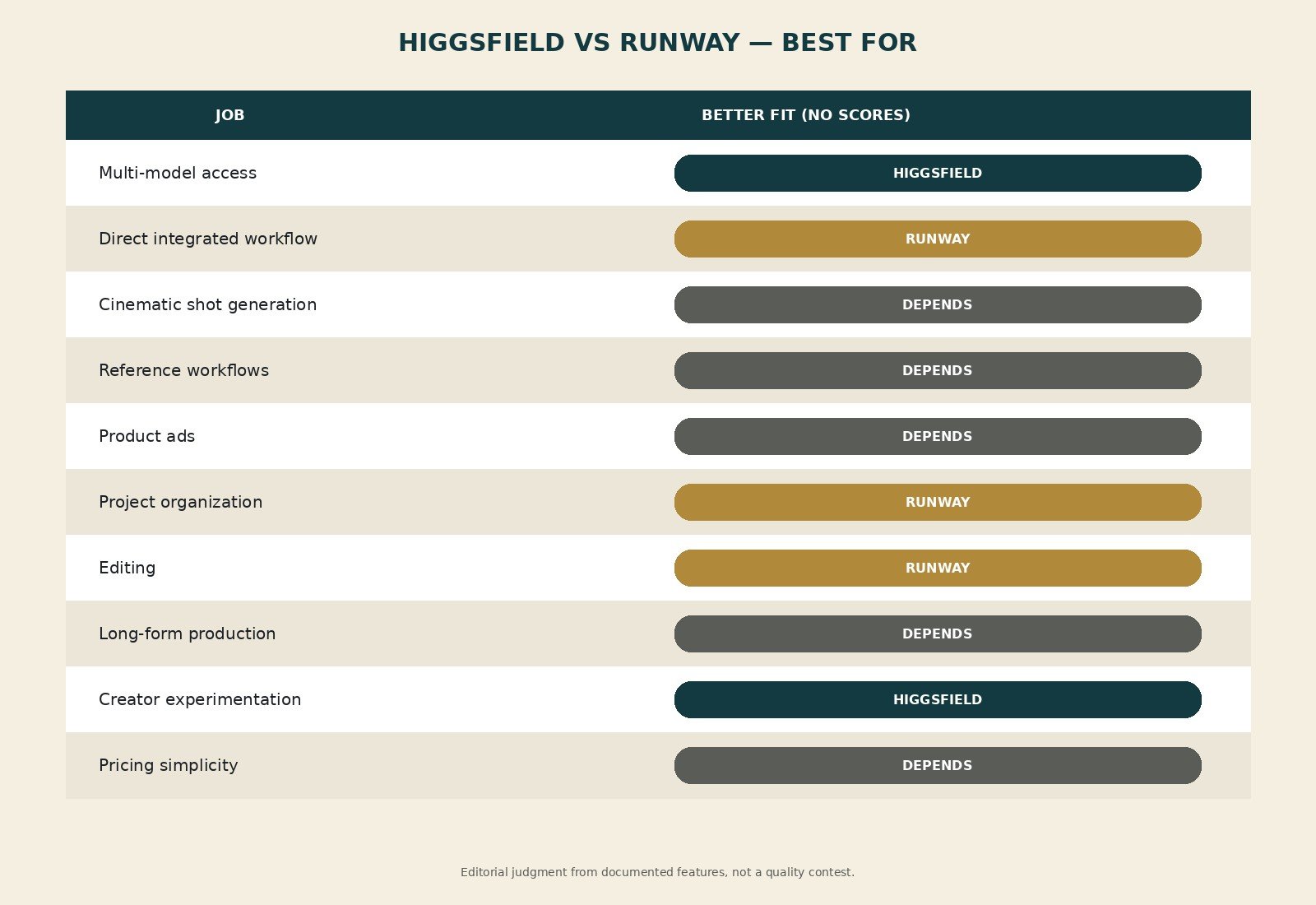
This Higgsfield vs Runway comparison does not name a demo-video winner. Higgsfield is the better multi-model workspace. Runway is the better integrated production ecosystem. Product-ad experimentation depends on Marketing Studio vs references/Aleph. Long-form production is a tie: both still need finishing elsewhere. Value depends on which friction you actually remove—model choice or in-app edit. Recheck live model lists, credits, and terms. See current Higgsfield plans. See current Runway plans.
FAQ
Is Higgsfield better than Runway? Not universally. Higgsfield for model breadth; Runway for integrated workflow.
Is Runway better for professional video workflows? Better documented editing/production tools; still not a full NLE.
Which has more AI video models? Higgsfield lists a broader third-party roster; confirm plan gates.
Is Higgsfield or Runway better for image-to-video? Both document it. Choose by references and the engine you will run.
Which is better for product ads? Higgsfield if you want Marketing Studio; Runway if you want stills plus Aleph variants.
Which is better for YouTube? Shots: either. Complete long videos: neither as a sole tool.
Which has better editing? Runway’s Edit Studio / Timeline Studio / Agent, with limits.
Can either be used commercially? According to current official terms/help, both describe commercial permission with caveats. Not legal advice.